



I never really got hydrangeas before I started traveling in Japan. To be fair, I only ever saw them in random old ladies’ gardens; their petals were often so pale as to be indistinguishable from their leaves, at least at a distance.
Of course, once the ajisai bug really dug its teeth into me, I became obsessed with seeing the plants in the most resplendent settings Japan could offer—a stray bush here or there simply wasn’t enough for me, nor were a few found along the paths of random temples, no matter how intentionally someone had planted them, or how long ago.
Ultimately, I knew I had to visit Kamakura’s Meigetsu-in temple in mid-June in order to have the full ajisai experience. It took me literal years, but every moment I waited was worth it.
Why Meigetsu-in Gets Overlooked
Obviously, if you specifically search for a hydrangea temple near Tokyo, it’s reasonably easy to find out about Meigetsu-in, and to see enthusiastic recommendations from other travelers who have been. Generally speaking, however, this temple isn’t extremely popular. For one, it’s actually located a bit north of central Kamakura, specifically just out the east exit of Kamakura Station. Most people stay on the train as it passes through this station, totally oblivious.
The other issue is that while nearby Engaku-ji is a bit more evergreen in its beauty (it’s gorgeous amid the sakura of spring and the vibrant colors of fall, and at basically all times in-between), Meigetsu-in just doesn’t reach the same heights outside of the relatively short ajisai season. As a result, anyone who visits in say October or January is unlikely to come away with a very positive impressive, let alone to make that known online.
How to Make the Most of Your Meigetsu-in Visit
Come in June—trust me
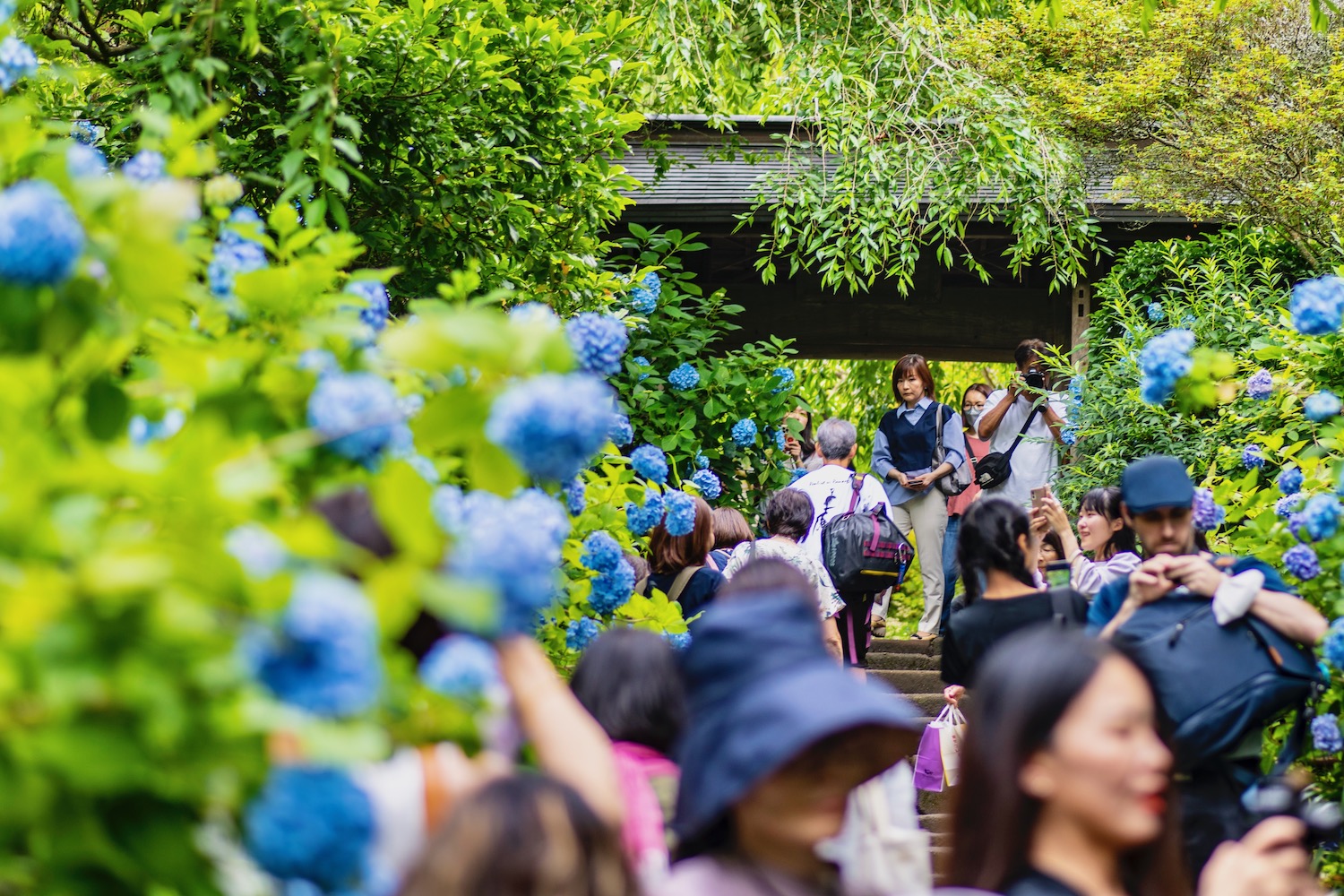
If you want to see Meigetsu-in living up to its nickname of Ajisai-dera, make sure to visit in June, specifically toward the middle of the month. Even if you have high expectations, the feeling of walking through the gates to see hundreds (maybe thousands) of hydrangea bushes in bloom is overwhelming in the best possible way.
Visit in the morning on a cloudy day
Although I usually don’t like rain, rainy conditions are arguably when the Kamakura hydrangea temple is at its most atmospheric. If it’s raining when you go, I suggest visiting in the morning (it opens at 9) in order to see it as uncrowded as possible. The lack of direct sun makes the fact that the place will technically be backlit irrelevant.
Or the afternoon if it’s sunny
By contrast, if it is very sunny, you’ll really want to visit in the afternoon, crowds or no-crowds. Coming on a sunny morning will cause all your shots to be completely washed out; but photographing the temple’s gates and staircases with the sun shining in from the west will make all your shots perfect.
Be prepared for crowds
I mentioned a potential morning visit earlier, as a way that you might be able to ward off hordes of tourists. In reality, however, there isn’t really an uncrowded time at the hydrangea temple in Japan, at least not in hydrangea season. At a minimum, you should steel yourself for the possibility of being very much not alone.
(And maybe confrontations)
I got especially unlucky on my last visit to Meigetsu-in. A random woman (who did not work at the temple) decided to report me to staff for using a tripod, which are prohibited in policy but not in practice. She was extremely rude and hostile, and seemed to delight in the eventual reprimand I got. Very un-Japanese, if I’m honest.


Other Places to See Hydrangeas in Japan
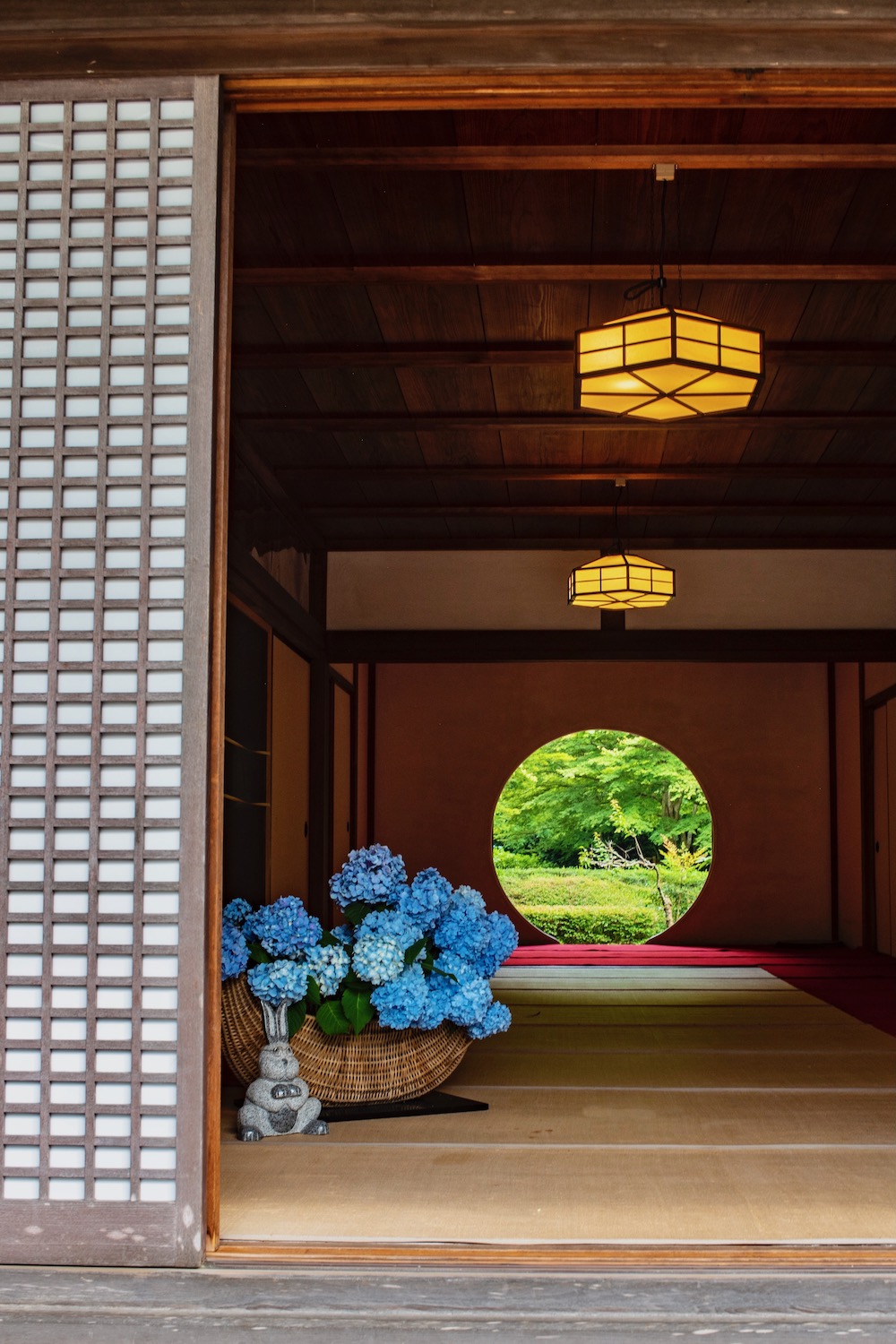
Meigetsu-in is the very best place in Japan to see hydrangeas, but it’s not the only game in town…er, country. Here are a few other options to consider:
- There are plenty of hydrangea-filled temples in Kyoto, from Mimuroto-ji temple in Uji just south of the city, to Yoshimine-dera temple in western Kyoto.
- Even within Kamakura itself, Meigetsu-in is not the only proverbial game in town. Specifically, Hase-dera near the Kotoku-in Big Buddha is a paradise for hydrangea lovers.
- Specifically sites notwithstanding, ajisai are ubiquitous throughout Japan, blooming in cities and the countryside as early as May, and staying in bloom as late are October or November.
Of course, many Kamakura hydrangeas are not within the walls of a temple at all. If you stay overnight in Kamakura, as I recently did, you can enjoy wayward ajisai more or less on your own time.

Other FAQ About Visiting Japan’s Hydrangea Temple
Where is the hydrangea temple in Japan?
The most famous hydrangea temple in Japan is Kamakura’s Meigetsu-in, which is so commonly associated with the flowers that it’s often nicknamed “Ajisai-dera”—literally “hydrangea temple.” With this being said, you’ll find hydrangea bushes within temples all over Japan.
What is so special about Meigetsu-in temple?
Frankly speaking, the most special thing about Meigetsu-in is the hundreds of ajisai (hydrangea) bushes that come into bloom around mid-June. The temple is perfectly beautiful on its own, but would not merit near the attention it does were it not for the scale of the hydrangeas here.
Which temple should I visit in Kamakura?
In addition to Meigetsu-in (which is also known as Ajisai-dera), other worthwhile temples in Kamakura include Engaku-ji (which is famous for cherry blossoms), the Kotoku-in Big Buddha and Hase-dera, which is nearly as famous for hydrangeas as Meigetsu-in.

The Bottom Line
On the fence about whether to time your late spring trip to Japan to the hydrangeas of Meigetsu-in temple? Don’t be! In addition to being an easy day trip from Tokyo, Ajisai-dera is a stand-out destination on its own merits, and easily elevates a trip to Japan in the underrated month of June to the next level. More broadly speaking, hydrangeas in Japan (and make no mistake, ajisai are every bit as Japanese as sakura) are the perfect way to add a special, seasonal flair to your travels, but without the crowds and guesswork of a cherry blossom trip. Need personalized help making the most of a June trip to Japan? Consider hiring me to plan it for you!