


As a photographer, getting the right shot in Japan is often equal parts coordination and luck. A great example of this is Chureito Pagoda, near the base of Mt. Fuji. To get my “postcard picture,” I not only had to time my visit to cherry blossoms’ full bloom, but also had to ensure I was going on a day with a perfectly clear sky.
The good news? I eventually got the shot. The not-as-good news? It took me a whopping seven years of effort, and multiple visits to get it just right.
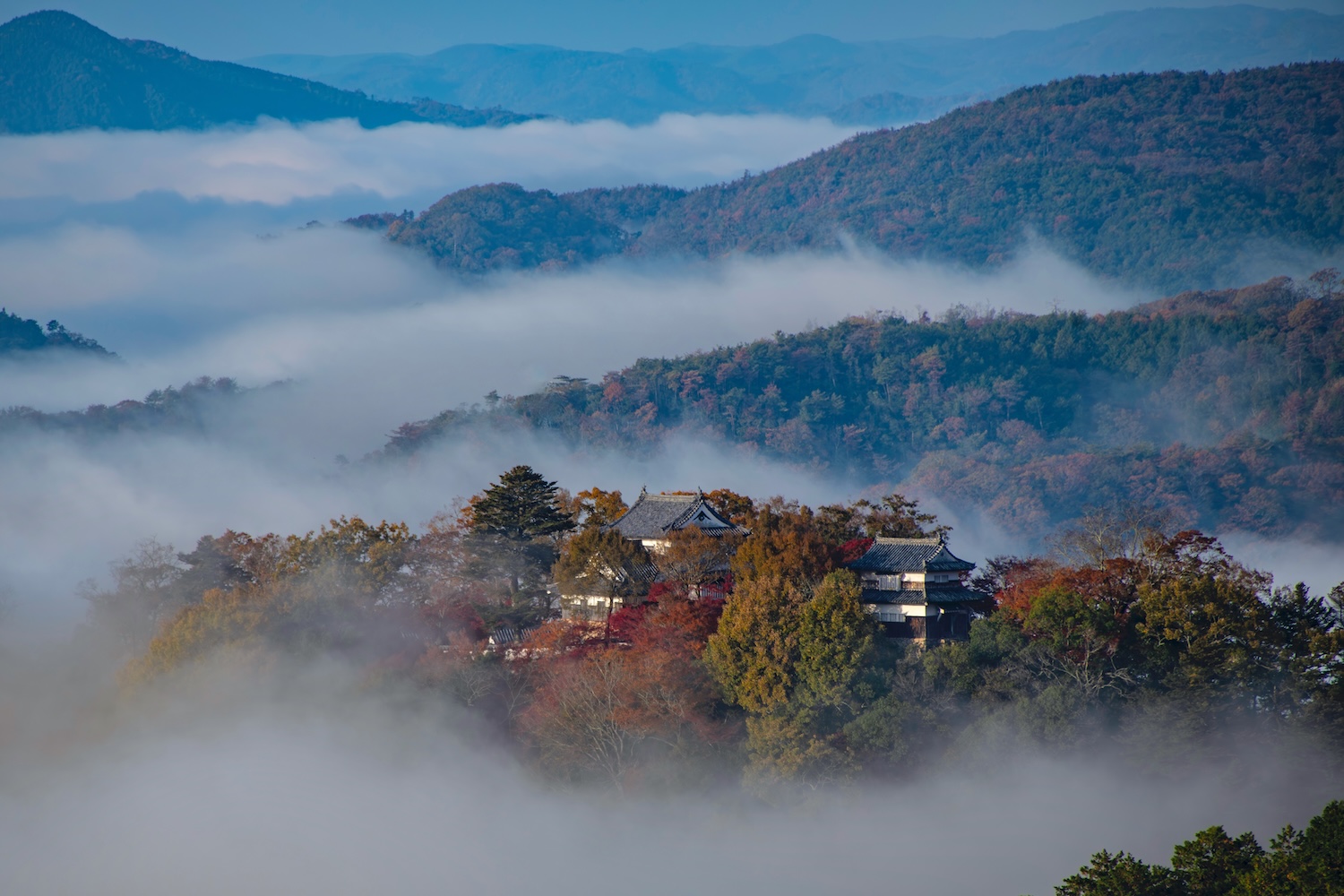
Thankfully, seeing the sea of clouds (unkai) in order to capture the Japanese “castle in the clouds” phenomenon does not require nearly as much luck, though you definitely still need some coordination. No matter which of these castles you decide you want to visit, I’m here to talk you through the process.
Understanding Unkai
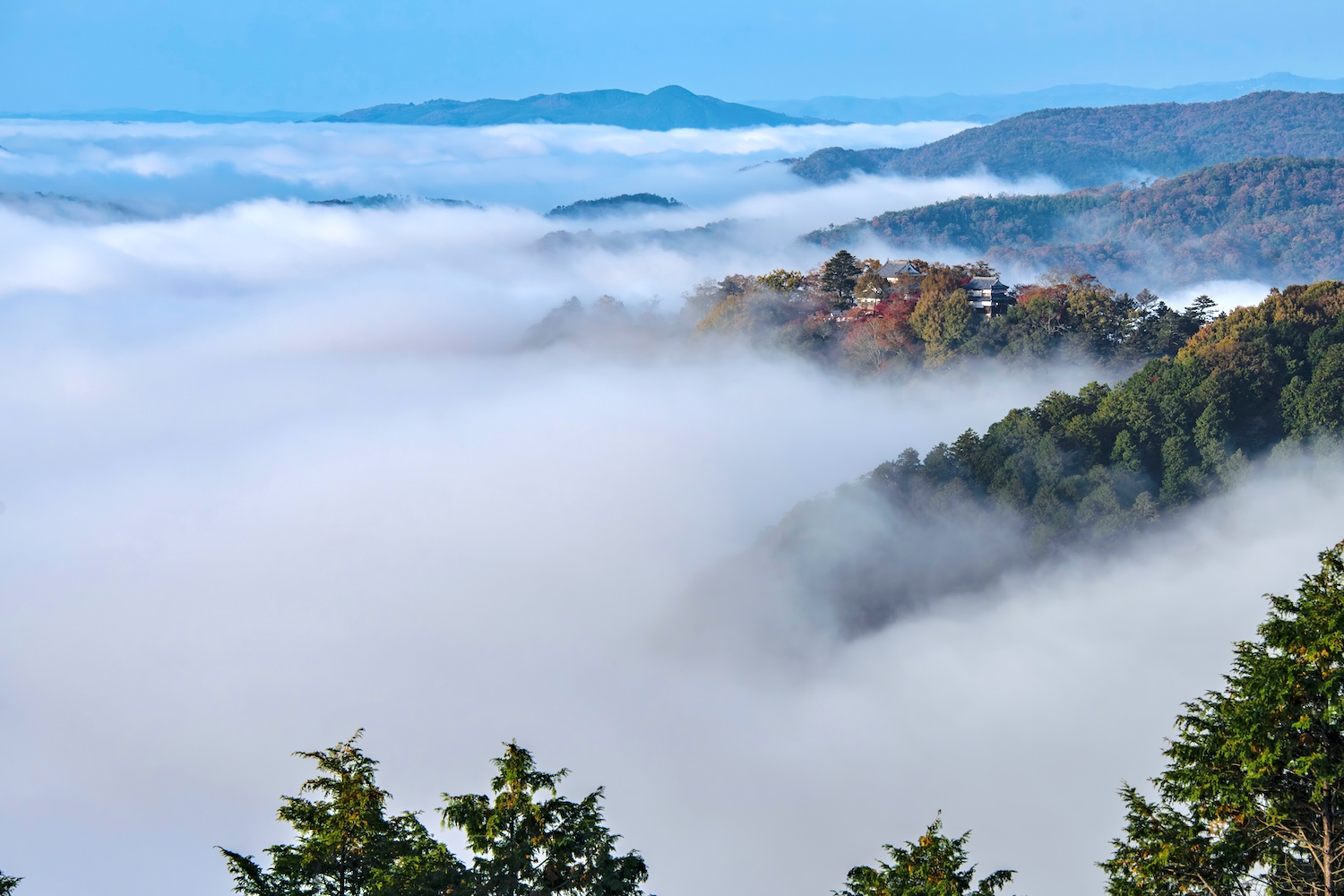
In order to see the Japan castle in the clouds, you have to make sure you’re there when the “Sea of Clouds” (known in Japanese as unkai) is present. Unkai is essentially a phenomenon whereby valleys are filled with fog; since you’ll be seeing the castles from a viewpoint, however, conditions above a certain height will need to be clear. At both Takeda and Bitchu-Matsuyama castles, this tends to be most common during the autumn; you also need to go at the crack of dawn.
Now, in spite of this, unkai is never guaranteed—like a trip to the casino, winning is down as much to your skill and preparation as it is to odds and luck. Additionally, it will be clear from the get-go whether or not you can expect to see the “Sea of Clouds.” It generally doesn’t develop after sunrise on a clear day. Rather, if you get to the viewpoint and unkai isn’t present, you will need to come back another day to see it.
How to See One Japan’s Castles in the Sky
Pick the one that’s closest to you
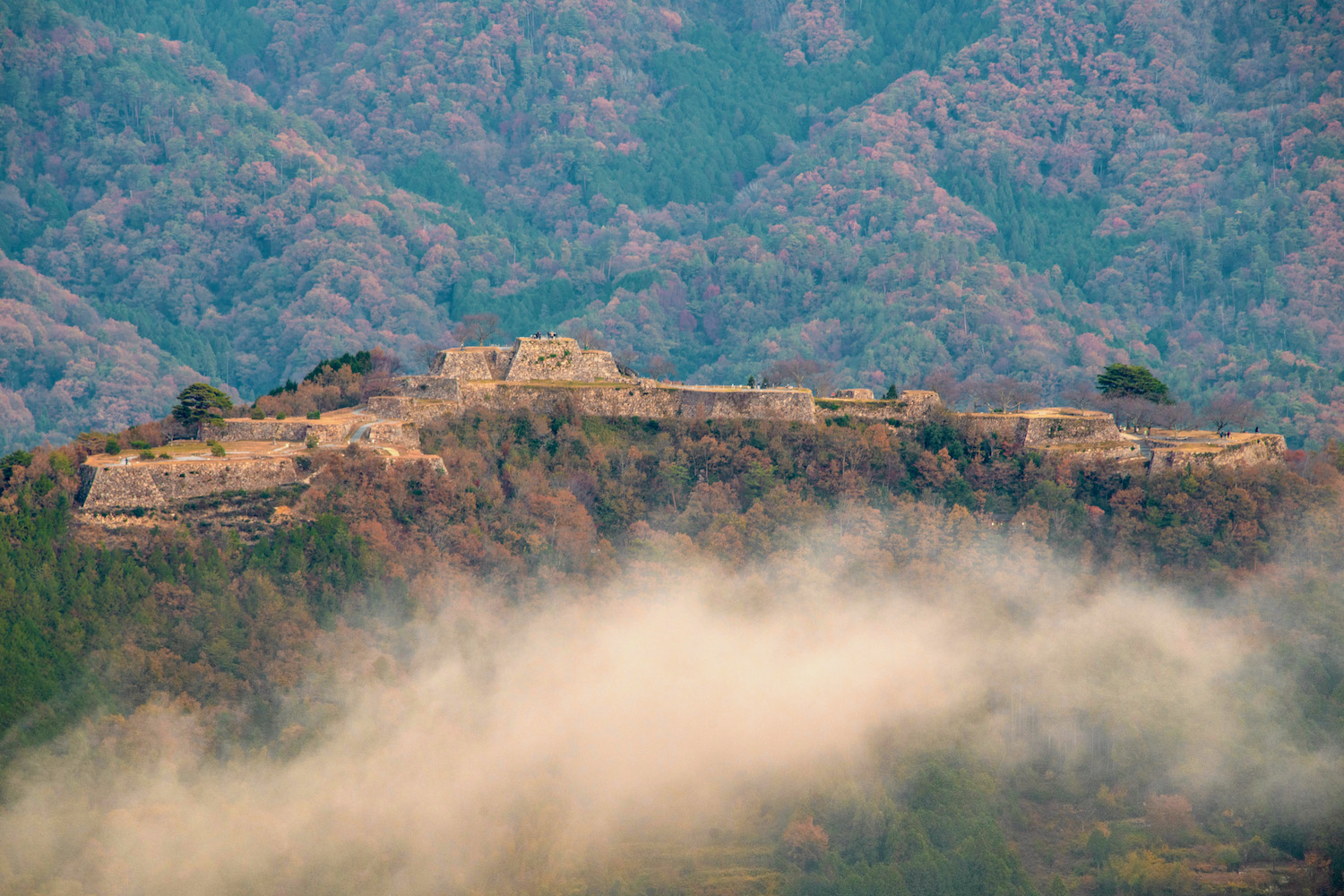
For most travelers, Bitchu-Matsuyama Castle is more easily accessible, given that it’s near the city of Okayama (which is a major Shinkansen hub, and right between Kyoto/Osaka and Hiroshima). Takeda Castle, by contrast, is “close” to both Kobe and Himeji but, as you’ll see, not really.
Plan on renting a car
To be sure, while you can technically reach Bitchu-Matsuyama Castle by public transportation from Okayama, in order to see a Japanese castle in the sea of clouds, you will need to rent a car. For Takeda Castle, by contrast, a rental car is the only realistic option period, given how sparse local train schedules are.
Go to the viewpoint, not the castle itself
As I mentioned above, you will need to go to a viewpoint in order to see either castle in the context of unkai; both of these tenbodai are relatively far from their respective shiro. You can click here for Google Maps directions to the Bitchu-Matsuyama viewpoint, or here for the Takeda one.
Visit during the right time of year
The Japanese castle in the sky phenomenon is relatively rare—it’s far from a 365-day-per-year occurrence. Specifically, autumn is your best bet, within the weeks just before or after the first of November the most reliable. I usually choose the weeks after, as these align with peak autumn colors.
Stay until the right time of morning
Sunrise is key to enjoying unkai, as this is when light begins coming over the horizon to illuminate the scene. For the most beautiful pictures, however, stay until (or arrive after) the listed time by around an hour. This will ensure that bright sunshine hits everything, offering contrast with the clouds—and ensuring you can use a faster shutter speed for less blur!
Other Places in Japan to Enjoy Unkai
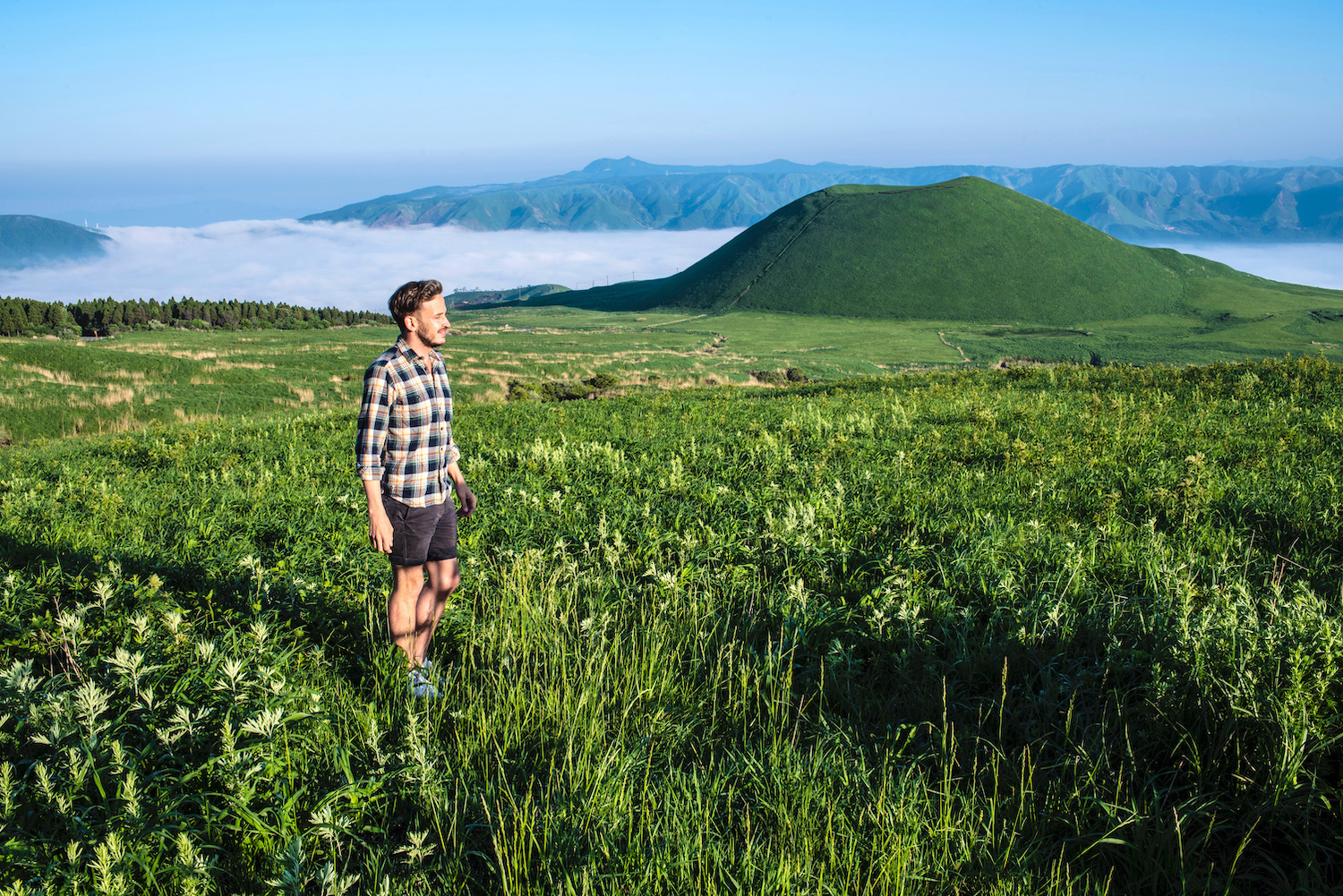
While seeing the “Sea of Clouds” at castles (or, in the case of Takeda, castle ruins) is extremely picturesque, these are not the only sorts of places to see the phenomenon. One of my favorite places to see it was within the gigantic volcanic caldera of Kumamoto prefecture’s Mt. Aso, where it really gave an otherworldly feeling to the scene. Here, by contrast, late spring (so, just after Golden Week in May) is the best place to see the phenomenon.
Another alternative to the Japan cloud castle is in Shikoku’s Iya Valley. While this is also a place you’ll want to visit in autumn (and early in the morning) for the best chances of seeing it, the clouds fill a ravine without any architecture adding context to them. This doesn’t diminish the beauty of the scene, in my opinion, but it is something of which you should be aware in order to avoid disappointment.
Other FAQ About Japan’s Castle in the Sky
Is Takeda Castle worth visiting?
Takeda Castle is worth visiting in certain situations, namely if you look over and down on it from its observation deck during autumn, when the unkai or sea of clouds is swirling around it. However, since Takeda-jo is in ruins and is not an “original” Japanese castle, it’s not especially interesting to visit on an ordinary day and in a normal context.
What is the sea of clouds in Japanese?
The sea of clouds phenomenon is known as 雲海 (unkai) in the Japanese language. It tends to occur in autumn (and, in some cases, spring) when a combination of humidity and warmth causes valleys and gorges to fill with fog, while the sky at the level of the mountain peaks around them stays clear.
Where can I see the sea of clouds in Japan?
The most popular places to see the sea of clouds phenomenon in Japan are both castles: Okayama’s Bitchu-Matsuyama Castle, which is one Japan’s remaining 12 “original” castles; and Takeda Castle (which is in ruins) in Hyogo prefecture not far from the city of Kobe.
The Bottom Line
Photographing the Japanese castle in the clouds requires both coordination and luck. Step one? Deciding which one you want to visit. While Hyogo prefecture’s Takeda Castle (which sits in ruins) is the most famous example of this phenomenon, I personally prefer Bitchu-Matsuyama Castle in Okayama, in part because it’s one of Japan’s 12 remaining “original” castles. The second step is visiting during the time(s) of year when the unkai (sea of clouds) is likely to appear. Beyond these factors, you’ll want to be mindful of lighting, camera settings and even the lens you use, though these aspects are easier by comparison. Need personalized help with your next trip to Japan? Considering hiring me to plan it!