


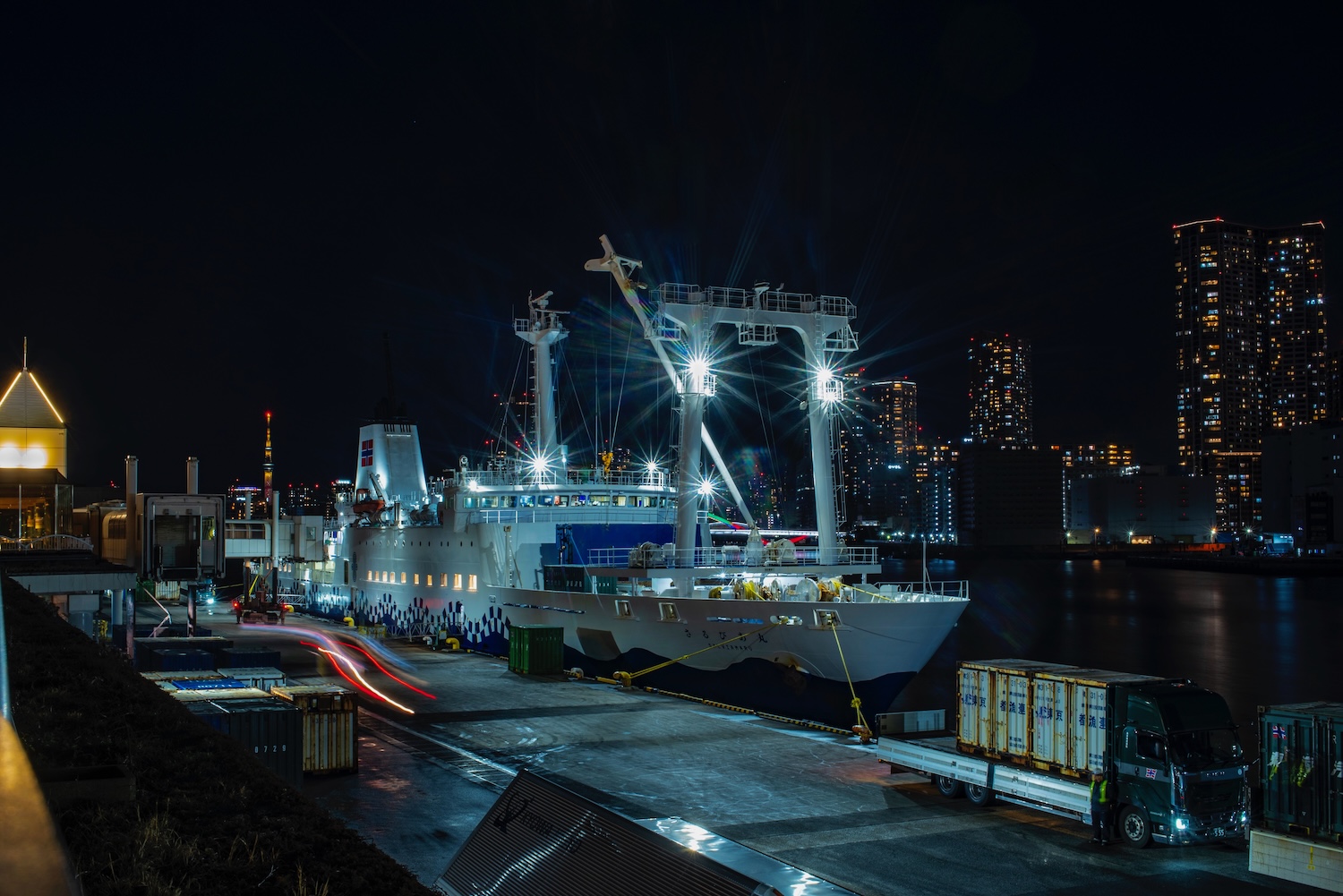
As I walked eastward toward Tokyo Bay from Hamamatsucho Station one cold evening in February, a massive, artificial mast stood imposingly in the distance. It was surprisingly on-the-nose, even for Japan, and shattered any ambiguity I might’ve felt about whether I was actually headed in the right direction.
It was strange, after more than a decade of exploring Japan, to be visiting the capital’s ferry terminal for the very first time. It was also thrilling—and stressful, given how surprisingly ambiguous the boarding process was.
Of course, taking a Tokyo to Izu Islands ferry isn’t ultimately a difficult experience, at least not once you’ve done it. Hopefully, reading this article will help you past some of the confusion I felt.
Why I’m Just Now Visiting the Izu Islands
The Izu Islands have long been on my radar. In fact, before covid-19, I’d planned for them to be the focus on my 2020 summer trip, which would’ve seen me make a brief stop in the city for the Olympics, before riding a Tokyo to Izu ferry. Obviously, I’m upset that trip didn’t happen, if only because I’m still bitter that Japan closed its borders for almost three years over a virus with a <1% fatality rate.
On the other hand, giving the trip (trips, actually—I’ve realized I can’t and shouldn’t see all the islands in one go) more time to germinate has allowed me to become a more intentional travelers and a better photographer. And it’s forced me to realize that while many of the islands are best seen in summer, this isn’t uniformly the case. The camellia of Toshima, for example, mean that it’s more impressive as a winter destination.
Things to Know About Ferries from Tokyo
Jetfoils are the fastest
As is the case elsewhere in Japan, jetfoil ferries (which literally float above the water) represent the fastest ships available to the Izu Islands, with trips to Izu Oshima taking less than two hours one way. Unless you are absolutely strapped for time, this will almost certainly be your preferred means of travel.
(But they aren’t always available)
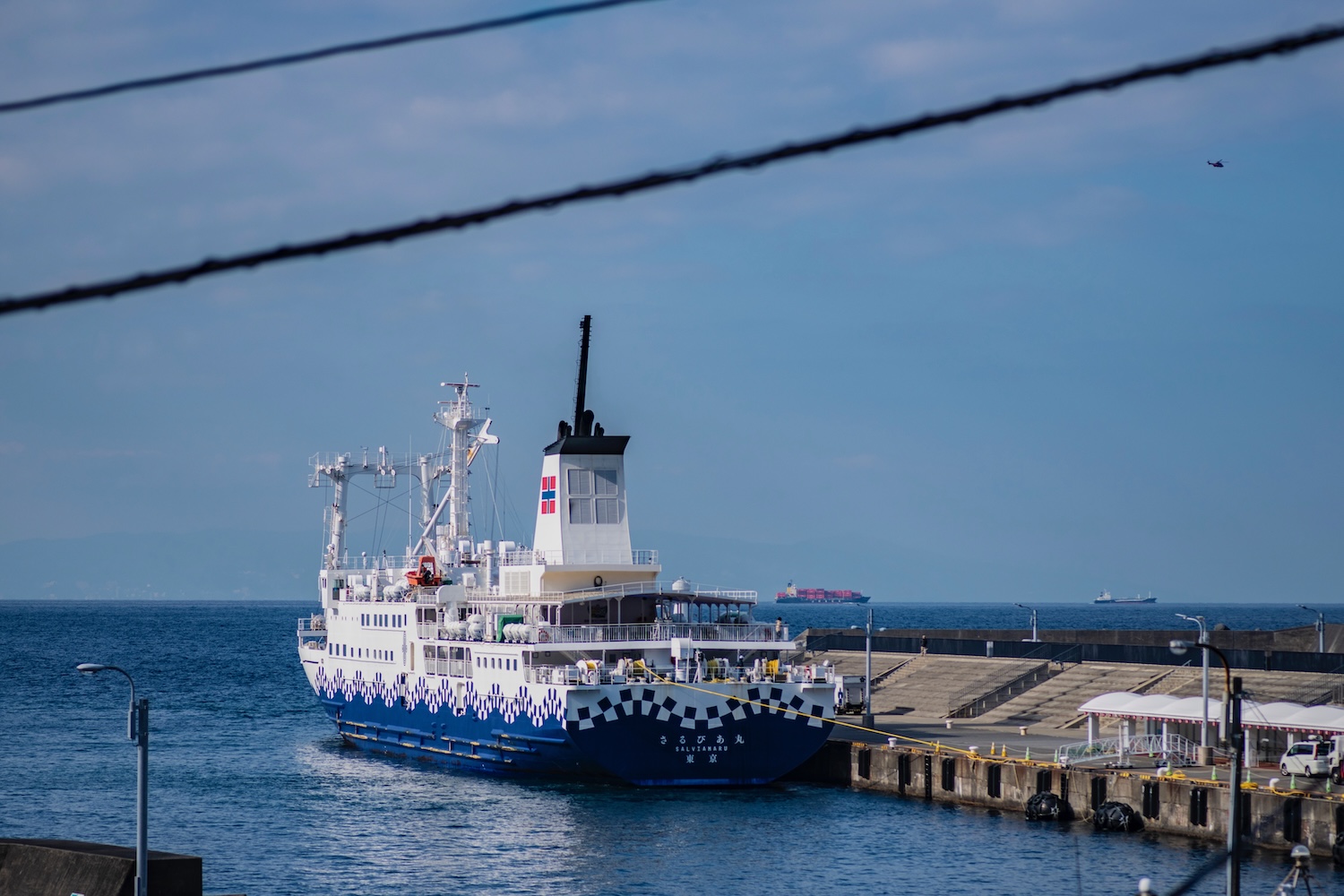
That, or if the only ferries from Tokyo are the slow ones. This is generally the case outside of peak summer months, when jetfoils travel only to Izu Oshima, and anyone who wishes to visit one of the smaller, more distant islands is forced to travel via one of the larger passenger ships, such as the Salvia Maru.
A larger ship may be the better option
It should go without saying that if the schedule requires it, you’ll have no choice but to ride a larger, slower ship. Irrespective of this, however, the larger ships are somehow the better option. They often travel at night or outside of peak times, for instance, and can save you a night in a hotel (which, in these islands, can sometimes be hard to come by).
(Especially if you can splurge)
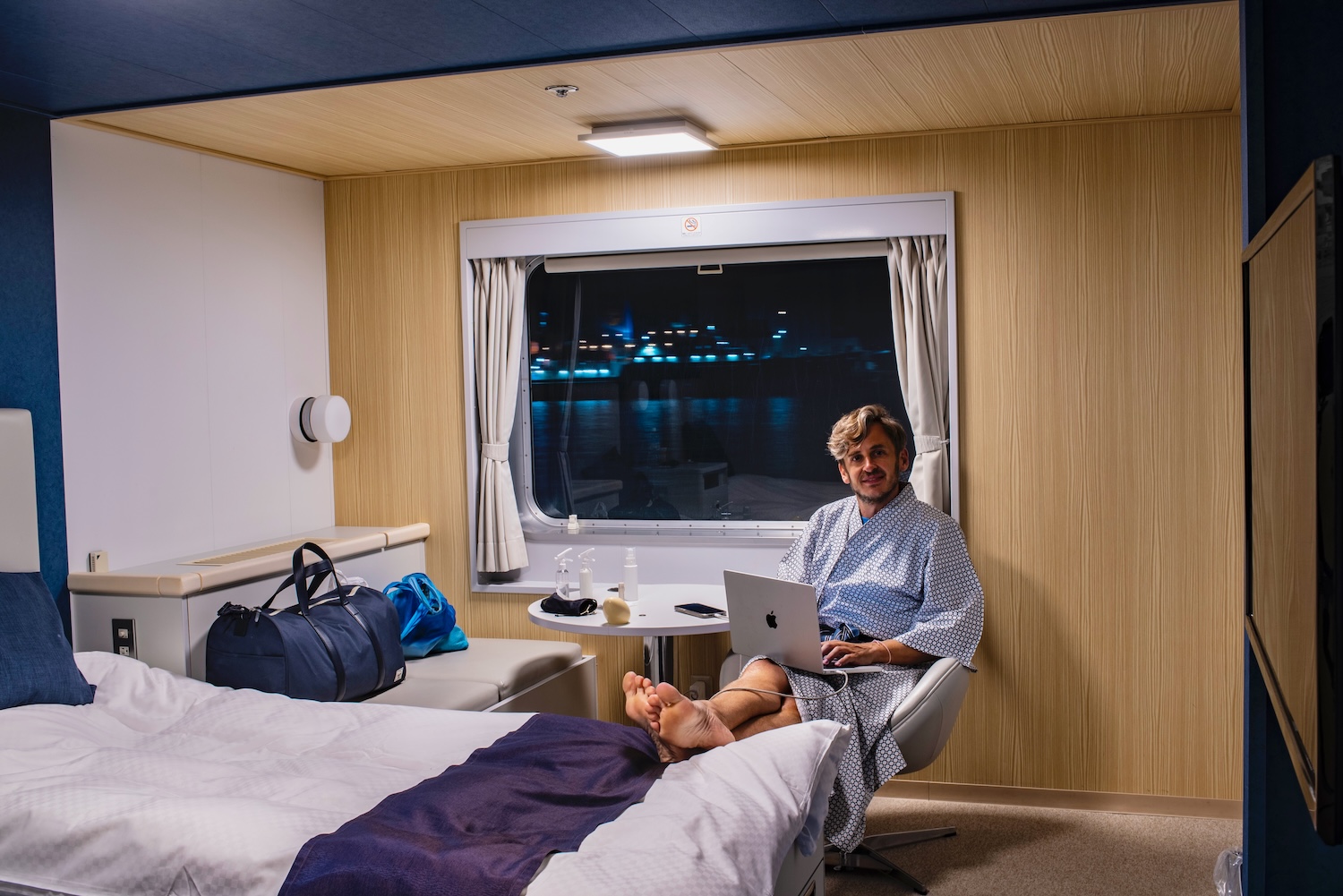
Here’s a tip: When book a ferry to Tokyo from the Izu Islands, or vice-versa, use the Japanese-language Tokai Kisen website (and translate it, if need be). This will allow you not only to login, create an account and book your own tickets (the English website, by contrast, makes you fill in a form to request someone else to book the tickets for you), but is also the only way you can book the deluxe first-class cabins, which are private rooms with real beds and hot showers.
Flexibility is essential
I know from first-hand experience that ferries (both slow and fast) in Japan are not nearly as reliable as trains or planes. Two of the three ships I took on my short trip to Toshima were delayed or canceled, and from what the owner of my Toshima guest house told me, this is not uncommon. Leave some space in your itinerary, or risky having to skip destinations and experiences.
Other Ways to Visit Tokyo’s Remote Islands
At the moment I’m first writing this article, I’ve only visited Toshima, and only by ferry. I currently have at least two more trips to the islands planned, and they will use a variety of modes of transport. For my first summer trip to the northern Izu islands, I will primarily get by using jetfoils, which operate at a much higher frequency during the warmer months than they do in winter.
As far as traveling from Tokyo to southern Izu islands, and then between them? This is where it gets more interesting. I’ll be writing a second post about the ins and outs at a later time, but the reader’s digest version is that I’ll be flying to Hachijojima, the “main” island, and then taking a lot of helicopters. Which is terrifying—I don’t like choppers—but also exciting, if only because of opportunities for aerial photography.
Other FAQ About Riding Ferries from Tokyo
How do I get to the Izu Islands from Tokyo?
Most of the Izu Islands are accessible via boat from Tokyo, though how long you’ll need in transit and what sort of boat you need to take really depend. If you go in winter, you’ll most likely need to take a large passenger ship, which can require either an all-day journey or an overnight one to reach most of the islands. Jetfoils are faster, but are only really practical in the summer.
How far is Tokyo from the Izu Islands?
The Izu Islands range from being just 100 km south of Tokyo (Izu Oshima) to being close to 1,000 km away, as is the case for the southern Izu islands and the Ogasawara Islands. Likewise, travel time can vary greatly, from flights and fast jetfoil ferries, to large passenger ships that take the better part of a day.
Is Oshima Island worth it?
Izu Oshima is a huge island with a large number of unique experiences and not very many tourists. If you have time in your itinerary and the patience to get there, it definitely has a high ROI as a travel destination. At the same time, it’s not as flashy or show-stopping as other places in Japan, and you should set (or, rather, not set) your expectations as such.
The Bottom Line
The Tokyo to Izu islands ferry was way more enjoyable than I expected. Once I got onboard, and especially since I booked a private suite on my way down to Toshima, I wondered why I didn’t travel this way more often. It was wonderful to wake up in a new destination, even if I did also wake up in the dead of night once or twice, due to the motion of the boat. While I would probably still opt for a faster jetfoil if available, the reality is that a slower ship is sometimes the only option. Need personalized help putting together an island-hopping trip from Tokyo? Commission a custom Japan itinerary today, and let me sweat the details.