


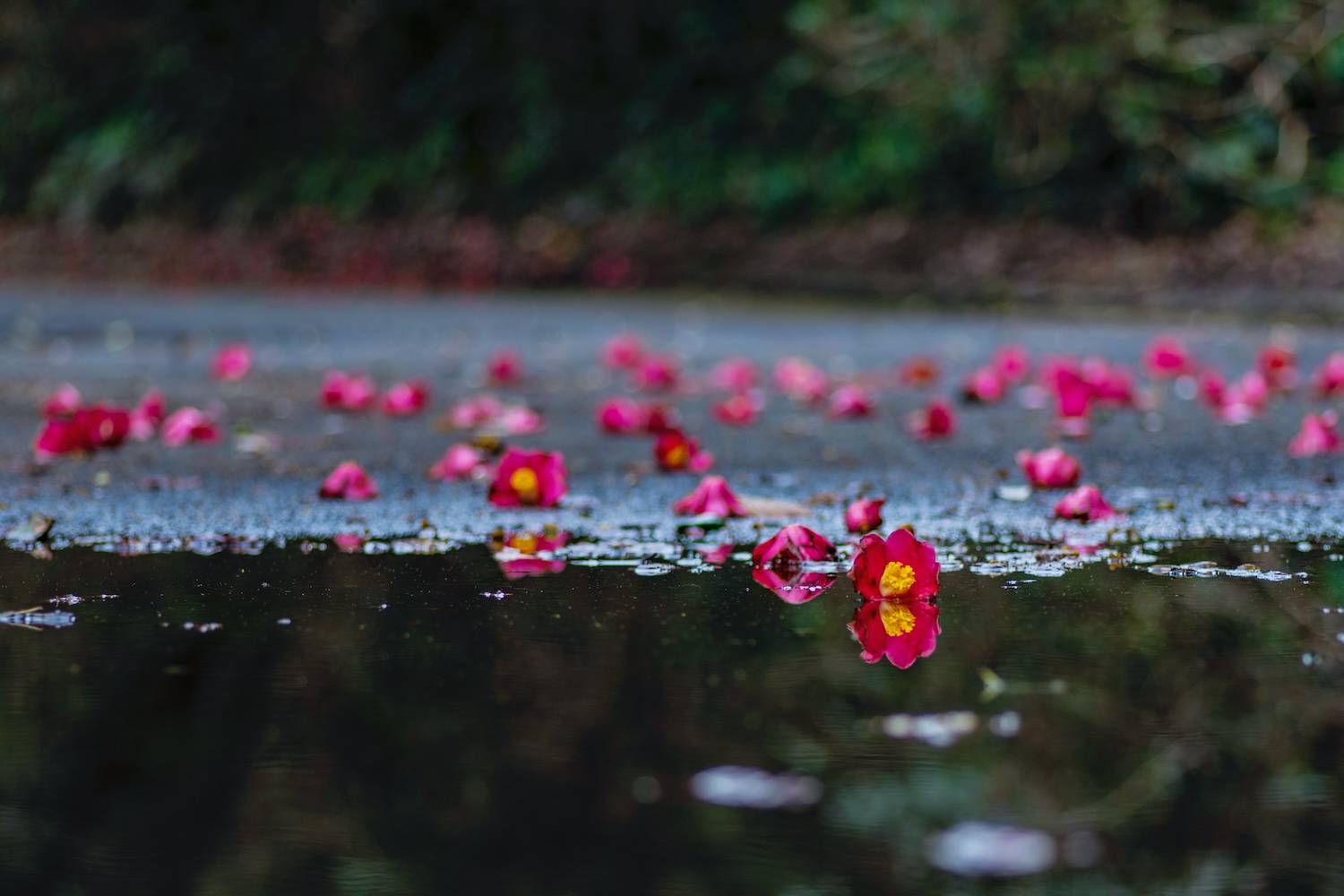
If you read this blog with any regularity, it’ll be no secret to you that I’m kind of a flower nerd. I’ve taken dedicated trips to Japan not only for the popular sakura, but for all other kinds of seasonal blooms.
Of course, Japan is the perfect country for this. From the ubiquitous ajisai (hydrangeas) of early summer, to the much more obscure manjushage (spider lilies) that appear in certain forests in September or October, Japan literally invented a word (hanami) for “flower viewing.”
Now, even in this context, I’ll admit: It’s a bit uncommon to focus specifically on camellias in Japan, for reasons I’ll explain later in this post. Still, I don’t think you’ll be disappointed if you come across a large grove of them.
How I First Became Aware of Tsubaki
The first time I really noticed Japan tsubaki was back in 2018, when I was visiting my friend Suguru in and around Tokyo. I remember seeing what I now know to be camellia bush, and being both taken aback and puzzled by its beauty. “Is that tree unique to Japan?” I asked him, genuinely ignorant, and not to my knowledge having ever seen one anywhere else in the world. He nodded. “It is, so far as I know.”
Since then, I’ve always been awake of the flowers, and became especially mindful of them once I realized that the generally bloomed in winter time. At the same time, I never went out of my way to see them; I presumed they were just a ubiquitous presence in Japanese cities, and not a plant that grew in high enough concentration to be remarkable. Well, at least until my trip to the Goto Islands in 2024.
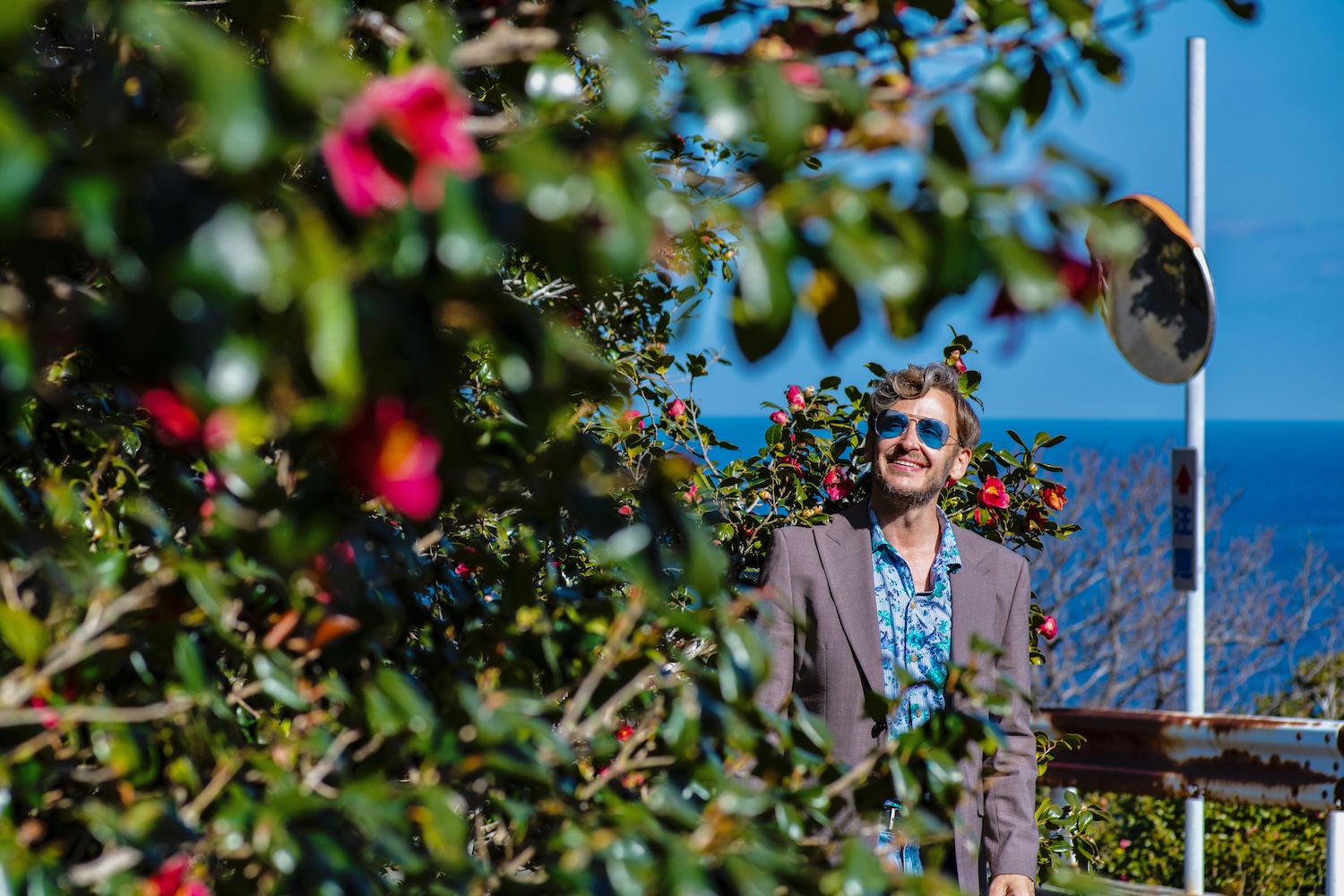
Amazing Places to See Tsubaki in Japan
Toshima Island, Tokyo
Although camellia also exist on the larger (and easier to visit) Izu Oshima island, they cover a greater percentage of the surface of smaller Toshima, make their display there more impressive. On the other hand, both transport to get here and accommodation once you arrive are scarce, so plan well in advance of the flowers’ January/February peak.
Fukue Island, Nagasaki
Toshima is ostensibly close to Tokyo, but Fukue island near Nagasaki is arguably a more reliable place to see camellia in Japan. There are more ways to get here and much more accommodation on the island, which is home to a large camellia garden. Plus, Fukue is one of many exciting islands in the Goto chain, to say nothing of nearby Tsushima and Iki.
Mt. Kasayama Camellia Grove, Hagi
As you’ll know if you read this site with any regularity, I’m a massive fan of Hagi, a former Samurai town in Yamaguchi prefecture. Beyond all the town’s fundamentals, its seasonal displays are beauty are second-to-none, and the Mt. Kasayama Camellia Grove just up the coast from the old castle town is no exception. Go here in the morning, and then to Motonosumi Inari Shrine in the afternoon.
Kurume Camellia Garden, Fukuoka
Another spot to see these Japan winter flowers is Kurume Camellia Garden, located in Kurume (surprising, right?) a city in Fukuoka prefecture about 20 minutes by train from Hakata Station. The tsubaki here bloom relatively early (sometimes even before the end of the year), so prioritize this place if you plan to be in northern Kyushu in December or January.
Kenroku-en Garden, Kanazawa
It probably won’t shock you to learn that Kenroku-en (Japan’s best traditional garden, and one of its most botanically diverse) is home to a camellia grove. It isn’t massive or show-stopping, but it certainly adds a pop of color to a winter visit to Kanazawa, particularly if you happen to come on a snowy day.

Other Winter Flowers in Japan
It surprises a lot of people, but winter can actually be a great time to see flowers in Japan. Certainly, these ones lend a lot of color to an otherwise bleak season:
- Whether on Chiba‘s Boso Peninsula or along the Echizen Coast in Fukui, daffodils (specifically, the smaller narcissus variety) bloom as early as January.
- Speaking of peninsulas near Tokyo, the Izu Peninsula is home not only to the increasingly well-known kawazu-zakura, but its even earlier-blooming cousin the Atami-zakura.
- Likewise, the kanhizakura that bloom in Okinawa usually reach their peak in the last few days of January or the first few days of February.
- Plum blossoms (ume) are associated with the coming of spring, but actually bloom in winter, with February being their peak along most of Japan’s tourist trail.

Other FAQ About Camellias in Japan
When do camellias bloom in Japan?
Camellias bloom in Japan’s winter season, or even in late fall. Specifically, you can see the trees blooming as early as December in much of the country, though they tend to reach their peak in January and February. On the other side of the bloom, most tsubaki flowers have fallen by April or May.
Where is the best place in Japan to see camellias?
Japan’s highest concentrations of camellias are found on Toshima island south of Tokyo, and on Fukue island west of Nagasaki. However, you can find the trees and shrubs in and around Japanese cities, both out in the wild and also within parks and traditional Japanese gardens.
What kind of flowers can I see in Japan in January?
Camellias (tsubaki in Japanese) are one of the easiest flowers to see in Japan in January. Depending upon where you are in the country, however, you may also be able to see daffodils, plum blossoms (ume) or various early-blooming species of cherry blossoms.

The Bottom Line
I’ll admit that even I might not take a trip explicitly dedicated to camellias in Japan. They don’t cover their trees nearly as fully as other popular flowers in Japan (namely, cherry blossoms), and because they bloom in winter, you can’t be guaranteed pleasant weather as you explore the places where you find them. On the other hand, they are ubiquitous and long-lasting enough that you can pretty easily incorporate them into your existing winter sightseeing, as long as you leave a little bit of space for them. Want personalized help determining where tsubaki might fit into your plans? Hire me to plan a custom Japan itinerary!