


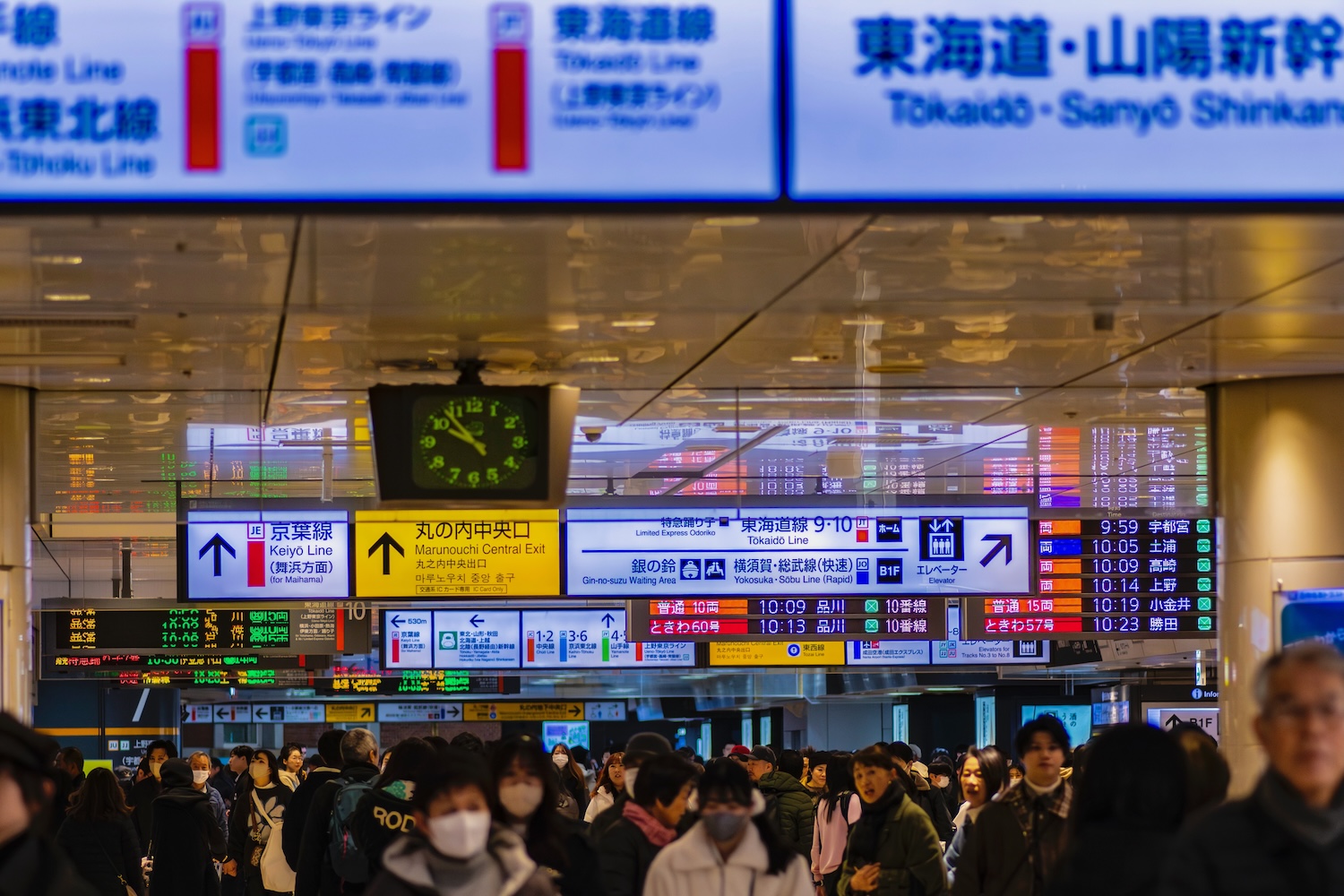
I didn’t formally study Japanese until almost seven years after my first visit to Japan, though that doesn’t mean I got by entirely in English. During that trip (and especially, the first few I took after that), I quickly learned a variety of words and phrases, and used them as often as I possibly could.
Now, allow me to be clear: You don’t “need” to speak Japanese in order to travel in Japan successful. Most of the people you’re likely to encounter as a visitor (especially one on Japan’s tourist trail) can speak at least some English.
With this being said, learning some Japanese phrases for travelers will earn you a lot of goodwill. It might even help you make some local friends!
For Travelers, Knowing Japanese Isn’t Necessary—But It Is a Good Idea
Now, I won’t make false promises. Learning some basic Japanese for travelers isn’t going to make your trip much easier from a practical standpoint. And conversely, if you choose not to learn any, it’s unlikely that you will fly home having followed a significantly different trajectory than if you had. Still, as I mentioned in the introduction, it’s all about the interactions and the energy—you’ll get more smiles, kinder eyes and more good vibes everywhere you go.
For significant tangible benefits, some kind of formal Japanese study is really the only way to go. However, if you can’t take an in-person course in Japan (and more about my thoughts on those, after the phrases themselves), there is a sort of mid-point. Namely, learning one or more of the Japanese writing systems: Hiragana, the “curvy” script that’s used for Japanese words; Katakana, a simpler one that typically represents foreign words; and maybe even some basic Kanji, aka Chinese characters. You can do it!
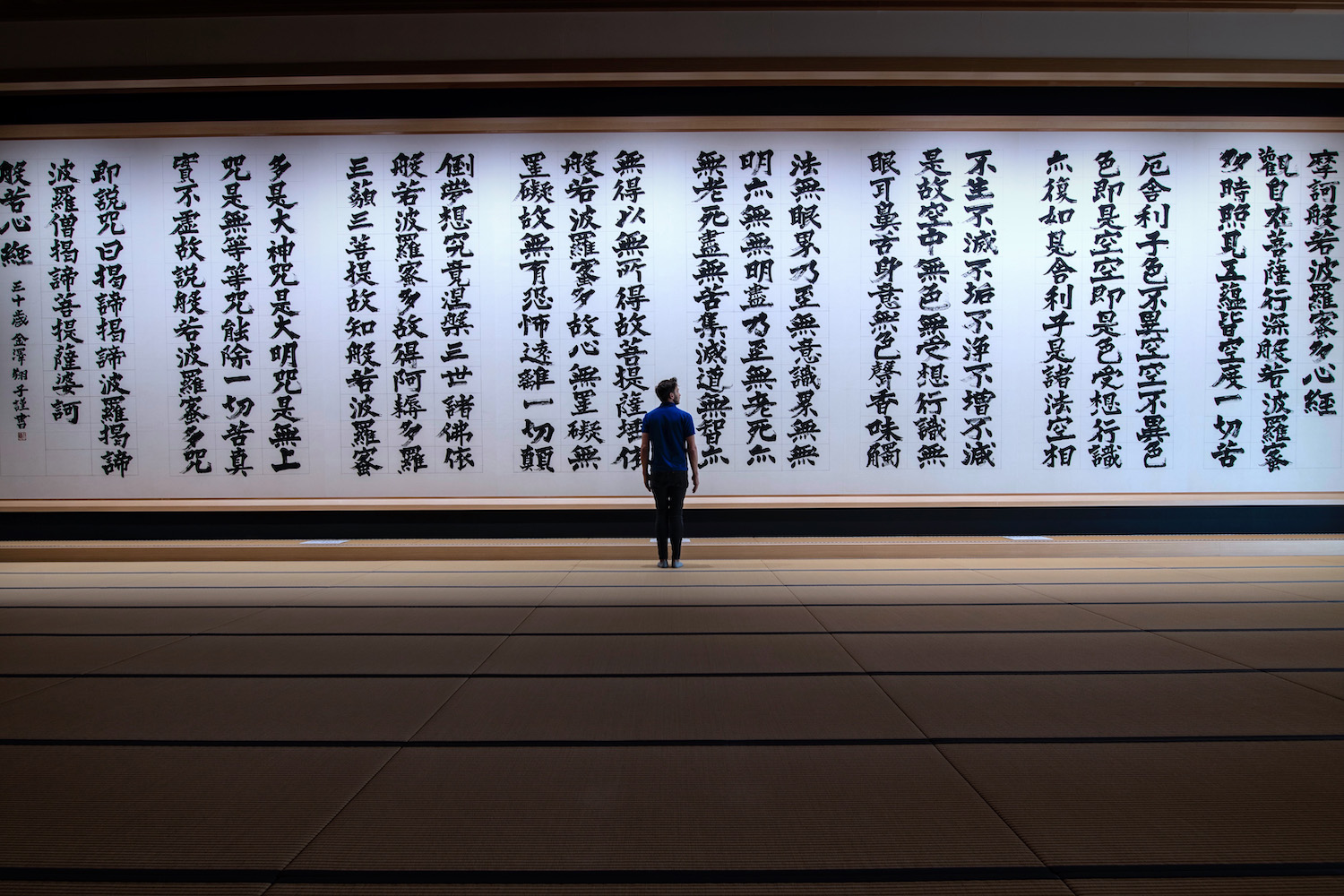
Basic Japanese Phrases, by Category
Greetings
These greeting-style phrases are perhaps the most important to know prior to traveling Japan. Note that when in doubt, you can always just say “Konnichiwa”!
- Good morning Ohayō gozaimasu
- Good day Konnichiwa
- Good evening Konbanwa
- Goodbye Sayōnara
- Nice to meet you (common) Yoroshiku onegaishimasu
- Nice to meet you (literal) Hajime mashite
Requests and acknowledgements
On the other hand, while these sorts of phrases generally make it easy to travel Japan, none (with the possible exception of “Arigatō”) are absolutely necessary to learn.
- (Item or request) please (casual) (Blah blah blah) kudasai
- (Item or request) please (formal) (Blah blah blah) onegaishimasu
- I see Sō desu ka
- I understand Wakarimasu
- That’s OK Dai jōbu desu
- Please say that again Mō ichido onegaishimasu
- Thank you (very much) Arigatō (gozaimasu)
Compliments
If your Japan trip will be food-focused (and let’s not kid ourselves—it will be!), make sure to commit the first phrase here to memory. The others are nice extras to have, depending on how much you plan to try and speak to local people.
- That’s delicious Oishi desu
- You are kind (Anata wa) shinsetsu desu
- You are handsome (Anata wa) han-sa-mu desu
- You are beautiful (Anata wa) kirei desu
Apologies and admissions
Japan is an extremely polite country, which is why these sorts of phrases are so important, even if they might not seem fundamental to learn when you’re staying Japanese for tourists.
- Excuse me Sumimasen
- I’m sorry Gomen nasai
- I don’t understand Wakarimasen
- I don’t speak Japanese Nihongo ga hanasemasen
Questions
Obviously, a couple of these questions—namely “where is the toilet?” and “Can you speak English?”—are more life-and-death important than the others. Still, knowing how to form questions in Japanese (and to understand when others are questioning you) is helpful.
- Where is (place)? (Place, person or thing) wa doko desu ka?
- Where is the toilet? Toi-re wa doko desu ka?
- Where are the police? Kei-satsu wa doko desu ka?
- How much does it cost? Ikura desu ka?
- Can you speak English? Ei-go ga hanasemasu ka?
When to Consider a Formal Japanese Course
I studied Japanese formally for nearly a year, after years before that of having wondered whether I should. Ironically, this saw me entering Japan on my student visa in the final week of 2020, just days before Japan’s second (ostensibly) pandemic-related entry ban of that year took effect. Suffice it to say, learning Nihongo from people wearing masks was an awkward experience—especially since I was wearing one myself!
Now, I do still think studying Japanese in Japan is worth it, especially since in non-pandemic times you can take a shorter course than I did on your normal visa exemption stamp. As far as who should consider such a course? Well, if you plan to visit Japan multiple times (and particularly, if you think you may wan to go as far off Japan’s beaten path as I often do), it might be a good idea for you.

Other FAQ About Japanese Phrases for Travelers
What are 5 must-know phrases to know when traveling to Japan?
In my opinion, the five most important Japanese phrases are as follows: Konnichiwa/Ohayō/Konbonwa—Hello/good morning/good evening; Arigatō—Thank you; Sumimasen—Excuse me; Ei-go ga hanase-masu-ka?—Do you speak English?; Toi-re wa doko desu-ka?—where is the toilet?
How do I say “I’m sorry” in Japanese?
There are a couple of ways to say “I’m sorry” in Japanese. If you simply want to excuse yourself (without formally apologizing), sumimasen is perfectly sufficient. Gomen nasai, by contrasts, is a bit heavier, and usually implies actual or perceived wrongdoing.
How severe is the language barrier in Japan?
The language barrier in Japan is noticeable, and often even annoying. However, as of the late 2020s, it is unlikely to practically impede your trip. The easiest way to bridge this gap is to learn some basic Japanese phrases, which will ingratiate you to locals, even if it doesn’t allow you to converse fluently with them.
The Bottom Line
The good news? You don’t need to memorize my list of Japanese phrases for travelers in order to travel in Japan without incident. The better news? If you do decide to learn a bit of Japanese, it will exponentiate the kindness and hospitality you receive from locals in Japan. The reality is that more people than ever speak English in Japan. It’s also true, however, that acquiring a dozen or two basic word and phrases requires minimal effort on your part, in spite of yielding potentially significant rewards. Need personalized help planning out your next trip to Japan, potential language classes notwithstanding? Commission a custom Japan itinerary today!