


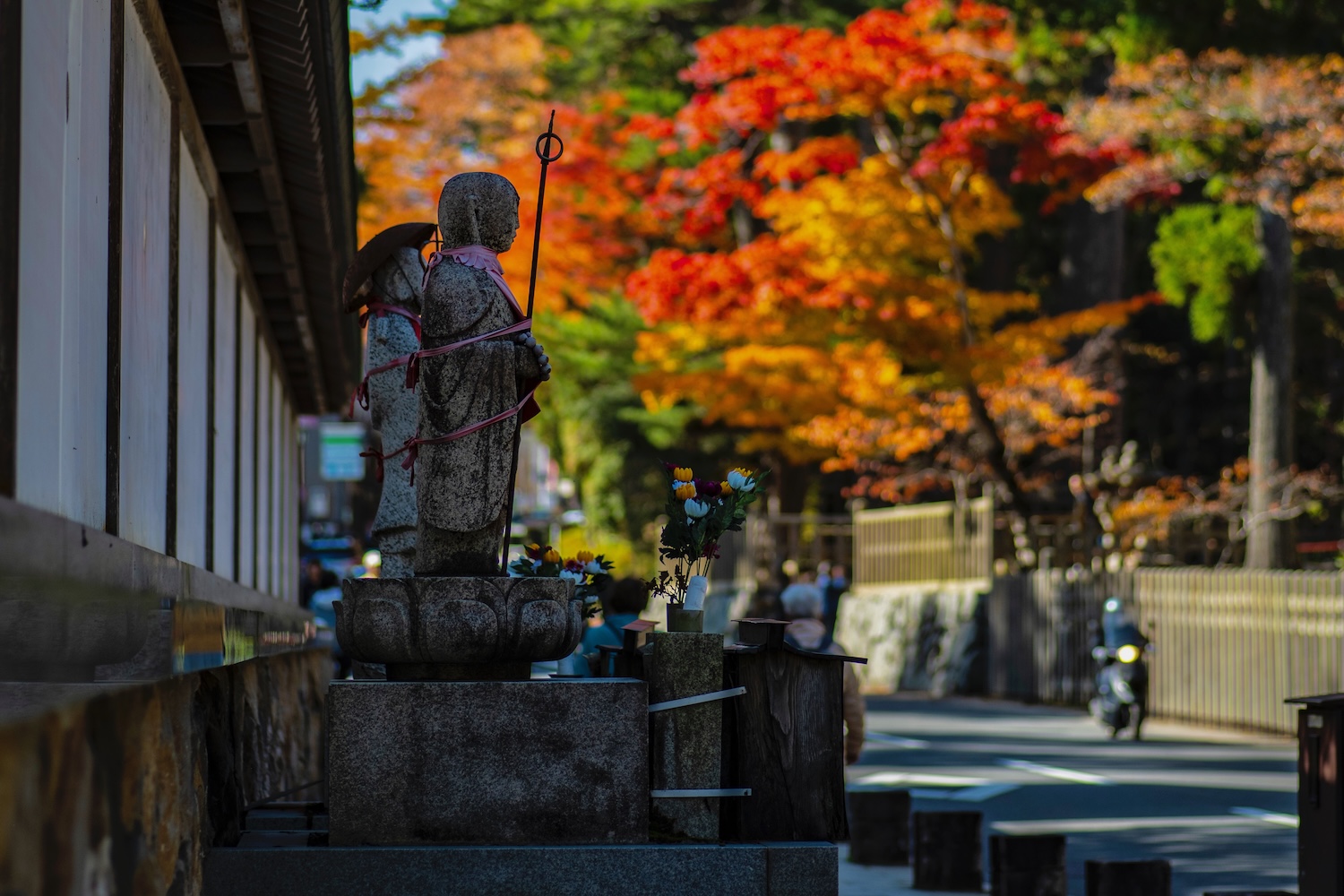
The first time I visited Koyasan was arguably at the worst time of the year to go. It was in mid-May, long after the last cherry blossom had fallen, but before anything resembling warm air was present within a few hours of sunrise or sunset.
I remember arriving at Daimon gate after hiking eight hours from Kudoyama Station, overheated from the trek, but freezing from the air around me. I spent my entire time at the summit in wonder of the culture and scenery around me, but also feeling regretful: Wouldn’t it all be better during a more beautiful month?
It took me nearly a decade (and visits during the depths of winter, and other seasons) to experience Koyasan in autumn, but I can now say that my hypothesis was correct. Here’s what you need to know if you wish to follow in my footsteps.
Koyasan Peaks Earlier Than the Rest of Kansai
Although all of the pictures in this article are from 2025, I actually made my first Koyasan autumn attempt seven years earlier. I’d decided to spend an entire week in Kyoto during the peak of fall colors and, finding myself with a free day in the middle of it, got a wild hair and decided to make a day trip to Koyasan. It was a gorgeous day with clear skies and warm weather; I had a fantastic feeling about it.
Unfortunately for me, I arrived at the mountaintop to find almost all non-evergreen trees bare. This puzzled (and disappointed me) at the time but now, makes perfect sense: Mt. Koya is several thousand feet higher than Kyoto’s city center, and although the air temperature wasn’t markedly different on that particular day, the overall climate meant that leaves there had peaked a few weeks earlier (during the first or second week of November, as is the case in most years).
My Favorite Koyasan Autumn Color Spots
Danjo-garan
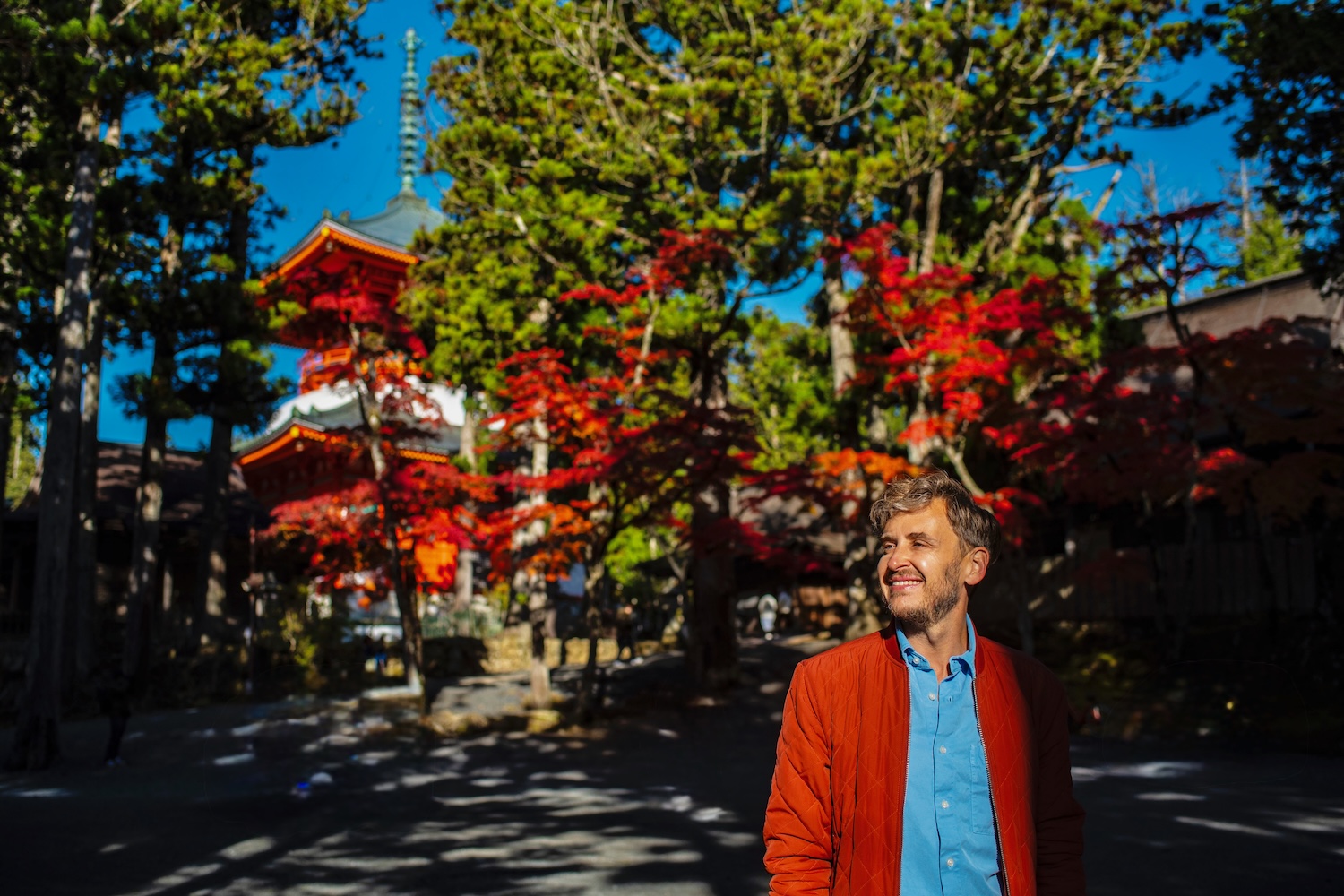
The Danjo-garan sacred complex is rightly known as the centerpiece of Mt. Koya any day of the year, in large part due to the massive Konpon Dai-to pagoda. While there aren’t a whole lot of maples and ginkgoes immediately within the core temple area, they add a great deal of color around it, so I do recommend starting here.
Koyasan Reihokan Museum
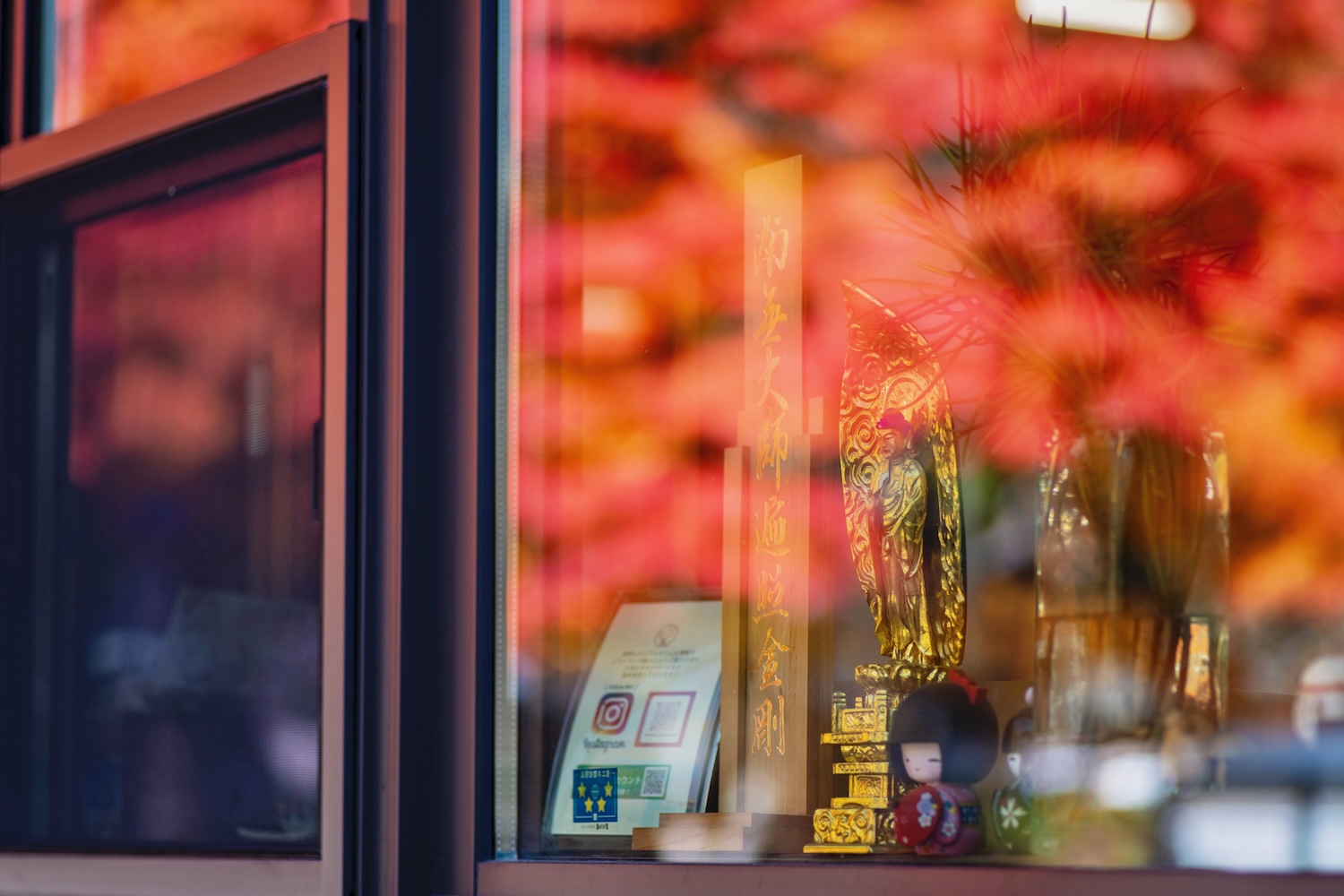
The bad news? The Koyasan Reihokan Museum has a strict no-photography policy inside its building, which is a shame because it’s home to some truly fascinating artifacts. The good news? There’s plenty of autumn color on offer outside of the building, which is why I’ve added it to my Koyasan autumn itinerary anyway.
Koyasan Central Street

Heading through Koyasan town from Danjo-garan and the museum and past Kongobu-ji toward the cemetery is where I consider the sweet spot of autumn color to be. It’s not just that there are a lot of different trees (though this is true), but rather than they exist in perfect proportion to built structures and the evergreens that rise high above them.
Okuno-in
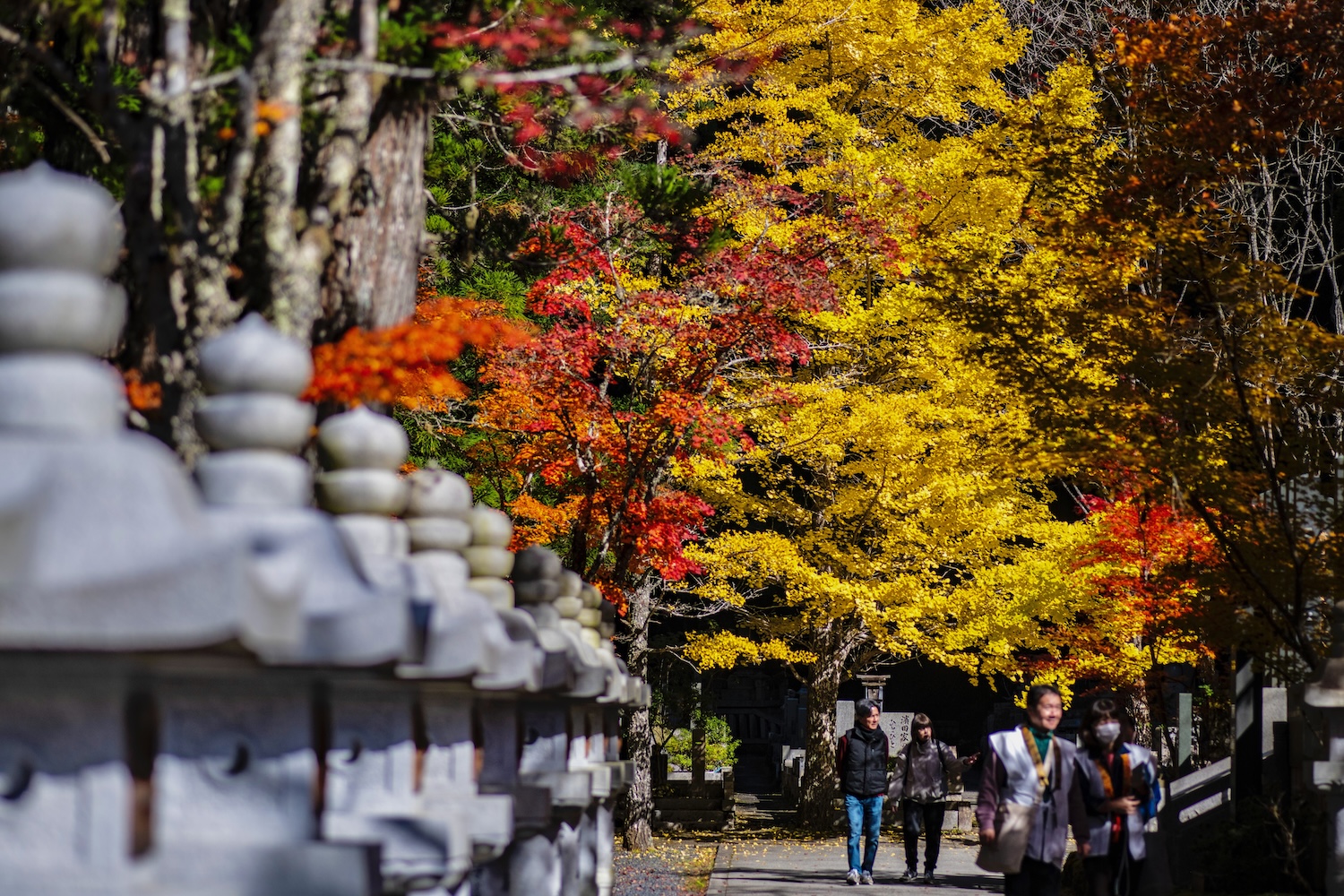
Speaking of the Okuno-in cemetery, it’s one of my favorite places to visit in Mt Koya in autumn, in spite of how much of its surrounding forest is made up of cedars and other non-changing trees. In particular, it’s home to some of the most beautiful ginkgoes atop Mt. Koya, though many of the maples are wonderful as well.
Daimon gate at sunset
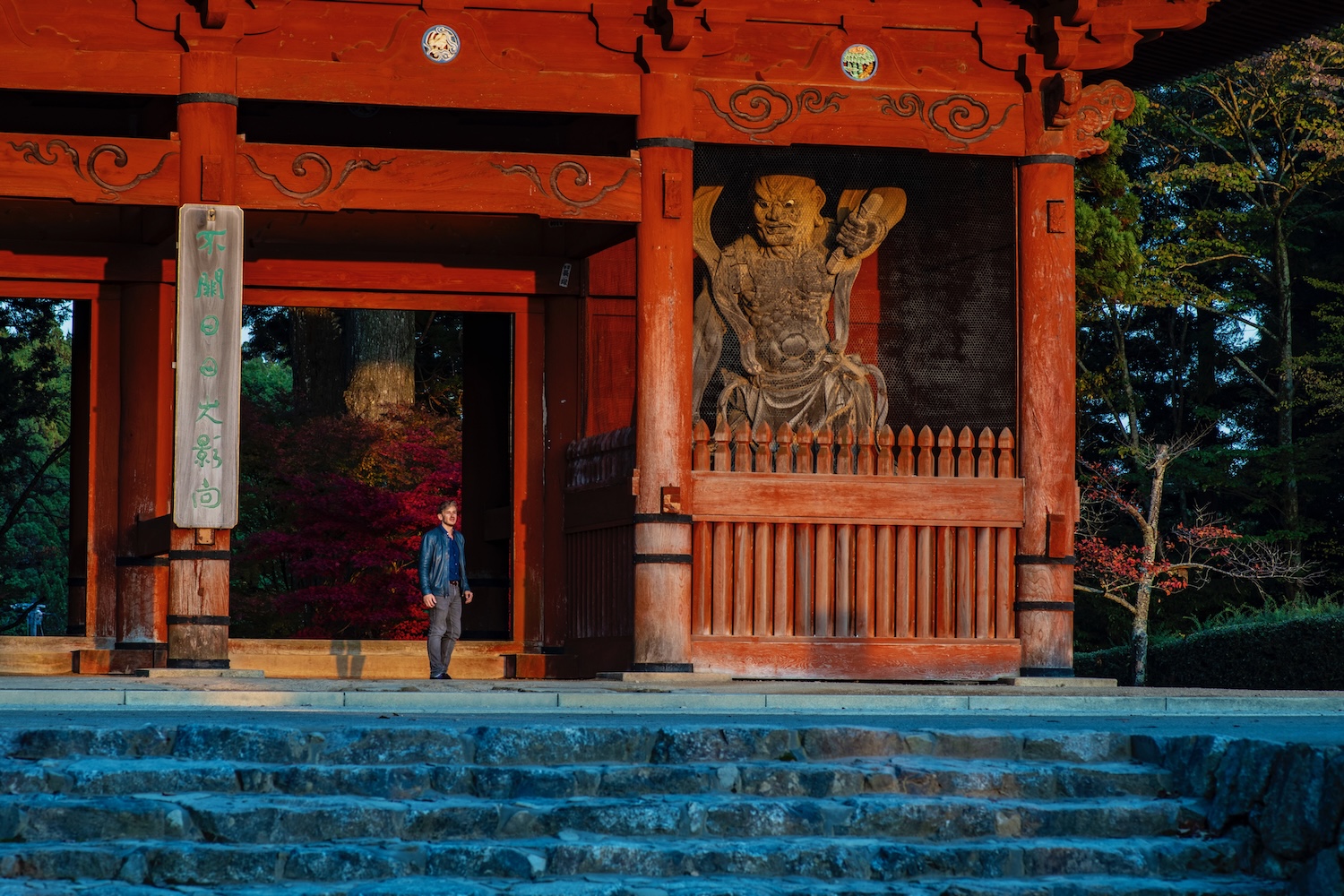
My last entry is Daimon gate, which is weird—this was the first place in Koyasan I laid eyes upon, given that I hiked from the bottom. Regardless, there aren’t actually many trees here, but that’s not the point. I like ending here because the light of sunset makes the trees that do exist even more brilliant, and sunset itself is always wonderful.
Should You Do a Koyasan Temple Stay in Autumn?
I’ve written extensively about shukubo temple stays on this site, and generally recommend them. There are some caveats, however. First of all, they tend to be expensive for what you get—they’re effectively minshuku or ryokan with shared bathrooms, and yet are much more expensive than comparable properties elsewhere in Japan. The unique food options served here offset this somewhat, but not entirely.
With specific regard to the Mt Koya autumn, this tends to be a very busy time to visit, and prices reflect that. You can escape the higher rates a bit if you book early (i.e. at least 6-12 months in advance), but even this isn’t guaranteed for all properties. If you plan to visit in autumn, but only reserve accommodation a few weeks before you depart, you can easily spend ¥50,000 (or more) for a single night in Koyasan temple stay during the fall season.
Other FAQ About Koyasan in Autumn
When do Koyasan autumn leaves reach their peak?
Koyasan’s leaves reach their peak around the first week of November in an average year. Notably, this is much earlier than is the case in lower-lying reaches of Wakayama prefecture, as well as in destinations like Kyoto and Osaka. Leaves can stay on trees well into November, though this is never guaranteed.
What is Koyasan like in October?
Koyasan experiences pleasant weather in October, with warm and sunny days and mild, crisp nights. While autumn colors may start to appear toward the end of the month, most of October is defined by green maple and ginkgo leaves atop Mt. Koya. This ins’t necessarily bad, though you should set your expectations according to it.
Is Koyasan worth visiting in autumn?
It’s absolutely worthwhile to visit Koyasan in autumn! Do keep a couple of things in mind, however. First of all, Koyasan is at its most crowded in autumn—expect lots of other people to be present, and for accommodation to be even more expensive than usual. Secondly, leaves here reach their peak 2-3 weeks before those in Kyoto and Osaka. So, early November rather than late November.
The Bottom Line
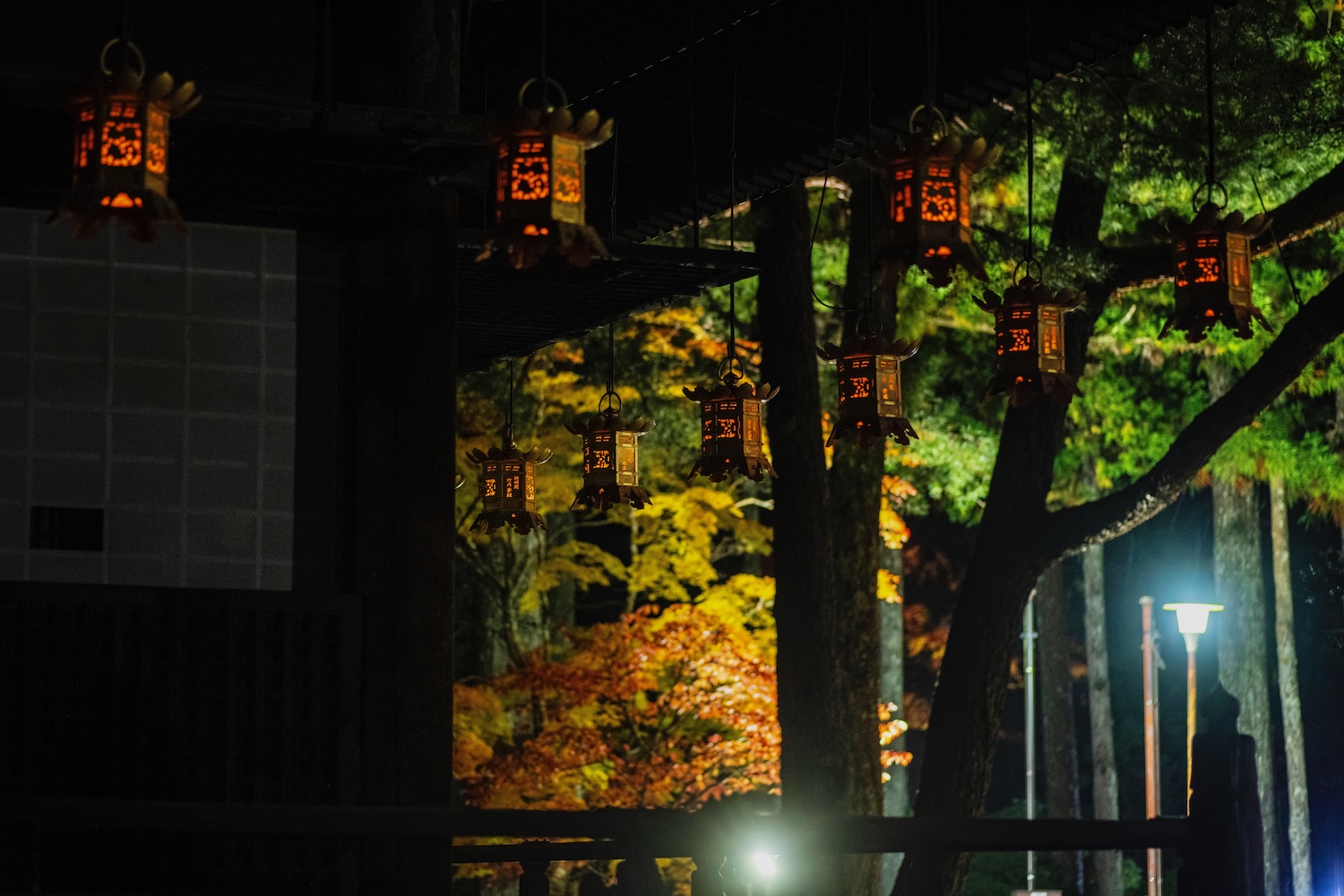
Koyasan in autumn is a revelation, whether you arrive on foot or via funicular, and no matter where it (or around) the town you experience its vibrant colors. Although more crowded (much more crowded, if we’re being honest) than the rest of Wakayama prefecture, Koyasan’s autumn nonetheless feels more special than many other destinations in the Kansai region do in early November, in part because its leaves peak so much earlier than those in Kyoto and Osaka—and especially if you stay overnight in a shukubo and can see the colors illuminated in the night. Need personalized help planning your autumn adventure? Commission a custom Japan itinerary today!