


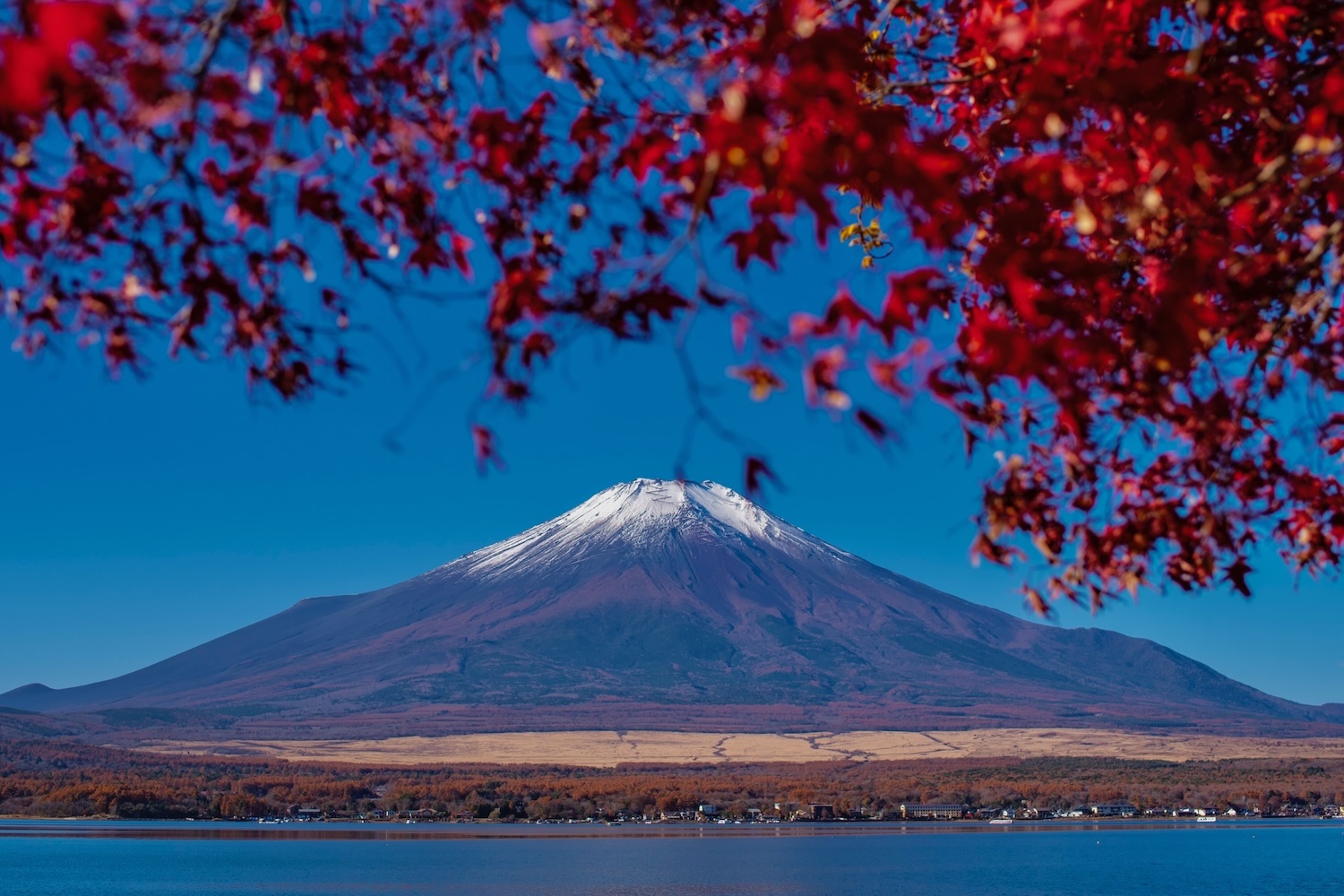
As “mainstream” destinations in Japan go, Mt. Fuji is without a doubt my favorite. This is in spite of how crowded it can often be, as well as the fact that the mountain is often only partially visible (if it’s visible at all), even on days when the weather is otherwise clear.
Like many of the places in Japan I enjoy most, Fujisan shines in part because of how excellent it is across seasons. It shines as brightly amid the deep snows of winter as it does when framed by sakura in spring, or sunflowers in summer.
Today, as you might’ve already guessed, I’ll be singing the praises of Mt Fuji in autumn—and providing an important caveat to keep in mind as you plan your own trip.
Mt. Fuji’s Many Autumn Peaks
Unlike some other places in Japan, the Mt Fuji autumn doesn’t occur at just one time. This is in part because of all the different types of trees (which, of course, does affect everywhere). It should go without saying, but obviously the leaves of cherry trees reach their crimson peak several weeks earlier than any maples or ginkgoes. I personally tend to prefer later in the season, when the mountains “snow cap” is at its largest.
There’s also the question of elevation differences, particularly when you expand the definition of “Mt. Fuji” to include peripheral destinations like Hakone and the Izu Peninsula. Leaves in the Fuji Five Lakes region can start changing as early as mid-October, while they can stay on the trees well into December in low-lying coastal areas that nonetheless have views of Fujisan. This can present both a challenge and an opportunity.
Fujisan’s Top Momijigari Spots (and When to Visit Them)
Churei-to pagoda
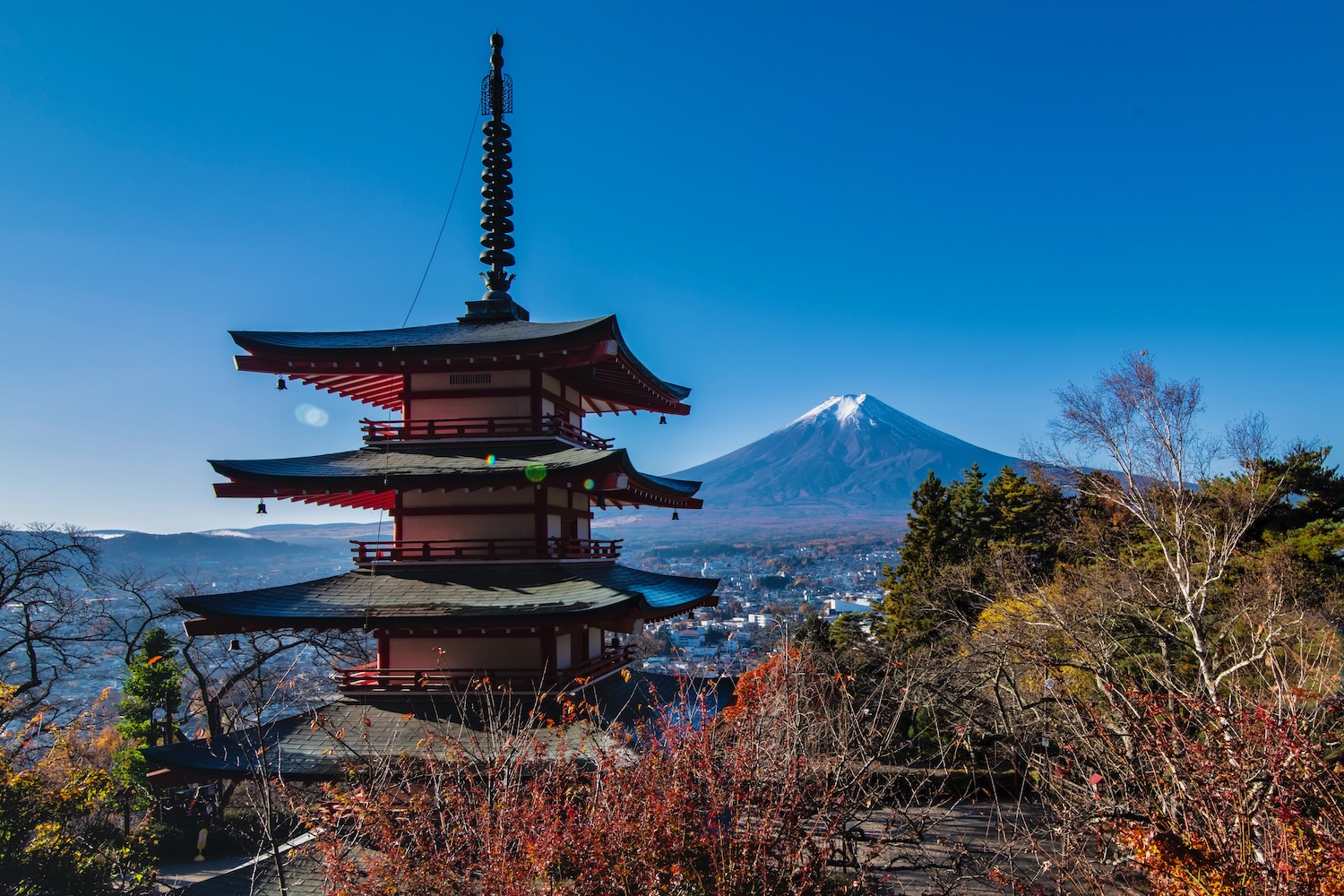
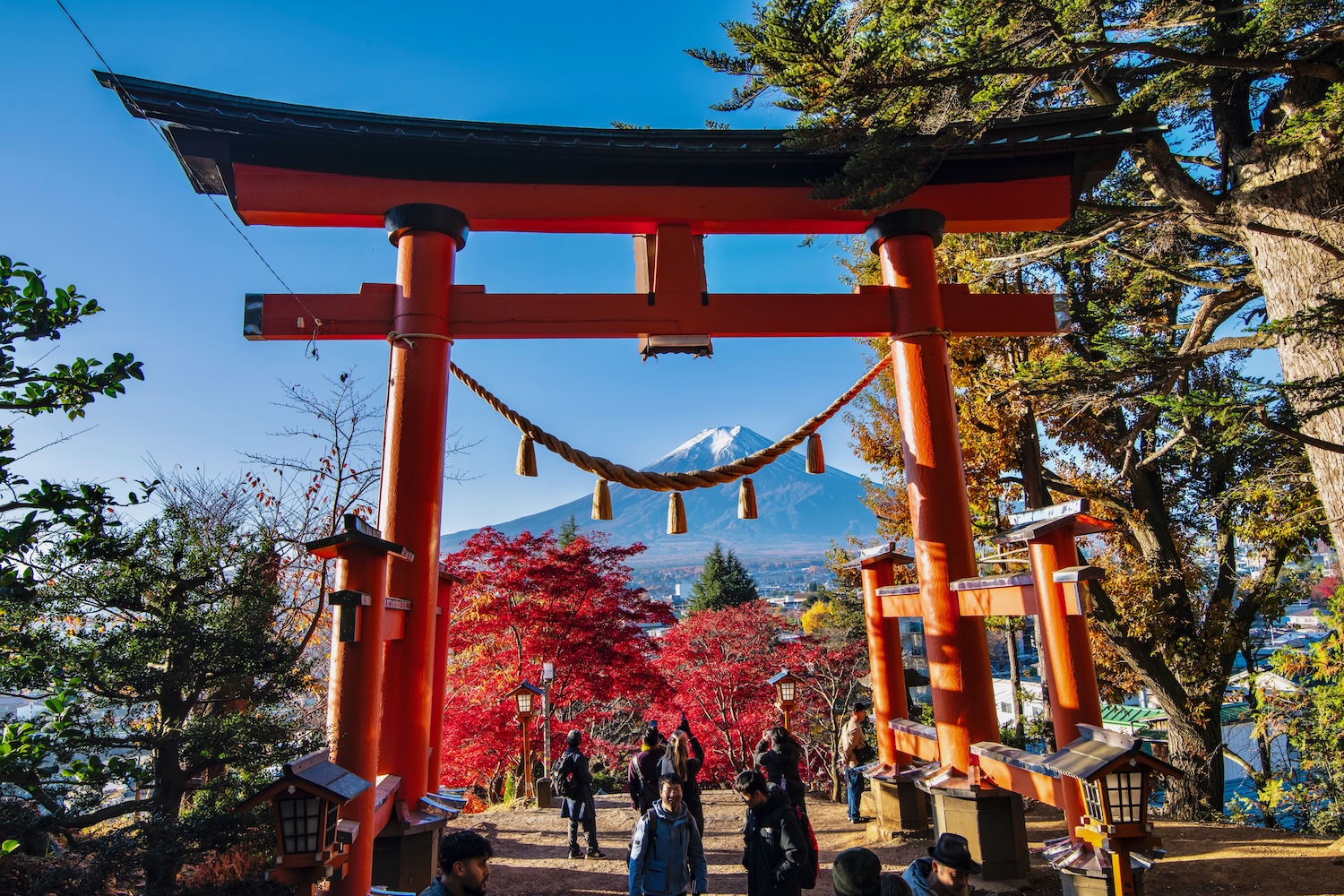
Although I’m listing it first in my guide, I don’t actually think that Churei-to is as impressive in autumn as it is in spring. This is for two reasons. First, the leaves on its cherry trees reach their peak at least a week or two before the maples elsewhere in the region, forcing you to pick and choose. Second of all, Fujisan is much less likely to have its iconic “snow cap” at the time the sakura leaves are changing, resulting in a less impressive scene.
Lake Kawaguchi
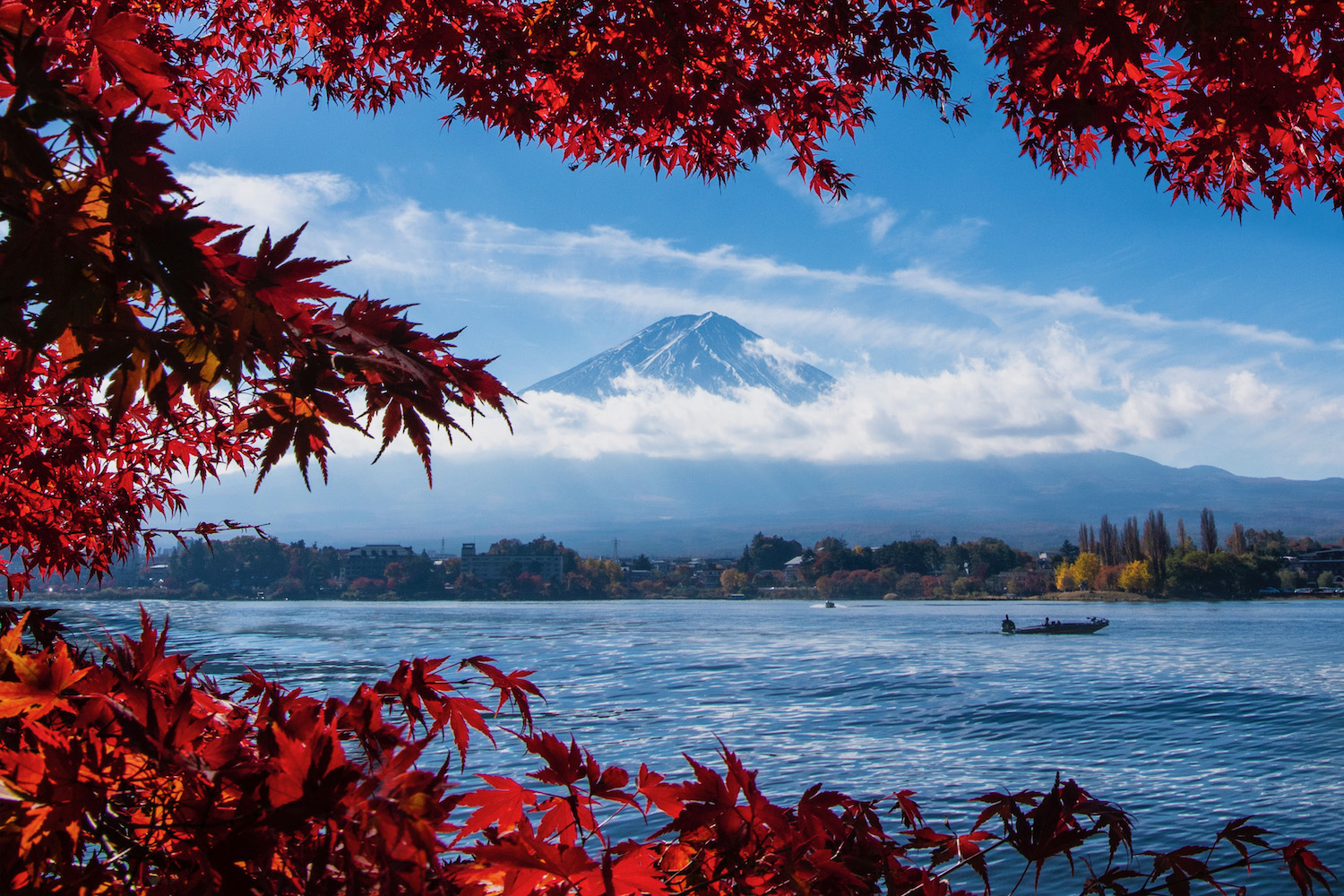
I have reservations for the next item on my Mt Fuji autumn itinerary as well, if I’m honest. Namely, that because Mt. Fuji is always backlit from Lake Kawaguchi, it’s very difficult to get a wholly attractive shot of it at this time of year, snow cap statue notwithstanding. There’s also the fact that Kawaguchiko is very much a known tourism quantity at this point—it’s completely crowded.
Lake Yamanaka

Lake Yamanaka, by contrast with Lake Kawaguchi, features much better lighting, especially in the morning—both the mountain and the lake appear perfectly lit and saturated, especially on a clear sunny day. The downside is that there are many fewer trees along the shores of Yamanakako, and the ones that exist are less impressive.
Hakone
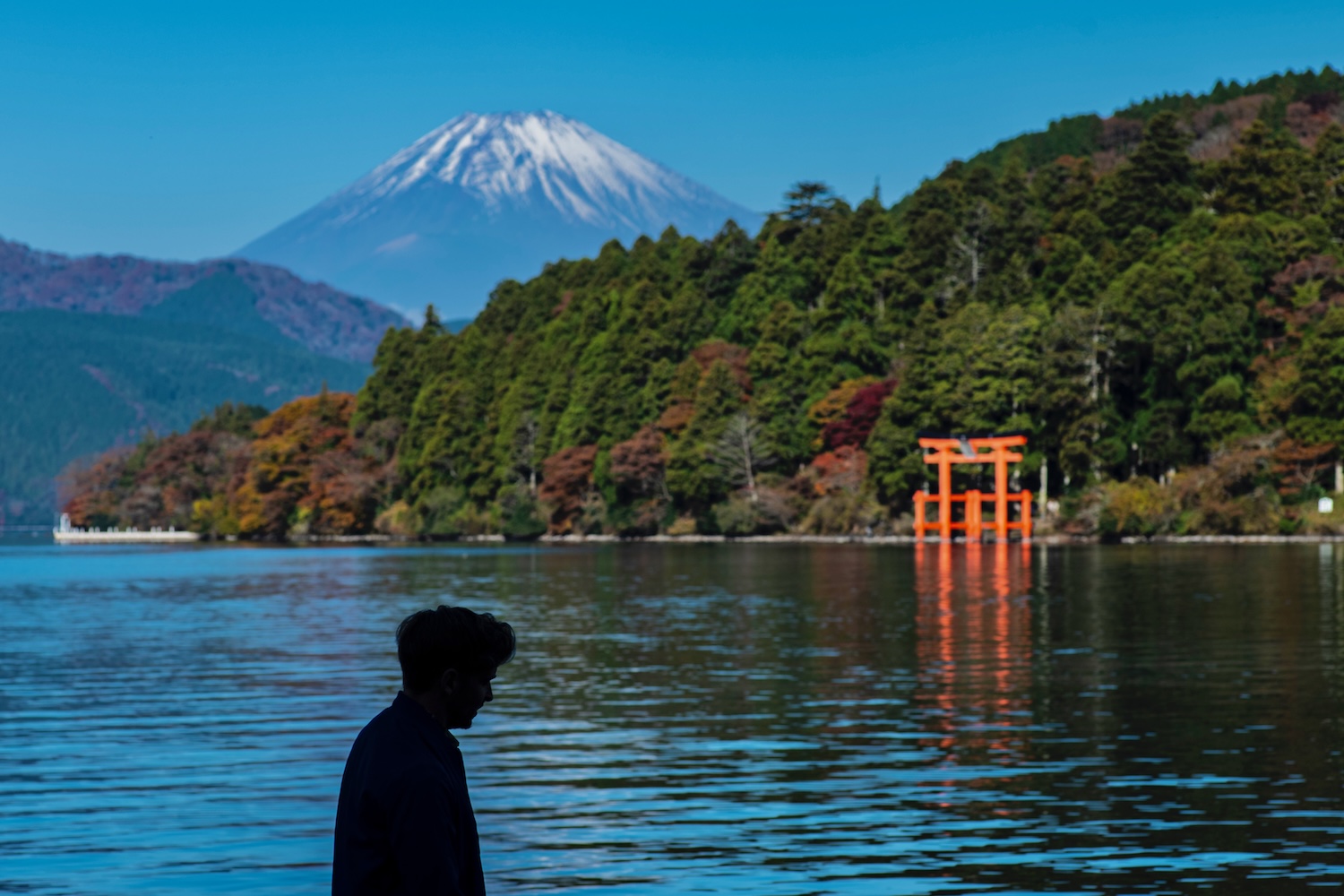
Hakone, as I’ve written about often on this site, is pretty far from Mt. Fuji—it might not even technically quality as one of the places where you can best appreciate Fujisan in autumn. With this being said, autumn here is gorgeous even if the mountain isn’t visible from Lake Ashi, and even if you’re here later than when colors change in Fuji Five Lakes.
Izu Peninsula
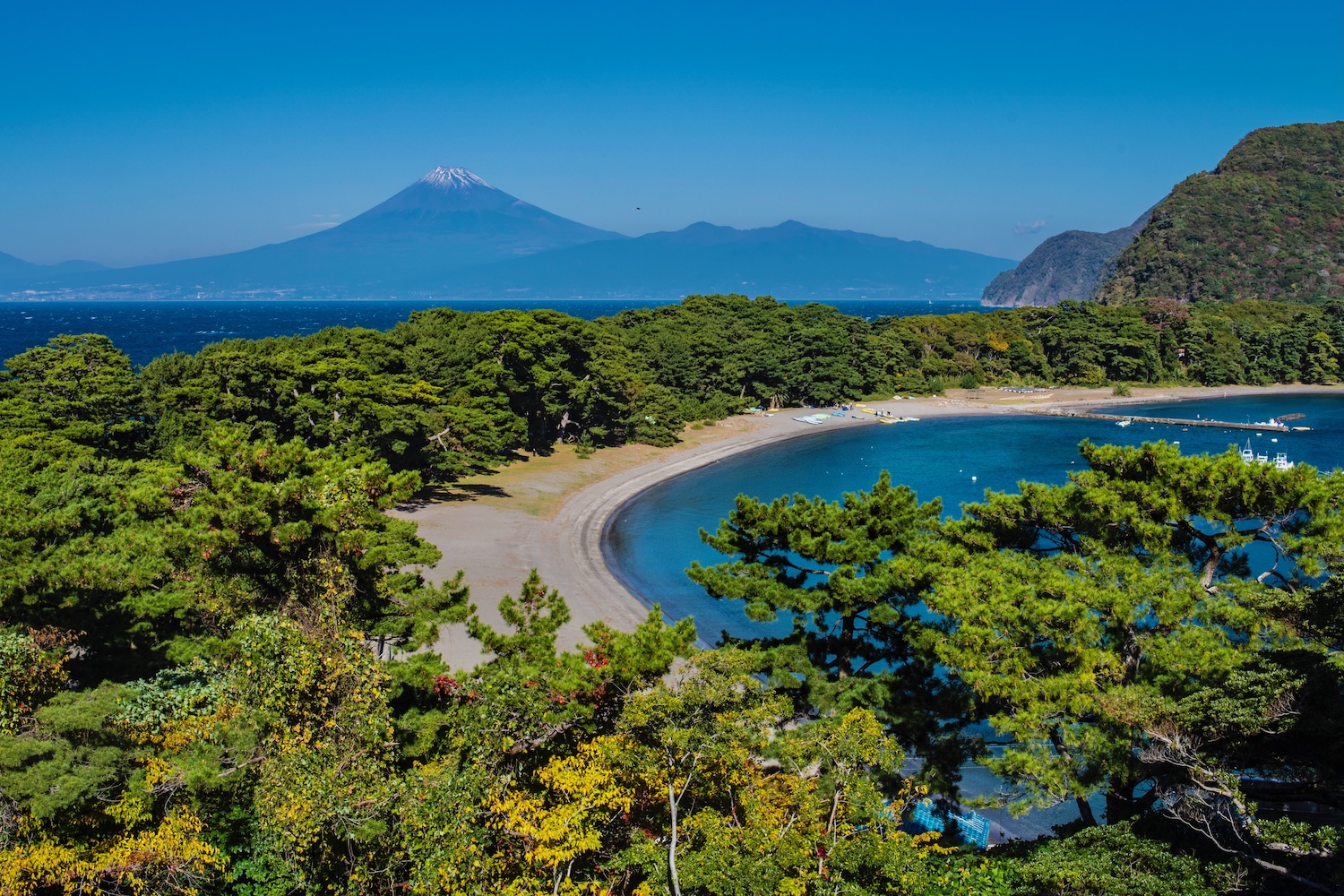
To be honest, leaves on the Izu Peninsula are pretty green until late November or early December. Many, as you see above, don’t change at all, since there are so many pines here. In some sense, of course, this makes it a perfect autumn observatory for Mt. Fuji, since (forgive the pun) is offer an evergreen foreground from which to appreciate the icon looming in the distance.
What is Mt. Fuji Like in Other Seasons?
Fujisan, as I mentioned in the introduction to this article, is probably my favorite “typical” Japan destination bar-none. This is in large part because of how wonderful it is throughout the year:
- Some of Japan’s best sakura spots are located near Mt. Fuji, including the aforementioned Churei-to pagoda, and the lower lying Urui River closer to the sea in Shizuoka prefecture.
- Come in summer to enjoy himawari (sunflowers) at the Yamanakako Hana-no-miyako Flower Park, especially on a clear day where the mountain will be fully visible. Summer is also the only time you can climb.
- Winter near Mt. Fuji can either feature deep snow (especially in the Fuji Five Lakes region) or surprisingly mild weather, such as what you’ll enjoy on the Izu Peninsula.
Other FAQ About Mt Fuji in Autumn
Can you see Mt. Fuji in autumn?
Autumn is one of the best times of year to see Mt. Fuji, with leaves changing as early as mid-October (when the cherry trees at Churei-to pagoda turn orange and red) and as late as December, when you can still see scarlet leaves on maple trees. I usually like to visit after November 1, when there’s a higher chance that the mountain will have a big snow cap.
Is October a good time to visit Mt. Fuji?
Late October at Mt. Fuji is fabulous, with leaves (at least those in the Fuji Five Lakes region) starting to change, and a high chance of clear skies, which means that you’ll actually be able to see the mountain. Early October, however, can be wetter and relatively warm, making it more difficult to say for sure that Fujisan will be visible.
Is Mount Fuji visible in November?
November is a month where Mt. Fuji is pretty consistently visible, given that it’s much drier than the ones that immediately precede it. This is particularly true in late November, as the milder and wetter weather of autumn gives way to the colder and drier (and, thus, clear) winter.
The Bottom Line
Seeing Mt Fuji in autumn isn’t necessarily straightforward. Differences in elevation for various vantage points means a wide range of peak foliage dates—the cherry trees at Churei-to pagoda turn red in late October, while its maples (and maples along each of the Fuji Five Lakes) can retain their most brilliant colors well into December, which is when it’s best to visit the Izu Peninsula, Fujisan views or not. The flipside of this, of course, is that if you aren’t married to seeing a particular perspective, you can enjoy a general autumnal atmosphere at or near the mountain over a period of several weeks. Need help putting your trip together? Commission a custom Japan autumn itinerary today!