


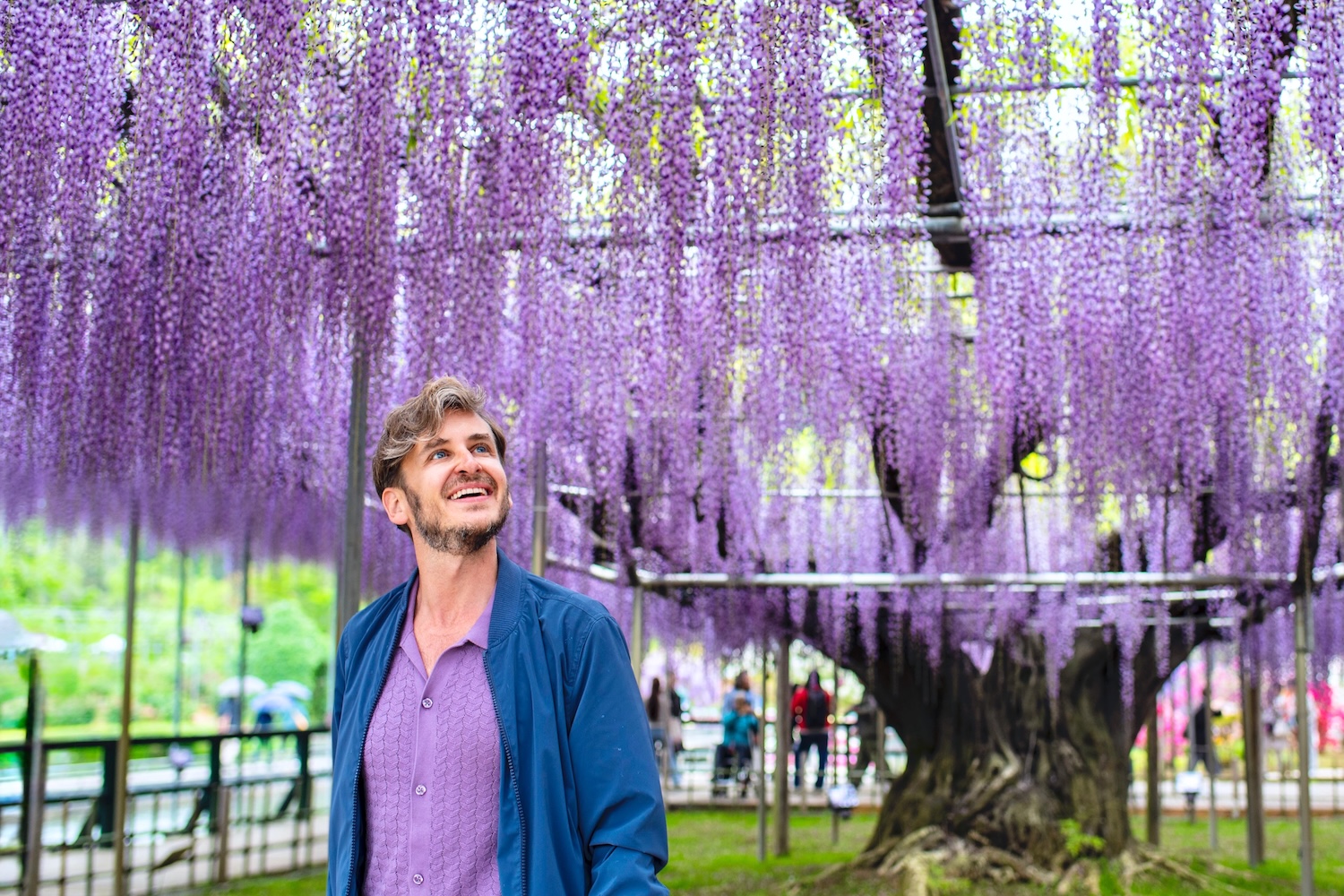
If you read the version of this post that was live before a few days ago, you probably had a mixed impression of Ashikaga Flower Park in Tochigi prefecture. This makes sense: Back then, I arrived several days after the peak of its wisteria bloom; the entire place seemed ordinary, even lackluster.
My latest visit, in 2026, offered a totally different experience. The fuji (this is the Japanese name for wisteria) were literally at the fullest of full bloom, which revealed that there are actually more than a dozen such trees on site, rather than just the three “big” trellises I target in 2023.
And this, to be sure, is just the beginning of the praises I now sing for Ashikaga Flower Park, which I can safely say is one of my favorite spring spots in Japan. Continue reading to get an even better sense of why.
How to Get to Ashikaga Flower Park
Getting from Tokyo to Ashikaga Flower Park is reasonably straightforward, to the extent that there’s a train station called Ashikaga Flower Park Station just opposite the entrance. To reach it, you first need to get to Tochigi prefecture’s Oyama Station, which is served via slower Tohoku Shinkansen trains from Tokyo Station, and also via the JR Shonan-Shinjuku Line from Shinjuku Station. Once at Oyama, you can ride a JR Ryomo Line train the rest of the way.
Of course, as you can probably guess, there are advantages to renting a car and coming here that way instead. First among them? You can easily combine the park with tsutsuji (azalea) hot spots such as Tsutsujigaoka Park in Tatebayashi, Gunma and Shiofune Kannon-ji temple in Ome city west of Tokyo. They tend to reach their peak around the same time, so they all pair well together. Having a car also allows you to stay until nightfall without having to worry about catching a train.
What to Know About Visiting Ashikaga
It’s all about the wisteria
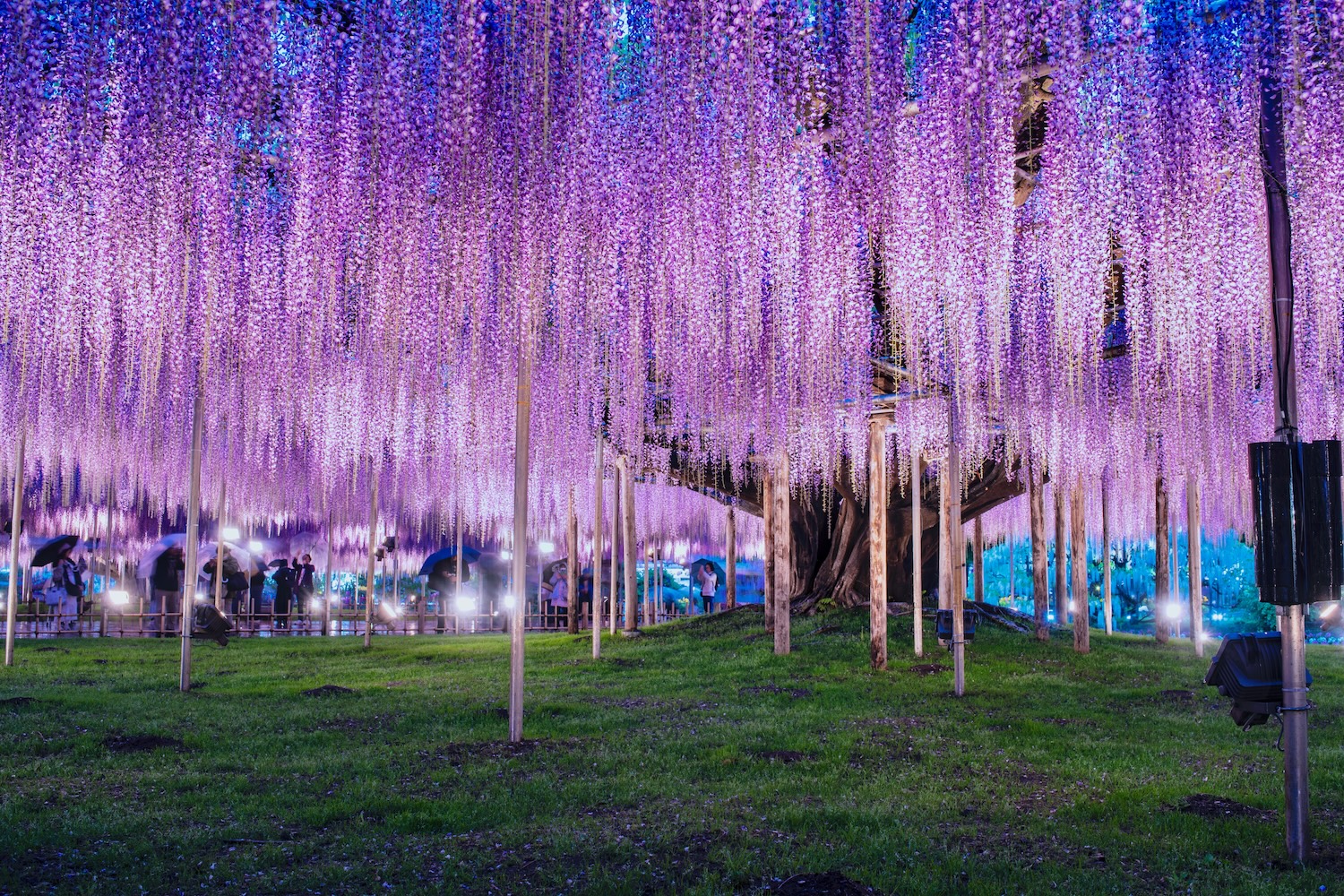
Looking back at my 2023 visit to Ashikaga Flower Park, which occurred after almost all wisteria flowers had fallen, it almost seems like a different place. This is because if you visit at peak bloom (and I’m going to mention this often—fair warning), both the quantity and quality of wisteria at the park is overwhelming. There are more than a dozen full-sized wisteria trees, in addition to three trellises of “standard” purple wisteria alone. The color, the fragrance and the beauty are astonishing in scale.
(And azaleas)
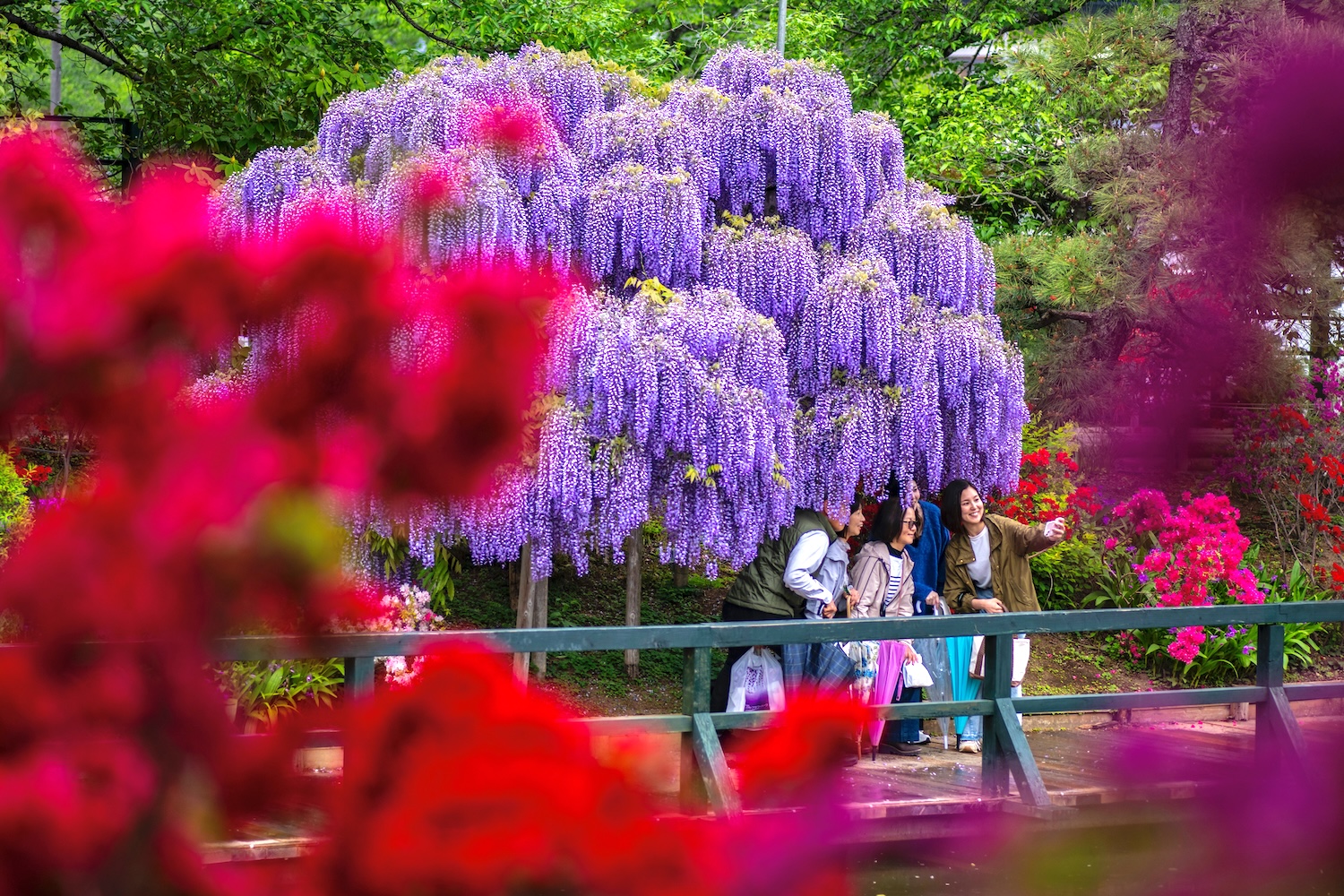
The other thing that surprised me? In addition to Ashikaga wisteria, there are a large number of azaleas at the park. Perhaps I was paid extra attention to them since I visited Shiofune Kannon-ji and Tsutsujigaoka Park on the same day; maybe it was as a result of the fact that tsutsuji tend to reach full bloom around the same time as fuji do. Whatever the case, these flowers pair extremely well together—the people who designed and who stil maintain the park as masters.
Seriously, time your visit to full bloom
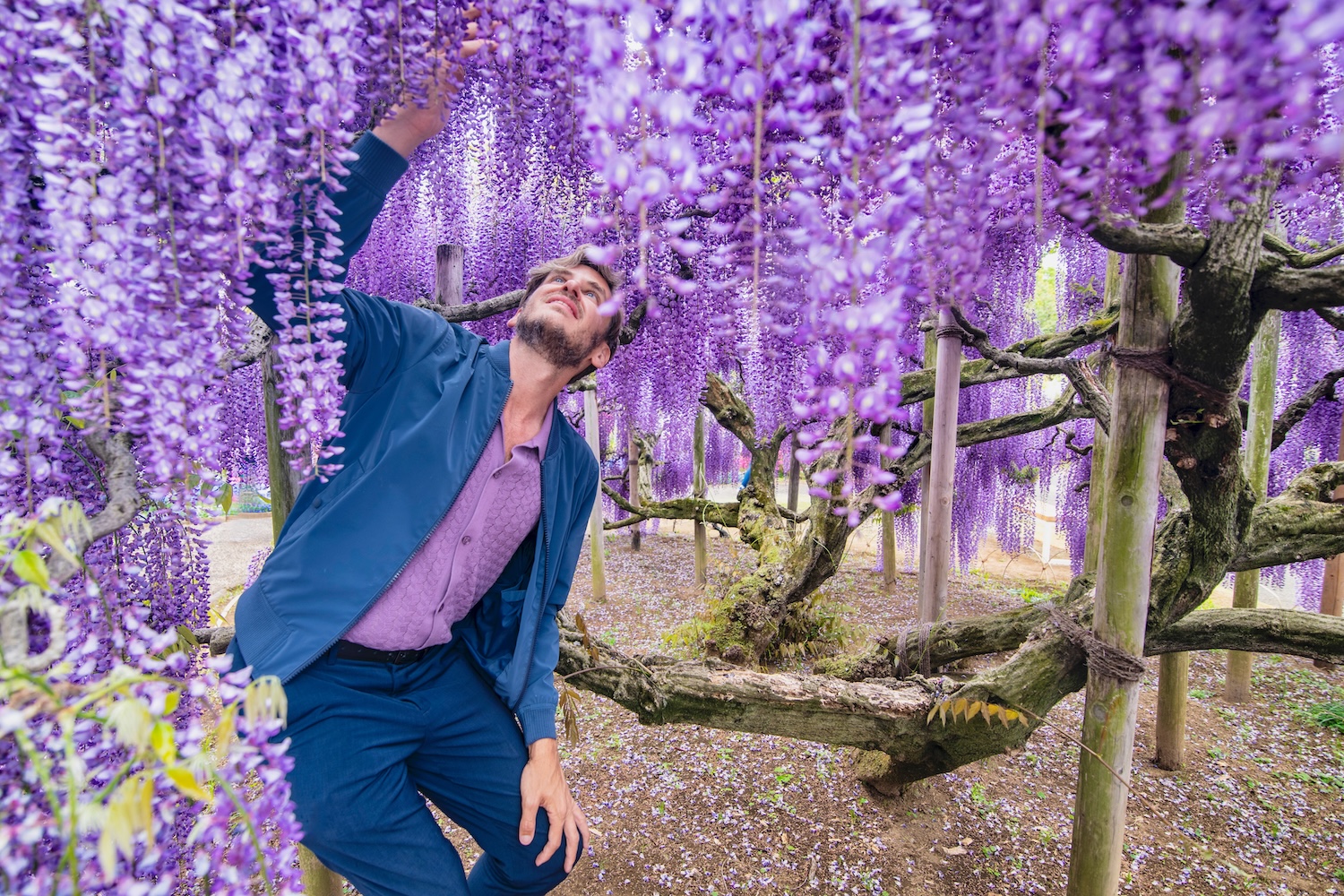
You can monitor the bloom status on Ashikaga Flower Park’s website—and I highly, highly recommend that you do. Again, I hate to be a broken record, but take it from me: The difference between full wisteria bloom and coming just before or after is monumental; it’s seismic. As cynical as it sounds, I would definitely recommend that you skip the park if you can’t be here at full bloom. It’s that important!
Leave yourself plenty of time to see everything
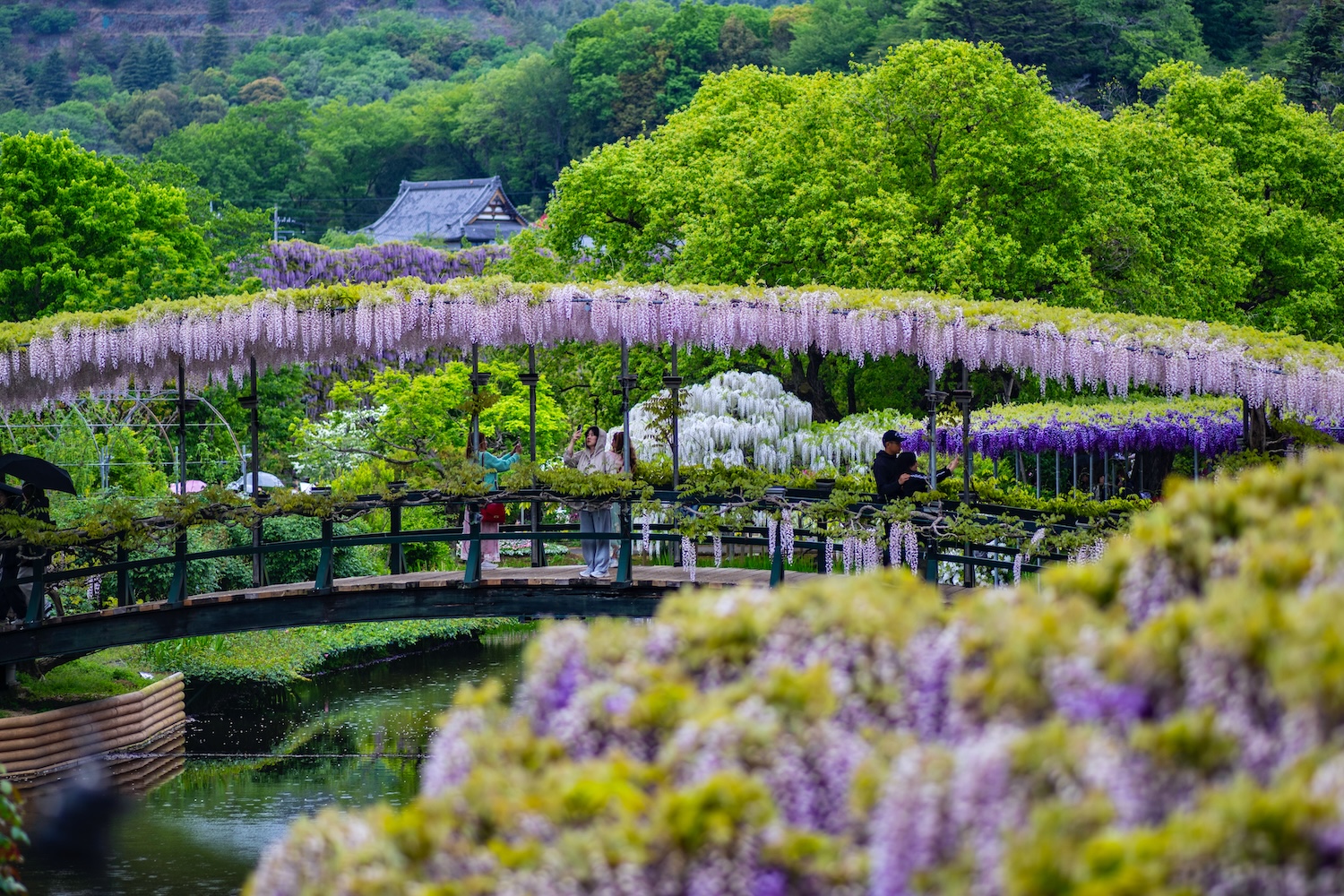
Assuming that you do follow my advice and visit the park only if it’s in full bloom, you will be amazed by the sheer density of the flowers in the park. You could spend hours visiting every purple wisteria tree and trellis alone, to say nothing about unique-colored ones (white and pink are my favorite), the “double wisteria” trellis, all the azaleas and fuji-flavored snacks and souvenirs. And this is even before you entertain the possibility of seeing Ashikaga Flower Park at night!
(And stay for the illumination)
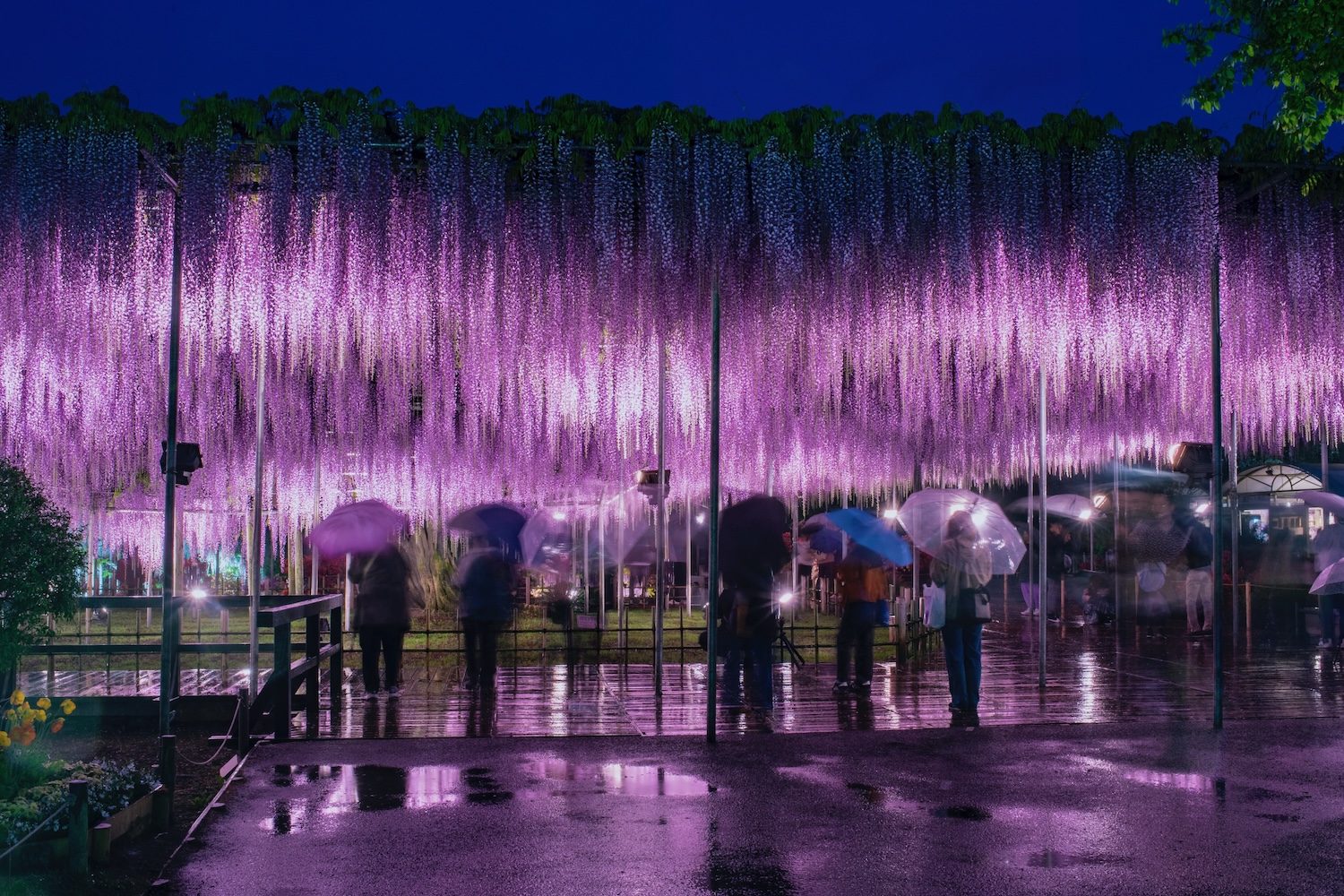
The final thing I’ll say about this place, presuming you do come at full bloom and understand the scale of wisteria on offer, is that yes: Staying for the illumination is absolutely worth it, though there are a couple of things you should keep in mind. First, the park isn’t really “dark” until about 7 PM in the spring, which means that if you have a train to catch or a car to return, you may have a limited time to photograph the light-up. Secondly, rain is common during wisteria season, which can make long-exposure night photography difficult.
Other Things to Do in Tochigi Prefecture
Tochigi is a surprisingly overlooked, with the notable exception of one of Japan’s most popular day trips (and probably the most popular one from Tokyo):
- I’m speaking, of course, about Nikko, the UNESCO World Heritage city that its the jewel in Tochigi’s tourism crown. Come only during the day to focus on Tosho-gu shrine, or stay overnight to enjoy the onsen hot springs of Oku-nikko at Lake Chuzenji.
- To go a bit more off the beaten path, consider explore the Nasu Highlands area, which is popular among Japanese travelers, but not among foreign tourists.
- Likewise, the pottery-producing town of Mashiko is still pretty early along its journey to mass tourism, and therefore makes an excellent destination.
- Utsunomiya is far from Japan’s most interesting city, but it’s an authentic place to spend the night, and enjoy some of the country’s best gyoza.

Other FAQ About Visiting Ashikaga Flower Park
What is the best time to visit Ashikaga Flower Park?
The best time to visit Ashikaga Flower Park is when the park’s wisteria trees and trellises are at full bloom, usually around mid-to-late April. If you can’t come at this time, I don’t personally believe that the park is worth visiting at all. It’s a totally ordinary place without wisteria.
How do I go from Tokyo to Ashikaga Flower Park?
Reaching Ashikaga Flower Park from Tokyo is easy. Simply take an ordinary train or Shinkansen from the Tokyo area to Oyama Station in Tochigi prefecture. From there, a JR Ryomo Line train can whisk your westward the rest of the way to Ashikaga Flower Park Station.
Do you take a bullet train to Ashikaga Flower Park from Tokyo?
You can take a bullet train part of the way to Ashikaga Flower Park from Tokyo. Specifically, from Tokyo or Ueno Stations to Oyama Station, where you’ll change to a local JR Ryomo Line train. As of 2026, however, you cannot ride a Shinkansen all the way to Ashikaga Flower, and there are no current plans for that to change.

The Bottom Line
Ashikaga Flower Park is astonishing if you visit at the right time, and forgettable if you don’t. The park, which is located in Tochigi prefecture, is home to one of Japan’s most impressive displays of wisteria (fuji or 藤 in Japanese). Unfortunately, if you don’t take your trip right when the flowers are at full bloom, you may end up feeling like the effort you made was in vain—that was definitely the case for me the first time I went. As an added bonus, if you are there near peak flowers, you can also see other mid-spring flowers, such as the azaleas at nearby Tsutsujigaoka Park in Tatebayashi city, Gunma prefecture. If this sounds even slightly confusing, I encourage you to consider hiring me to plan your Japan trip.