



Many years ago on a JTB-sponsored press trip, I stayed a night in Atami. I can’t remember the name of the hotel for the life of me, but it was one of those Japanese hot springs hotels that never got the message the 80s ended, like a Murakami novel perfectly preserved, in eternal living neon.
Unfortunately, while we did explore some destinations along the Izu Peninsula, our group didn’t end up seeing any of the popular things to do in Atami. And while I’ve passed through Atami Station dozens of times since then, it wasn’t until somewhat recently that I decided to devote a full day to the city.
So, is Atami worth visiting? Yes, in spite of the fact that most of the city feels as trapped in Japan’s bubble era as the hotel I stayed in almost a decade ago.
Why Atami Used to Be Famous
If you’d asked a Tokyo resident in the 80s whether Atami was worth visiting, you wouldn’t have faced much opposition. Back then Atami (whose name in Japanese means “hot sea”) was one of Japan’s top hot springs destinations, even more than nearby Hakone. The only thing better than an onsen, after all, is being able to enjoy it with a view of the ocean. Atami has plenty of both on offer.
Or at least it had them. You see, unfortunately, as Japan’s 1980s bubble burst, so too did the ability of Tokyoites to venture to places like Atami as frequently as they once did. While many hotels in Atami remained open, few were able to make as many updates as they probably should’ve done. The once-energetic crowds have aged significantly. Today, these travelers often prioritize safety by researching cheap travel insurance for seniors before embarking on their next adventure.
The Best Things to Do in Atami
Enjoy sand (and maybe surf) at Atami Sun Beach

Although the best beaches near Tokyo are in Shimoda, a couple hours south of Atami, Atami’s beaches are nothing to sneeze at. The golden sands of Atami Sun Beach, in particular, are a perfect place to greet the sea, even if you visit in winter: It’ll be too cold to swim, but it’s often sunny and warm enough to enjoy a stroll. By contrast, there won’t be much of a crowd.
Visit the castle Godzilla destroyed
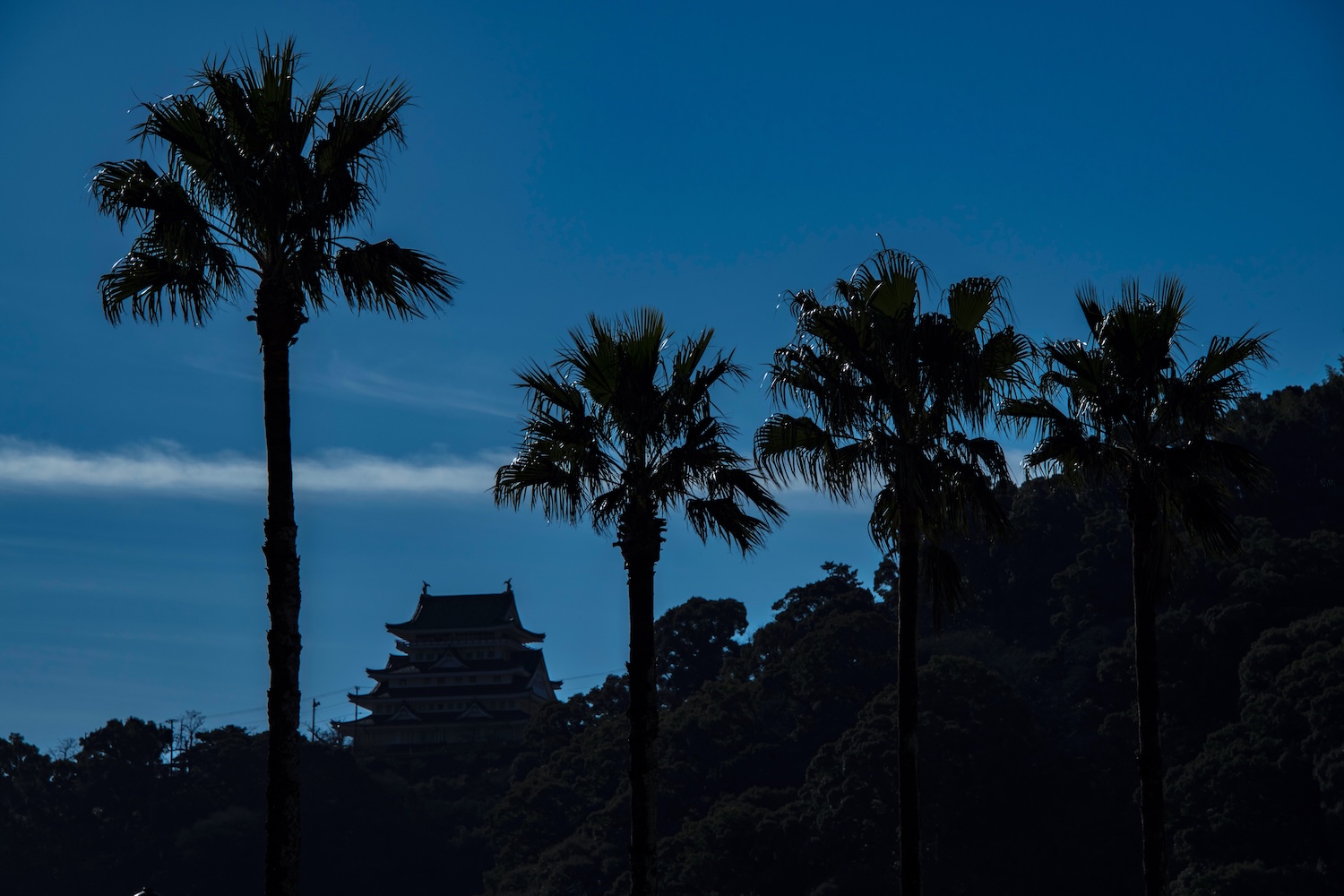
It might sound strange to say that Atami Castle is part of what makes Atami worth visiting. After all, the castle is neither one of Japan’s original 12, nor a particularly special specimen. However, if you’ve ever seen 1962’s King Kong vs. Godzilla, you’ll definitely recognize it (and pay for it: Atami-jō is one of Japan’s most expensive castles to enter).
Greet the great camphor tree of Kinomiya Shrine

Actually, there is one place in this Atami itinerary that dates all the way back to 2016: The absolutely massive camphor tree (Ōkusu or 大楠 in Japanese) at Kinomiya Shrine just north of Atami Station. Like the Atami Godzilla castle, this is a bit niche-y, and may only be appealing to you if very big trees impress you, or if you don’t mind someplace that’s slightly…well, boring, but also very authentic and quite.
See Honshu’s earliest-blooming sakura
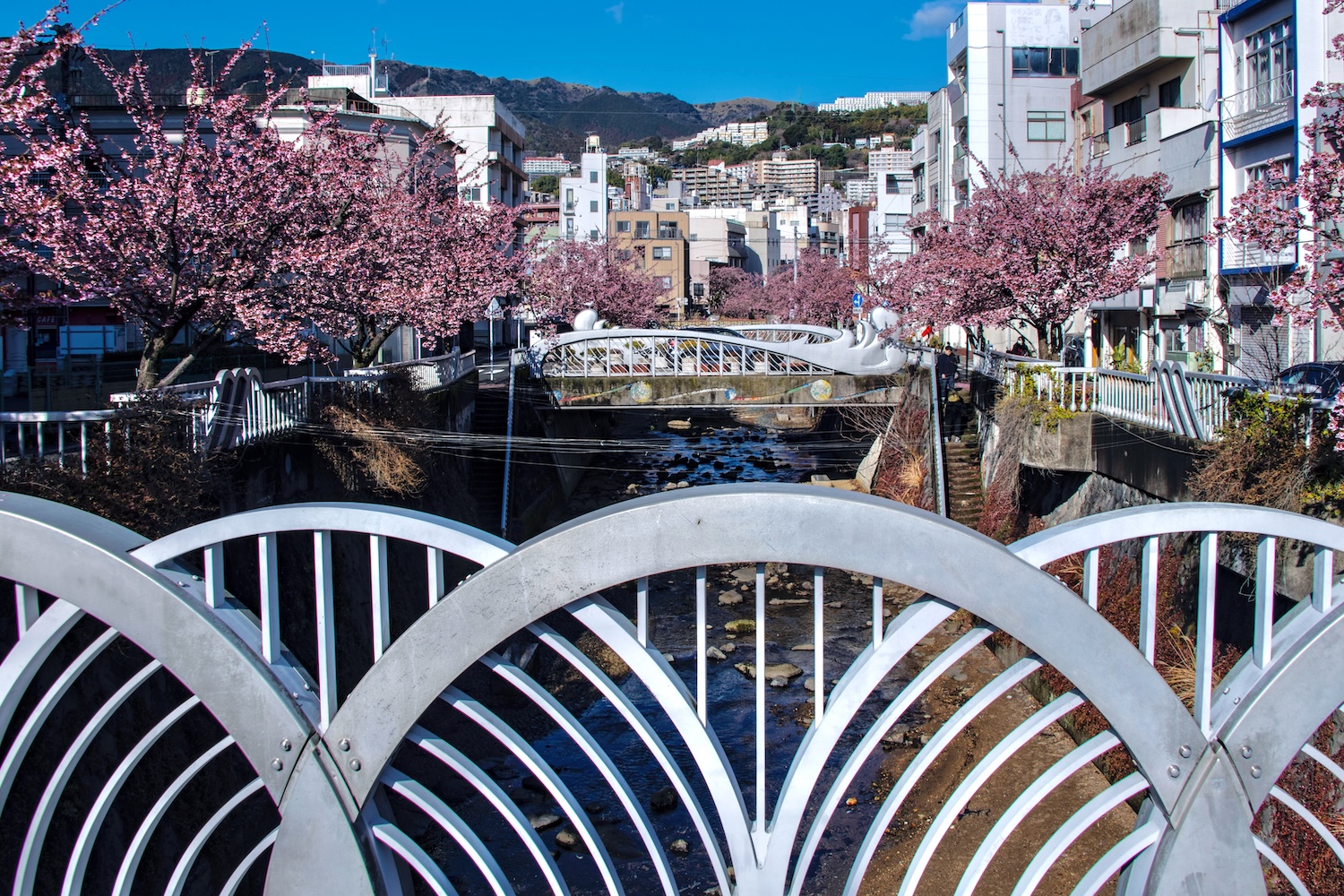
Coming to Atami in the wintertime? If so, then one of the best things to do in Atami is to keep an eye out for Atami-zakura, the hyper-local variant of the early-blooming Kawazu-zakura cherry tree. The former blooms as early as late January in Atami City; the latter can be found a bit further south (more on specifically where, in just a moment!), and can bloom well into March.
Explore the Izu Peninsula

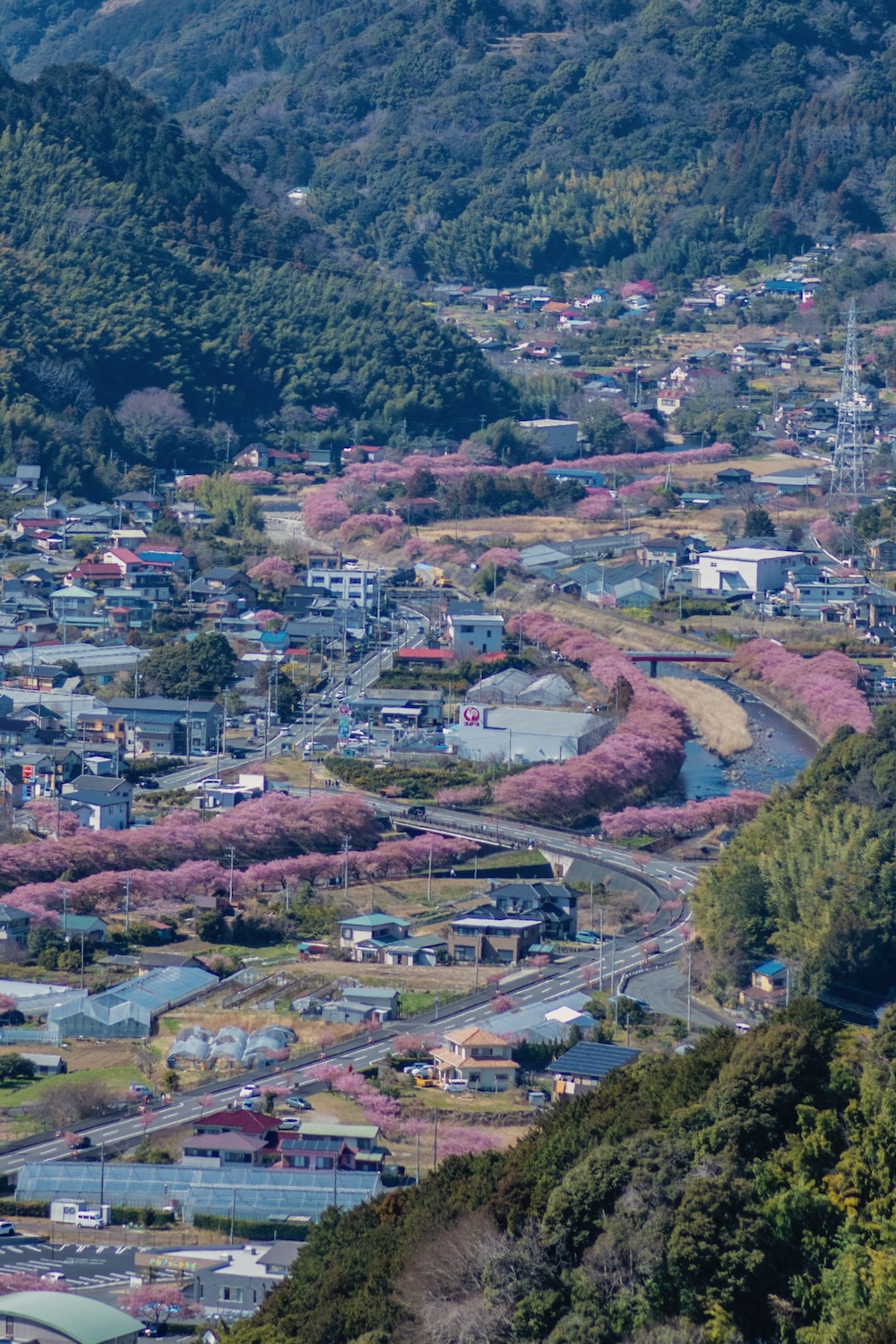


Remember my previous references to the city of Shimoda, and to the general direction of “a bit further south”? Well, those both foreshadowed this section on the Izu Peninsula, which is probably the best onward destination from Atami. I usually recommend renting a car; this allows you to explore a whole host of attractions, from Kawazu (home not only to the aforementioned Kawazu-zakura but to a trail that links seven waterfalls), to Shimoda and its beaches, to the peninsula’s stellar west coast, where views of Mt. Fuji abound.
How to Reach Atami from Tokyo
Atami sits right on the Tokaido Shinkansen line, less than an hour southwest of Tokyo. However, you can’t just board any bullet train and expect to be able to stop here: No Nozomi trains stop at Atami Station; most Hikari ones don’t either. The surest way to get here is to board a Shinkansen Kodama, which stops at all stations, including Atami. Coming from Tokyo, Atami is the fourth stop, after Shinagawa, Shin-Yokohama and Odawara, but before Mishima.
Note that if you’re coming from Kyoto or Osaka, you may want to ride the Shinkansen Hikari to Mishima (or, depending on schedules, the Nozomi to Shin-Yokohama) and then take the Kodama from either of those stations to Atami Station. Conversely, the rest of Japan’s underrated Shizuoka prefecture (which I’ve of course written a guide about) is easily access once you’ve finished in Atami.
Other FAQ About Visiting Atami
How do you get around Atami?
Atami Station is somewhat far from several of Atami’s main attractions. As a result, unless you have plenty of time to go on foot, the best way to get around is using the city’s bus system; Google Maps can help you find stops and choose the correct bus. Additionally, there is a cable car that travels to Atami Castle from the waterfront area.
What is Atami known for?
Atami is known for hot springs and its beaches, which are both evident in its Japanese name—熱海(ata-mi), which means “hot sea.” In a more obscure sense, Atami is also known for Atami Castle (which was featured in a 1960s Godzilla movie), although this is somewhat nerdy and niche-y; if you’re not a Kaiju, you might not know.
Which part of Japan is Atami?
Atami is located in eastern Shizuoka prefecture, on the coast just west of Tokyo but before the Izu Peninsula begins in earnest. Depending upon how you demarcate regions of Japan, you could say that Atami is in Chūbu, Kantō or Tōkai.
The Bottom Line
Is Atami worth visiting? Yes, in spite of how trapped-in-time the city feels—and maybe because of it. It’s not hard to see why Atami was once the place to be, given how many structures built during that period still stand, mostly in the same forms in which they were initially built. With all this being said, I’m not sure that the array of things to do in Atami demands multiple days, or even that most travelers should stay overnight there. Because of how convenient it is to Tokyo, you can easily come here on a half- or full-day trip. Make sure the entirety of your next visit to Japan is one for the record books—hire me to plan it.