


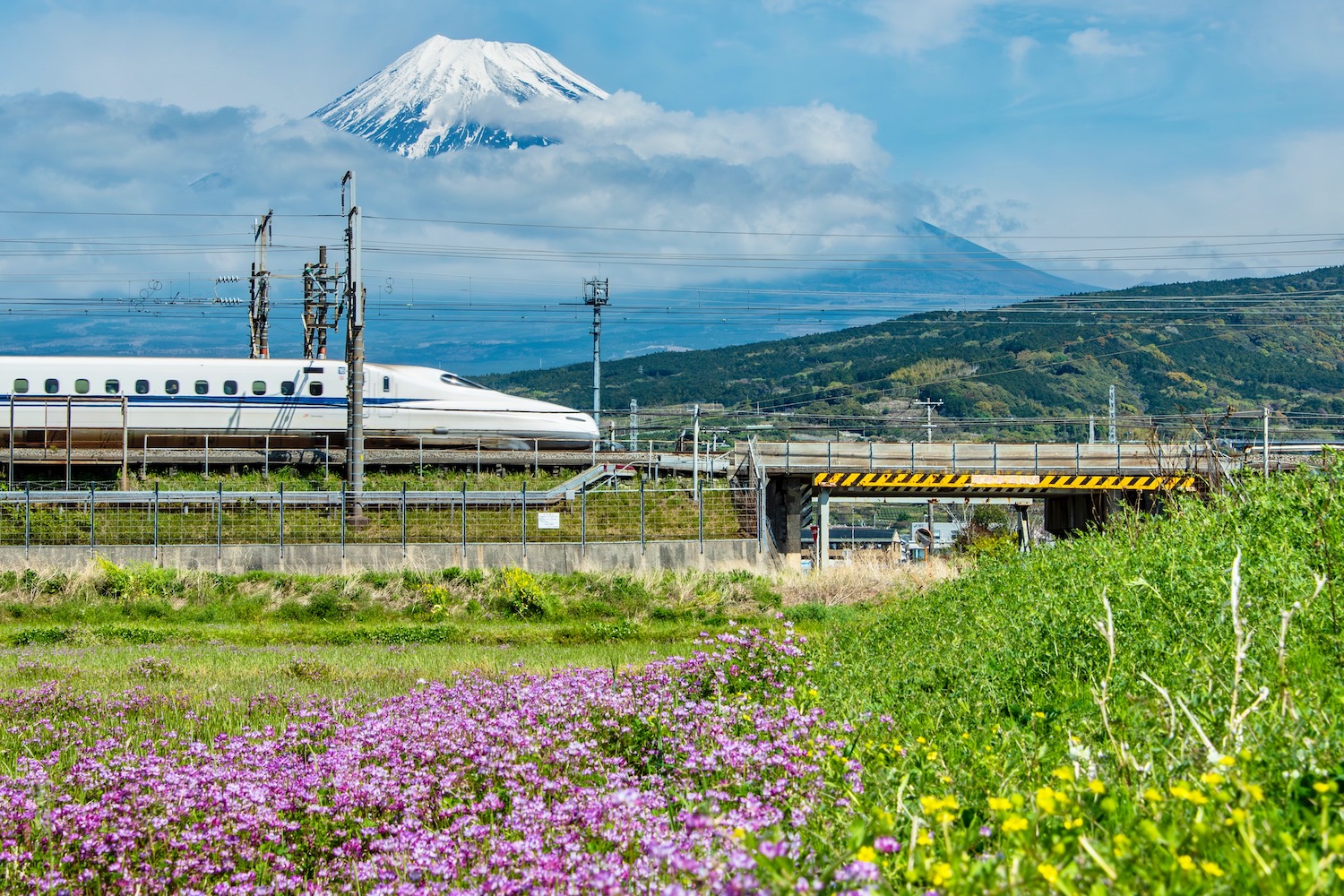
When people hire me to plan their trips to Japan, they give many reasons for seeking professional help. Transportation is almost always first among them.
In particular, I find that travelers have a lot of questions—a lot of anxiety, frankly—about Japan’s trains. Which makes sense: In Japan, it can be hard to get from Point A to Point B without a baseline knowledge of how the entire system works, but this can seem abstract or even nonsensical if you haven’t yet set foot in the country.
In reality, taking the train in Japan is so simple that even a kindergartner can do it. A kindergartner, or a grown person who’s read my guide once or twice!
Why Japanese Trains Intimidate Travelers
I literally cannot tell you how many prospective clients email me, at least in part, because they’re unclear about (or even scared of) how to take the train in Japan—it’s well over 50%, and sometimes close to 100%. And look, there’s a part of me that understandings. After all, I myself was a Japan newbie a little over a decade ago. In spite of having criss-crossed Europe with a Eurail Pass a few times by that point, I had literally no knowledge of how Japan’s trains worked.
Thinking back on my own experience allows me to pinpoint what you might be feeling right now. First, where does (and doesn’t) the bullet train go, and to what extent does its high speed defy the gravity of the distance it traverses. Second, how the hell do you pay for Japanese trains anyway—it a Japan Rail Pass helpful? Is it required? What about bringing oversized luggage on the train? And what’s the best way to search schedules for trains in Japan?
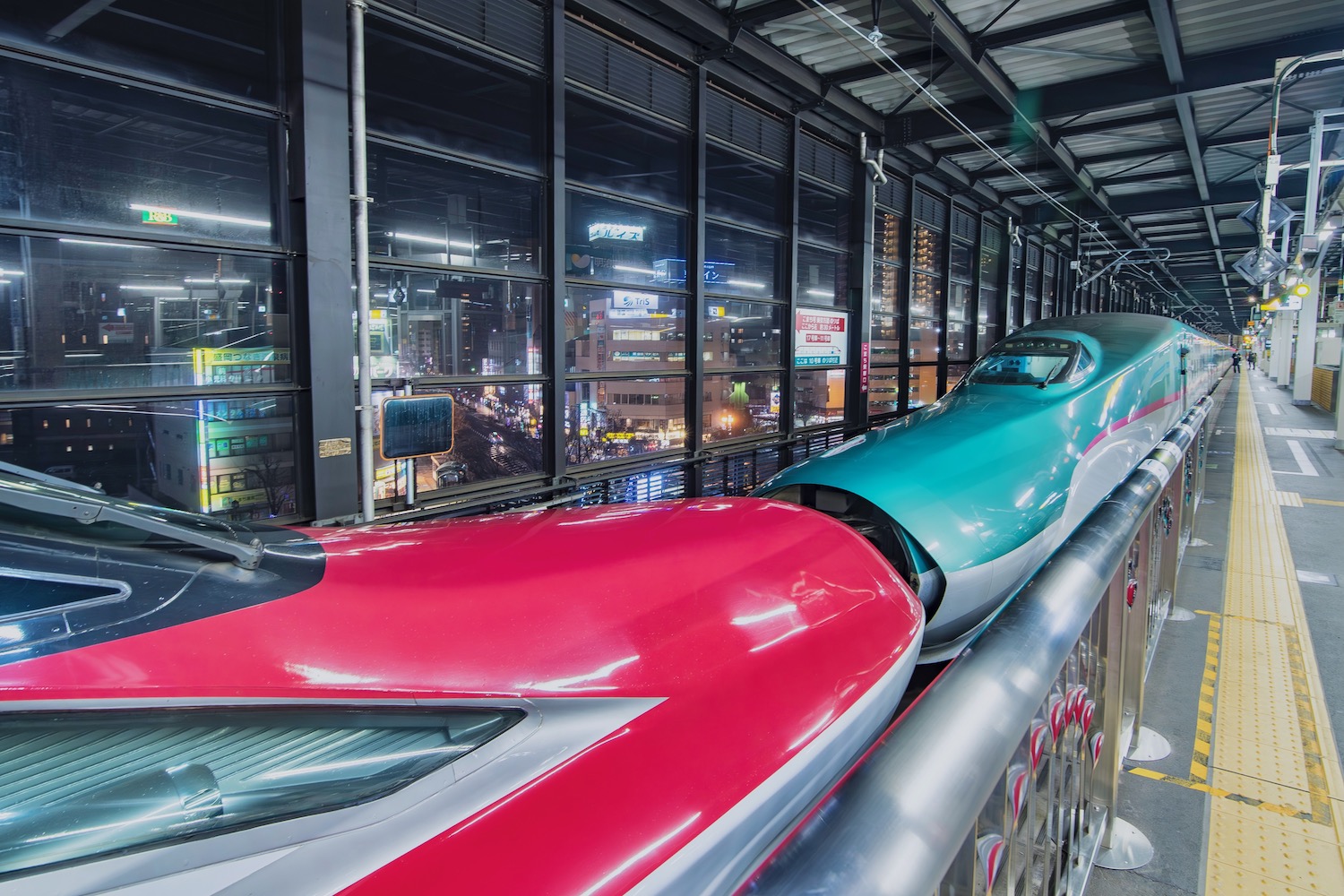
5 Lifesaving Tips for Taking Trains in Japan
Learn all the different train types before your trip
The Shinkansen (新幹線) bullet train is the best-known Japanese train type, but it isn’t the only one. The next-fastest train in Japan is the Limited Express (特急 or tokkyū in Japanese); in addition to speed, it shares with the Shinkansen the fact that you generally need a secondary ticket in order to board it—more on that in a second. Past this are local trains, which don’t require special tickets or reservations, but do come in different “flavors”: The ordinary futsū (普通) stops at every station, while the Rapid (快速, kaisoku) and Special Rapid (新快速, shin-kaisoku) trains make fewer stops for a shorter travel time.
(Different operators, too)
Another essential part of how to take trains in Japan is understanding the different operators. Both the Shinkansen and most long-distance train lines (and even some urban ones, such as the Osaka Loop Line and Tokyo’s Yamanote Line) are operated by the national Japan Railways (JR) company. Beyond this, there are a spate of private rail operators in the country, with the most common among them being Keikyu, Keisei and Odakyu in Tokyo and Keihan and Hankyu in the Osaka-Kyoto area. Local subway systems are also generally operated by their own companies, such as Tokyo Metro and the Kyoto City Subway.
Understand how buying tickets—or, ideally, not buying them—works
I recommend that every traveler to Japan gets a reloadable transportation card such as PASMO or Suica, either installed digitally (if you use an iPhone) or purchased in physical from a ticket machine or ticket office. Once activated and loaded (I usually like to start with around ¥5,000 per card), you can use these for tap-on, tap-off access to virtually every subway and local train line in Japan. They can also be used to cover the “basic fare” component on Limited Express trains (Remember: You have to buy the tokkyū ticket separately), and even to board Shinkansen trains if you buy them online. No IC card? No worries. Employees as basically all ticket offices in Japan can speak at least some English; all ticket machines for all train companies are available in English.
TIP: Whether or not you use an IC card, and in addition to the Limited Express ticket itself, seat reservations require a separate booking; they’re helpful for all Limited Express and Shinkansen trains, and required for others. Additionally, if you plan to bring very large luggage on the Shinkansen, you may need to purchase reservations for it.
(And I’m not talking about the Japan Rail Pass)
Prior to 2023, the Japan Rail Pass was indispensable (albeit never required) for taking trains in Japan. It was cheap enough that its restrictions (you can’t use it on the super-fast Nozomi and Mizuho Shinkansen trains, nor—of course—on private rail lines) were easy to overlook. These days, its price is so high that in the best-case scenario, buying tickets outright is usually a wash. Its only main advantage is that you can easily make and manage seat reservations online.
Google Maps is your friend—but only within cities
The good news? Google Maps is fantastic for finding your way around Japanese cities, whether by local train, subway, bus or on foot. The not-as-good news? Unless you’re already very familiar with the various Japanese train types and how they work together, the Google Maps directions for a given long-distance journey can be confusing, even if they are technically correct. For the majority of foreign visitors, locally-built search tools such as Jorudan and Navitime provide far more useful information pertaining to most train journeys.
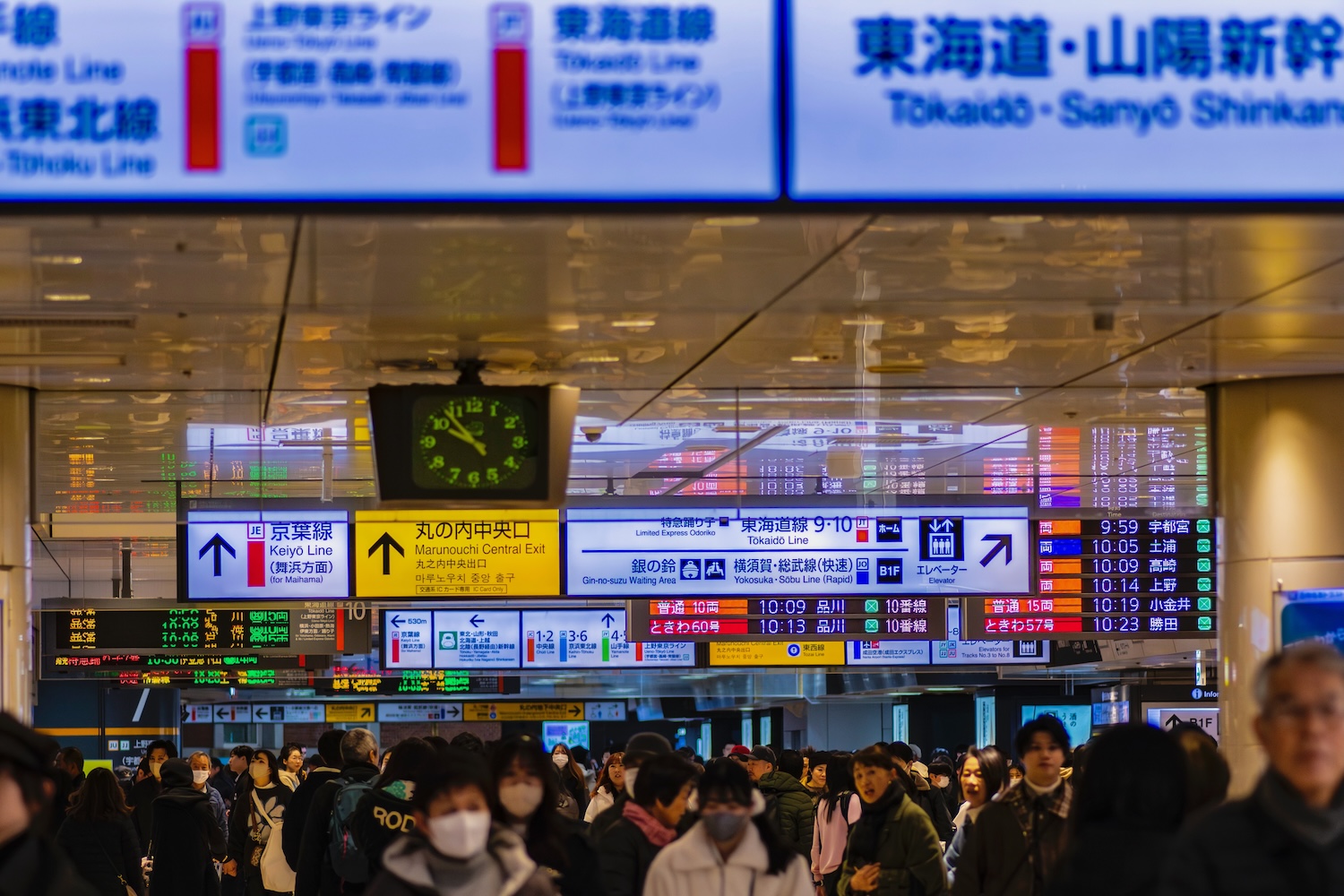
Decoding the Journey: Tokyo to Hakone
To illustrate the value of the tips above, I thought we could decode a real-life train journey together, this one from Shimbashi Station in Tokyo’s Ginza district to Gora Station in the hot springs town of Hakone. Here is what the trip looks like, in its simplest representation:
TRAIN: Shimbashi to Shinagawa, JR Tokaido Line, 13:45-13:50
—connecting to—
TRAIN: Shinagawa to Odawara, Shinkansen Kodama 831, 14:04-14:30
—connecting to—
TRAIN: Odawara to Hakone-yumoto, Hakonetozan Line (for Hakone-yumoto), 14:56-15:10
—connecting to—
TRAIN: Hakone-yumoto to Gora, Hakonetozan Line (for Gora), 15:12-15:48
Let’s break it down, leg-by-leg:
- The Tokaido Line is a JR-operated local train; other trains that connect these stations include the JR Yamanote Line and JR Keihin-Tohoku Line. You can use a PASMO or Suica (shorthand: IC) card to enter Shimbashi Station and exit Shinagawa Station; reserving seats is neither possible nor necessary.
- Once at Shinagawa Station, follow signs to the JR Ticket Office to buy tickets for the Kodama bullet train; you’ll insert these paper tickets into the Shinkansen ticket gates, rather than tapping your IC card. Well, unless you have reserved tickets online and linked them to your IC card. A reserved seat ticket is not required, though it is helpful. If you don’t have one, you’ll have to scramble for a seat in one of the non-reserved cars.
- Arriving at Odawara Station, you have two potential paths. If you bought tickets online and linked them to your IC card, you can follow signs to the Shinkansen Central Exit and tap your card. If not, follow signs to the JR transfer gates, insert your paper tickets and then use your IC card to go out the tickets gates beyond the transfer area. In both cases, you can use your IC card to pass through the ticket gates for Odakyu, the operator of the Hakonetozan Line.
- Riding the local Hakonetozan Line trains from Odawara to Gora is easy, but notice the “two-step” here. In spite of both being Hakonetozan Line trains, one runs only between Odawara and Hakone-yumoto; the other runs between Hakone-yumoto and Gora. As a result, you’ll need to transfer at Hakone-Yumoto Station, which usually entails simply walking across the platform.

Other FAQ About Taking the Train in Japan
What is the difference between a Limited Express train and a Shinkansen in Japan?
A Limited Express (特急 or tokkyū) train is an ordinary train that quickly connects a string of destinations by eliminating all non-major stops. A Shinkansen (新幹線) is a high-speed bullet train which, in addition to being a limited express train by default, is a much faster way to travel on account of extreme speeds of up to 300 km.hr.
Can I use PASMO or Suica to ride the bullet train in Japan?
Some travelers can use PASMO or Suica to ride the bullet train, but only if they book the ticket online in advance (via the smartEX service if heading west from Tokyo, or via JR East if heading northward and eastward) and “link” their IC card to the reservation. In all other cases, you will need to use a paper ticket purchased or picked up at a JR Ticket Office.
Is it difficult to take the train in Japan?
It’s not difficult at all to take the train in Japan—even kindergartners do it by themselves. What is difficult, however, is gaining a deep enough understanding of how Japan’s train system works to be able to take the train without stressing out about it, or fixating too much on the process.

The Bottom Line
I get why you might feel nervous about taking the train in Japan, I do. And some of that is unavoidable, at least until you’re on the ground in Japan and riding the country’s various rail networks daily. On the other hand, you can set yourself up for success with some key baseline knowledge—the various types of trains in Japan; how to buy tickets (or to use PASMO or Suica to board without them); online tools that can help you plan your journey from Point A to Point B. The good news is that you generally don’t need to worry about the Japan Rail Pass, whose 2023 price increase made it obsolete for most travelers. Need personalized help putting your Japan trip together? Whether or not you’ve got transportation anxiety, I encourage you to commission a custom Japan itinerary today!