


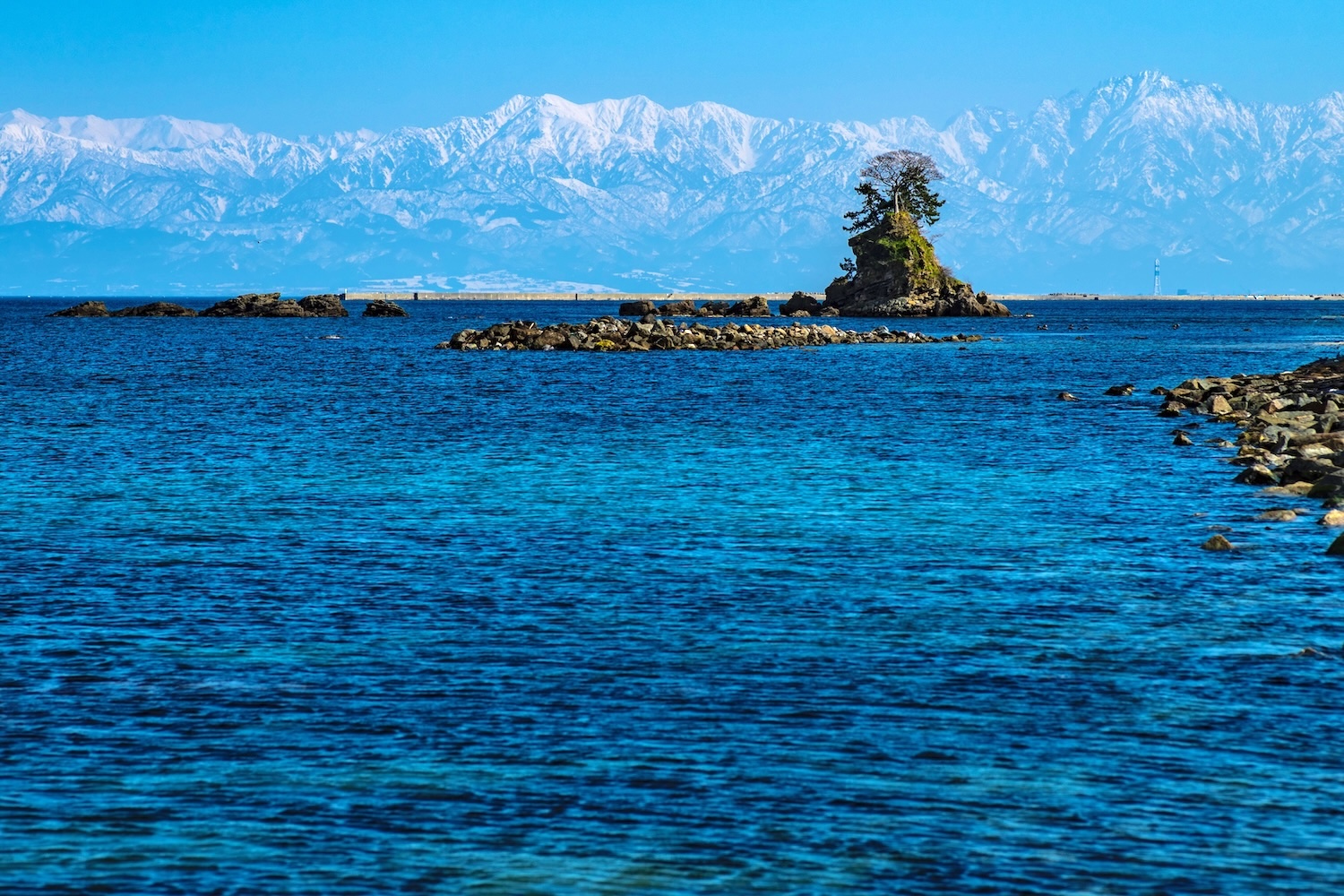
If I had spoken better Japanese the first time I tried to visit Amaharashi, I might’ve been more prepared for how difficult it would be. After all, one half of the characters in its name—which, in kanji, is 雨晴—is “rain.”
Then again, rain wasn’t what prevented me from getting the picture I wanted all those years ago. Though I’m getting ahead of myself in saying that.
The bad news? Based on my own experience, your odds of seeing Toyama‘s Amaharashi Coast in all its glory on your first try are pretty low. The good news? By being mindful about when (and, frankly, if) you go, you can tilt these odds dramatically in your favor.
My First Fateful Trip(s) to Amaharashi
The first time I traveled from Toyama to Amaharashi Coast, I was bright-eyed and bushy-tailed. I’m made my way to Toyama-ken first and foremost to see the Asahi Funakawa Spring Quartet; the Amaharashi-kaigan, I thought, would be a cherry on top. Unfortunately, thick haze obscured the mountains from both shots, leading me to need to return in 2023 to see the flowers as I wanted to see them. This trip, thankfully, was successful.
Unfortunately, while it would’ve made sense for me to go back to Amaharashi on that trip (in April 2023, this is), I didn’t end up having time. I instead came back the following month, which proved ill-advised for two reasons. First, I learned that Hokuriku‘s spring haze is even thicker in May than it is in April. And second, because much of the snow atop the Tateyama mountain range had melted, making what I could see of the scene much less impressive.
How to Maximize Your “Money Shot” Chances
Prioritize colder months—with a catch
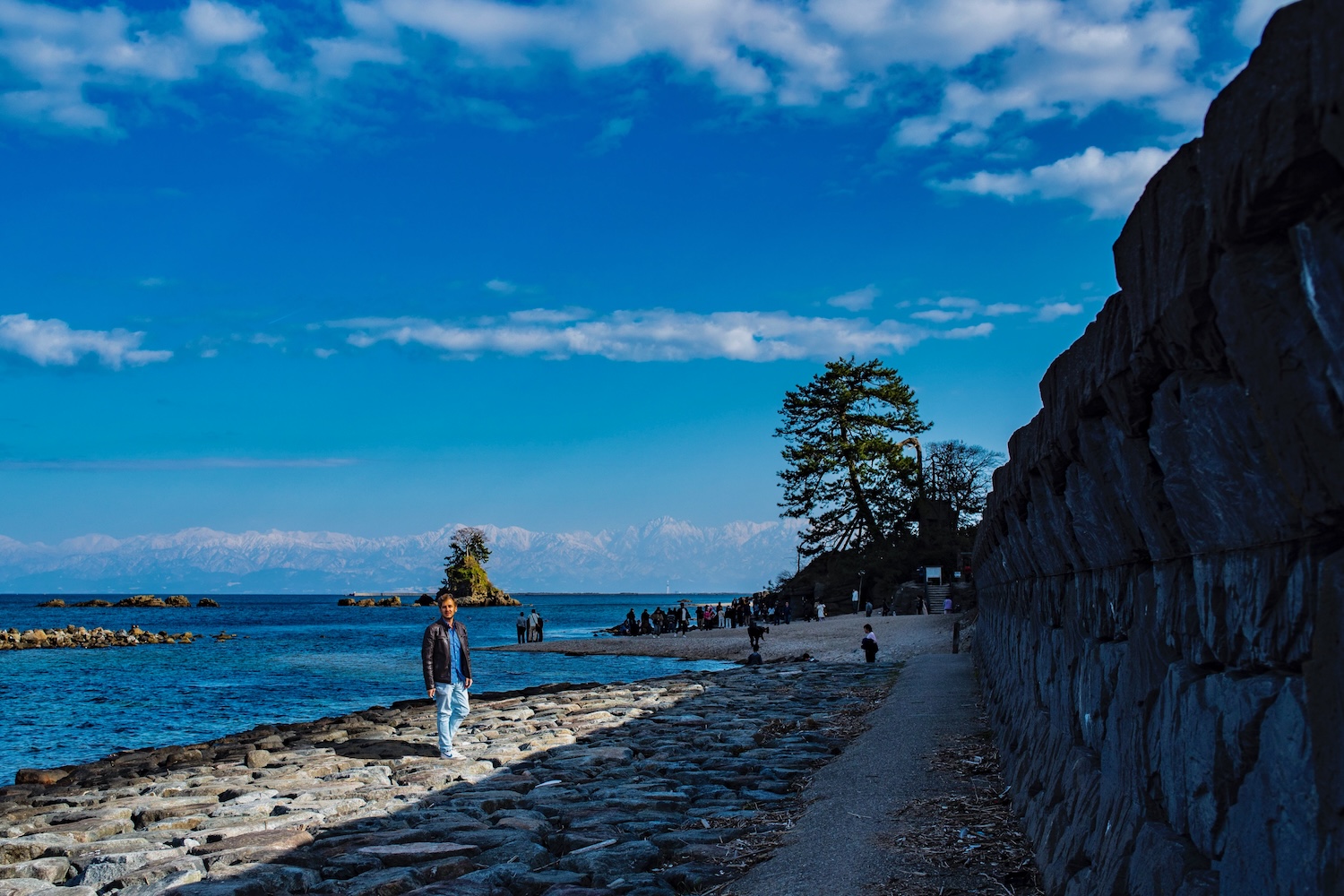
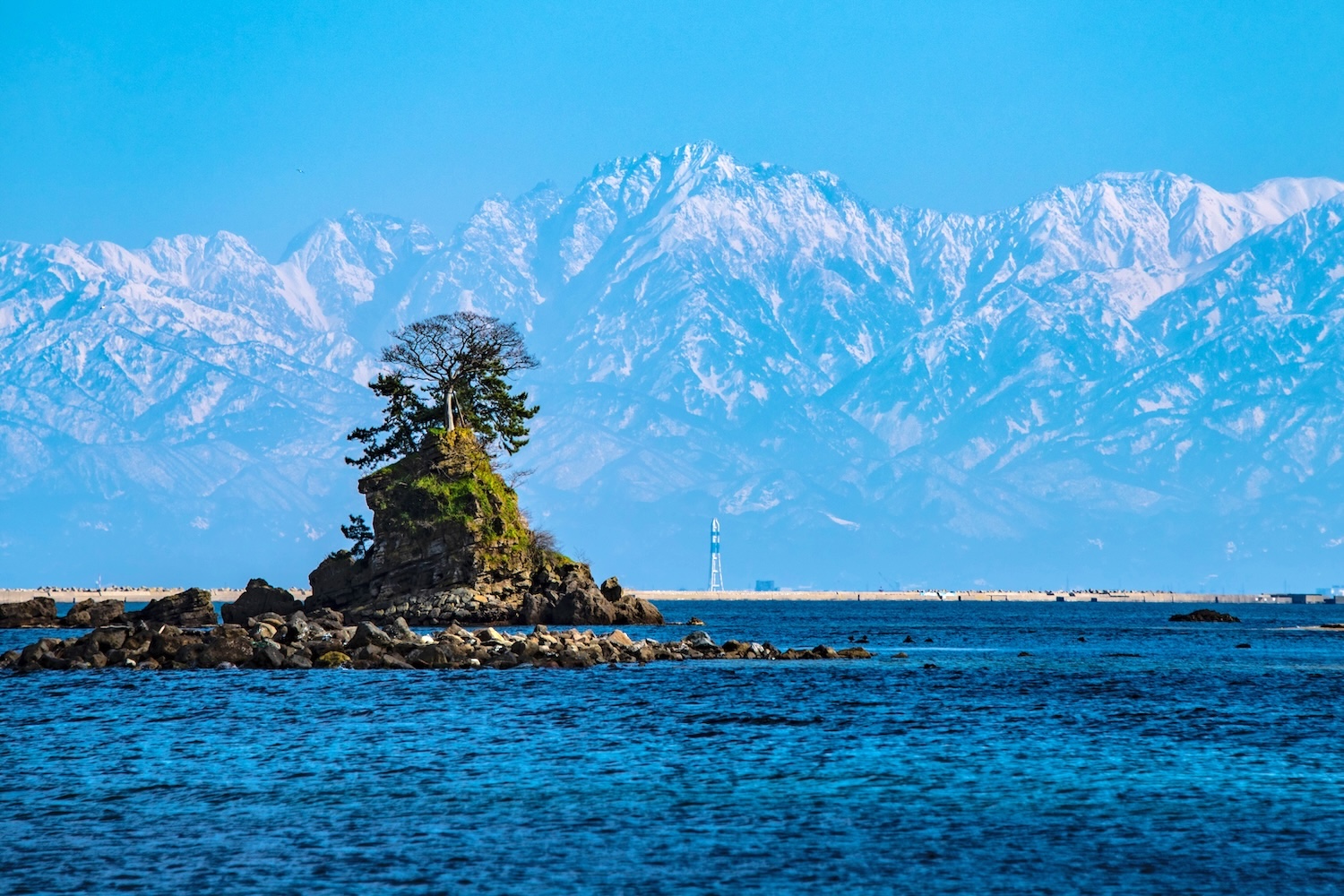
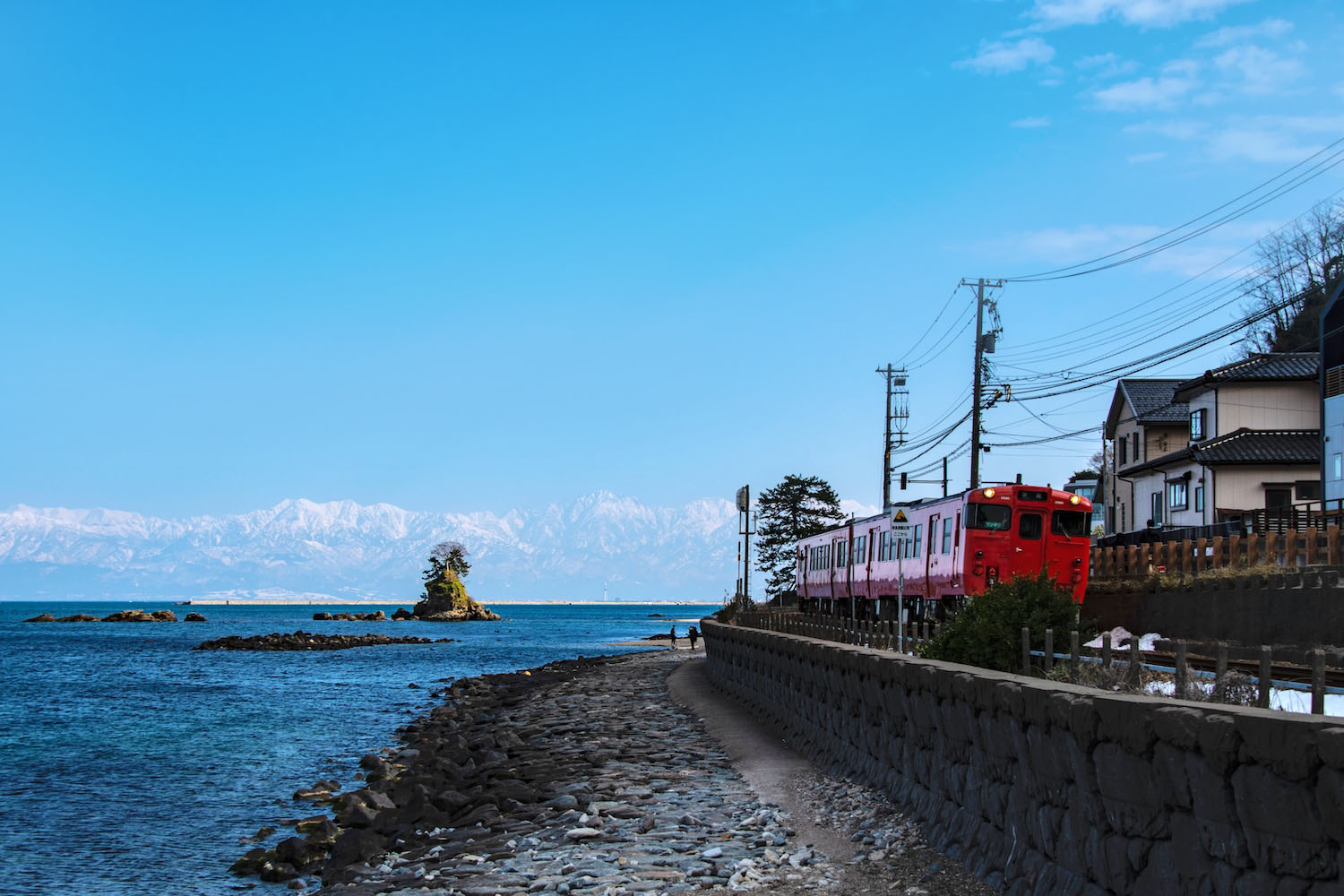
The “money shot” of Amaharashi is Onnaiwa island with the sea beneath it, and the Tateyama mountains rising behind it. Your best chance of seeing this at its most beautiful and vivid? Well, weather-wise that’s definitely winter—and not just because winter is clearer than the other seasons. During winter, the mountain peaks are at their snowiest, creating the most stunning backdrop.
Check the forecast
Whether you come by rental car of take the Amaharashi Coast train, you’ll want to check the weather, irrespective of the season you’re visiting. Similar to how you’d operate if you wanted to ensure you see Mt. Fuji, you will want to make sure that conditions are clear and are scheduled to be for at least an hour or two before or after you plan to arrive. I recommend that you use this website for the most accurate information.
(No, really check it)
Indeed, it won’t be sufficient simply to check whether Toyama and Takaoka cities are clear. You’ll want to scrutinize the Japan satellite if you can, to make sure no clouds are on the way, and potentially even look up the weather for towns like Murodo, which are actually up in the mountains. You should also check the air quality forecast—the worse the air is, the likelier it is that there will be haze.
Spend multiple nights in Toyama
Let me be clear: I’m not arguing against an Amaharashi Coast day trip, and in favor of staying there overnight. However, spending several nights in Toyama prefecture (be that the cities of Takaoka or Toyama, or somewhere more rural) gives you flexibility, and allows you to be nimble if the weather changes. This is an especially worthwhile tactic if photography happens to be your priority.
Have a morning and an afternoon available
In the same vein, being flexible about the time of day you visit is always important. Although the afternoon sees a better lighting situation for capturing the mountains, since they rise to the east of Amaharashi, morning is a bit likelier to see clear skies. Ideally, you would visit at both times, so that even if one is less than ideal, the composite of what you see will amount to the perfect view.
Other Amazing Things to Do in Toyama
As I’ve written about pretty extensively on this site by now, Toyama is a prefecture I love more every time I visit. Here are some of my favorite destinations to explore:
- Toyama City is underrated, whether you visit the Toyama Glass Art Museum within the city center, or enjoyed a panorama from Kurehayama Park.
- Whether or not you’re a fan of Doraemon (whose creator hails from the city), Takaoka is relatively free of tourists, and interesting to explore.
- Along with Kanazawa, Toyama is one of the easiest entry points to the Noto Peninsula, whether you go on a day trip or stay overnight in Wajima.
- You can easily visit the Japanese Alps on a day trip from Toyama, be that the Tateyama Kurobe Alpine Route, Kurobe Gorge or Takayama and Shirakawa-go.
Other FAQ About the Amaharashi Coast
Is the Amaharashi Coast worth visiting?
The Amaharashi Coast is worth visiting if you can go there when conditions are right—namely, a clear and blue sky that’s free of haze. However, if it’s cloudy or rainy/snowy and/or there’s pollution in the air, you’re likely to feel very disappointed upon arriving here.
Is Toyama usually overcast?
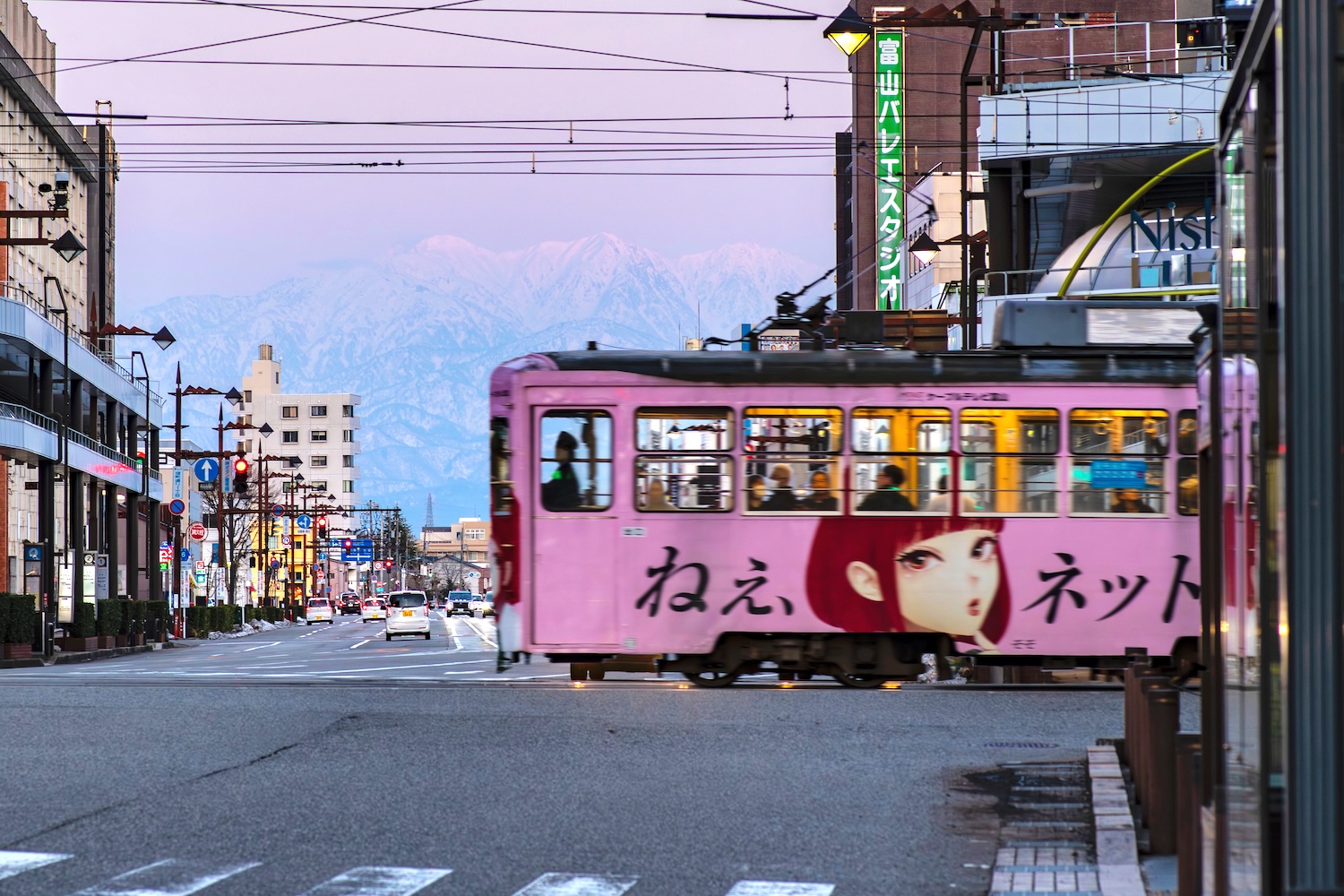
Toyama is one of the rainiest (and, in winter, snowiest) prefectures in Japan, with precipitation falling on roughly 50% of days throughout the year. While slivers of blue sky can appear even on cloudy days, your chances of a perfectly clear day in Toyama simply aren’t very high.
How do I get from Toyama to Amaharashi Coast?
The Amaharashi Coast is about 45 minutes from Toyama by public transportation. You’ll need to ride the Ainokaze Toyama Railway Line from Toyama Station to Takaoka Station, and then the JR Himi Line from there to Amaharashi. If you have a rental car, you can expect the trip to take about as long.
The Bottom Line
My first couple of trips to the Amaharashi Coast were disappointing, but the charmed third time made all the previous travails worth it. There are some places in Japan where you can look on the bright side if you get a cloudy or hazy day, but at Amaharashi (as is the case with Mt. Fuji), a perfectly clear sky is necessary to see the view (which, in this instance, is the Tateyama mountains in the distance) at all. Maximize your chances of a positive outcome by visiting in winter when the snow cover on the mountain is high, and on a clear winter day at that, when both clouds and air pollution are minimal. Take your entire Japan itinerary to the next level when you hire me to plan it.