



As I’ve written about elsewhere on this site (namely in this post, if I’m not mistaken), the shibazakura displays near Mt. Fuji were one of my early travel failures in Japan. And, due more to logistics than a lack of skill, have remained a proverbial white wale until very recently.
The good news? In the spring of 2026, I finally had time to make another trip to Fuji Motosuko Resort and take another stab at seeing the flowers that are sometimes characterized as “hot pink moss.”
The better news? I can confidently say that attending the Fuji Shibazakura Festival is fully worth the effort involved. Well, at least if you do your homework (and if you make peace with the fact that the shibazakura are not actually moss).
My First Attempt to See the Shibazakura Was a Massive Fail
Back in 2018, literally the day I officially launched this website to the world, I was bullish about my prospect of seeing the Mt. Fuji Shibazakura. While research I did prior to my trip indicated that mid-May was toward the end of the shibazakura season, they also informed me that these flowers were far less fickle than the sakura themselves. I felt confident, even a little bit cocky.
Unfortunately, reality quickly slapped me in the face. “You can go if you want,” the bus ticket seller across from Kawaguchiko Station informed me when I walked up, “but the flowers are basically gone.” I was disappointed to hear this, but I trusted here, and instead headed up to the north shore of Lake Kawaguchi to admire the irises (which, thankfully, were in full bloom).
What to Know About Mt. Fuji’s “Pink Moss”
It isn’t moss
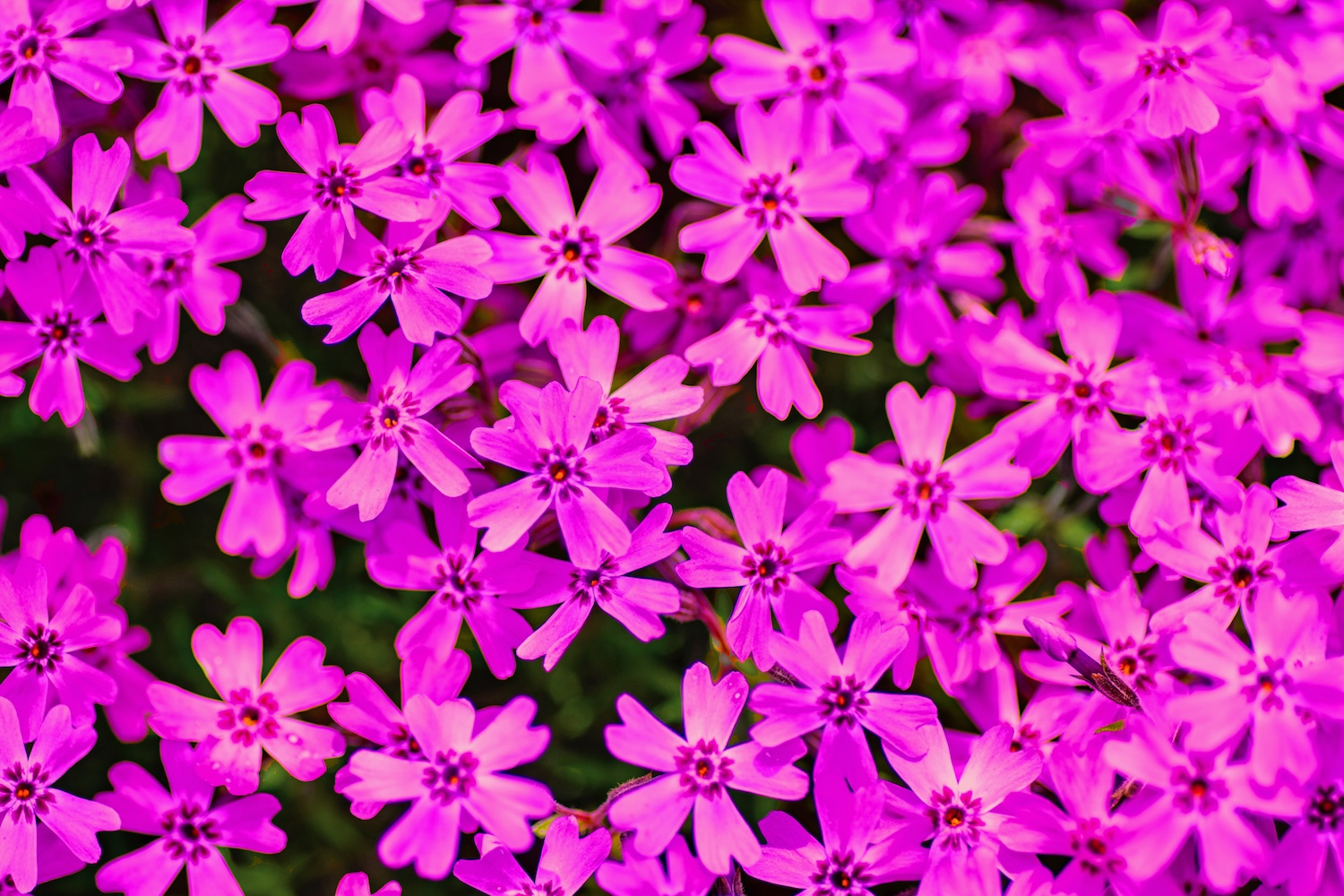
Shibazakura is not moss. It can look like moss from far away, given that it is a kind of groundcovering; its hot pink color can obscure the intricacies of its structure, especially underneath the bright sunlight that’s ideal for seeing it. But it’s a type of phlox flower which, while densely, is not nearly as intricate or latticed as moss.
(It also isn’t sakura)
Colloquially the name of the Mt. Fuji pink phlox is shibazakura, which literally translates to “cherry blossoms on the ground.” It’s important to note, however, that this is a cultural representation of the flowers, rather than a scientific one. They function as sakura does in the context of this festival, but they have no biological relation to cherry blossoms.
It’s becoming more of an April event than a May one
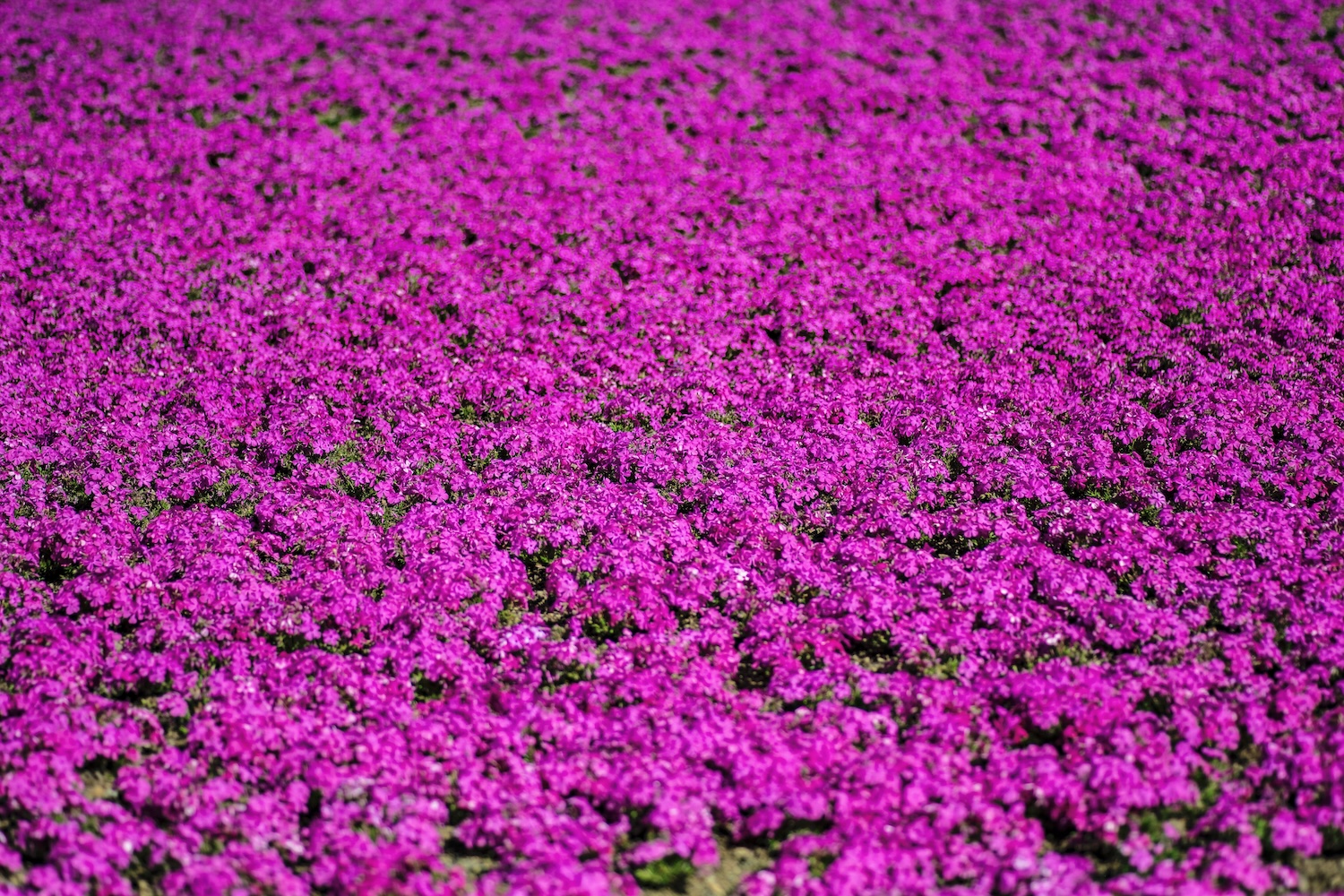
Although the dates for the 2027 Fuji Shibazakura Festival have not yet been released, I predict that next year’s festival will begin in mid-April. This is because even in 2018 (which was a “normal” sakura year), the flowers were all but gone by mid-May. So while seeing shibazakura in May a decade or more ago might’ve been reasonable, this is simply not the case anymore.
(Though you can monitor its status online)
As 2027 begins and the date that the Mt. Fuji pink moss appears draws near, Fuji Motosuko Resort itself will begin posting updates about the bloom. I would recommend bookmarking this page now, and keeping an eye on it, especially during late March and early April.
A clear sky is essential for best viewing
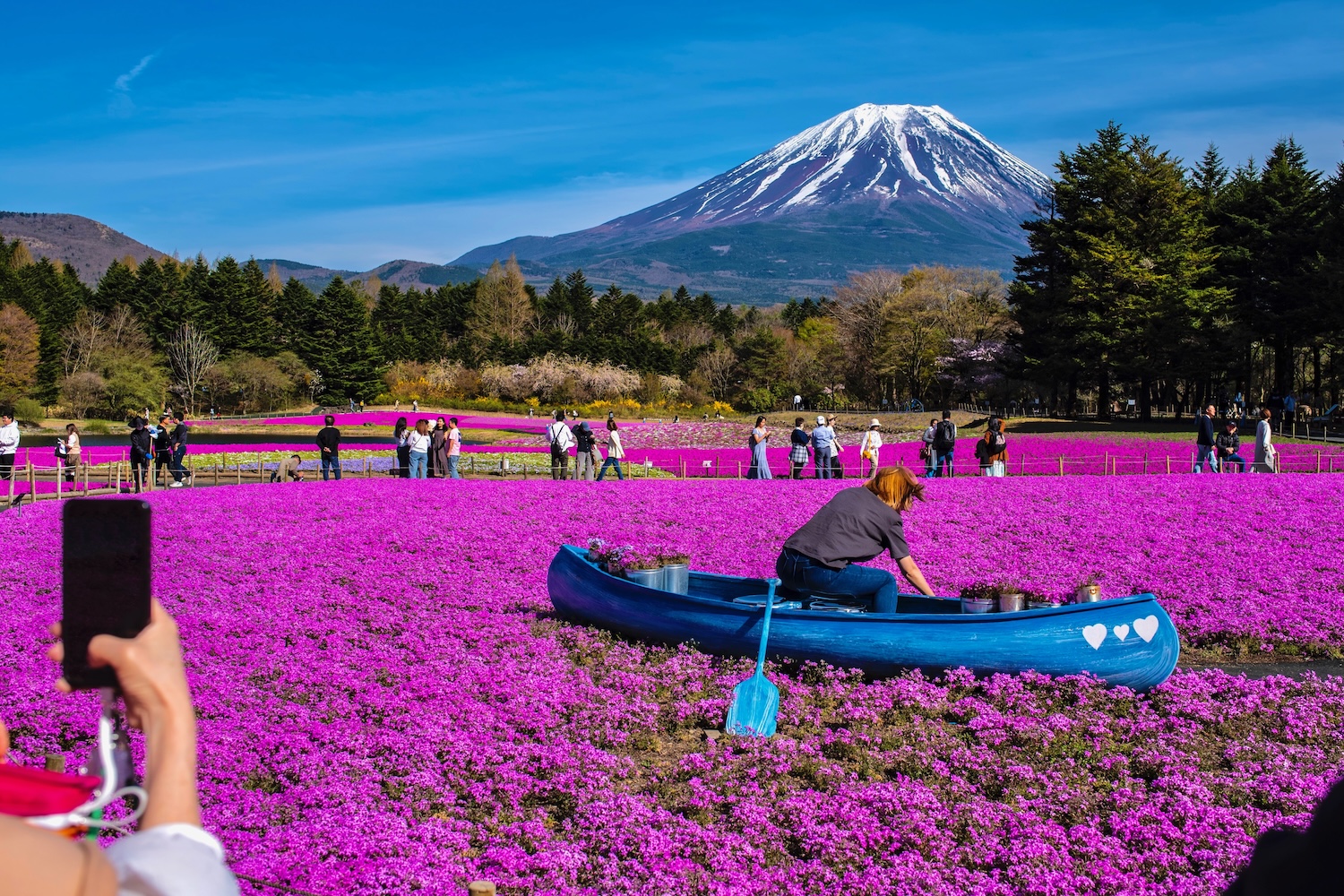
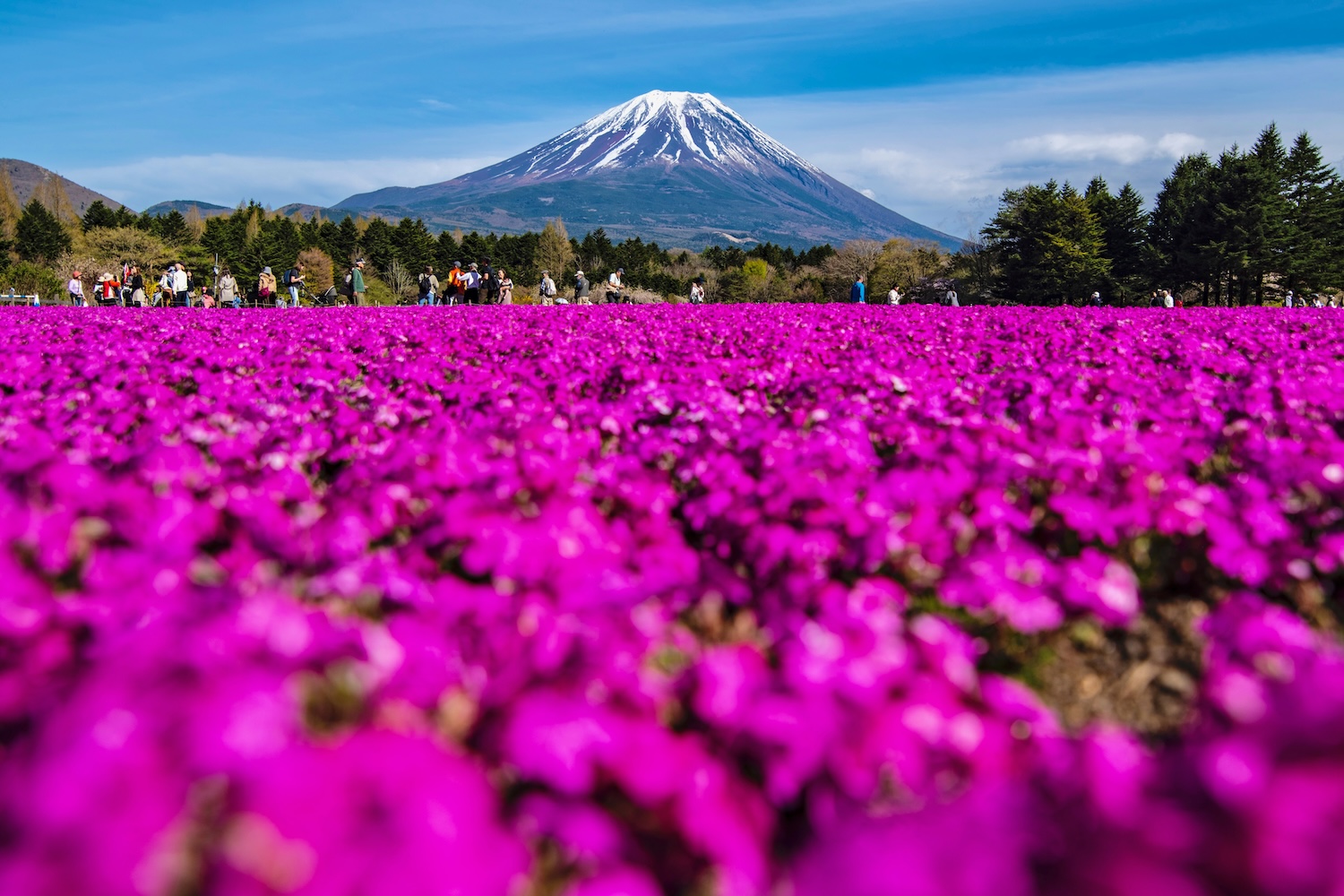
As is the case with most activities in the vicinity of Mt. Fuji, a clear view of the mountain is essential for fully enjoying the experience. I recommend that you check this page in the days leading up to your planned visit to see the shibazakura. If conditions don’t look like they will be clear or, at worst, partly cloud, you may want to reschedule for another day.
Other Things to Do Near Mt. Fuji in Spring
Mt. Fuji is amazing 365 days per year, but is especially wonderful during the spring season—and not just because of the shibazakura. Here are a few other awesome options:
- Cherry blossoms near Mt. Fuji are amazing, and they have two “windows.” The first tends to fall in late March, when lower-lying hanami spots such as the Urui River near the sea in Shizuoka prefecture reach full-bloom.
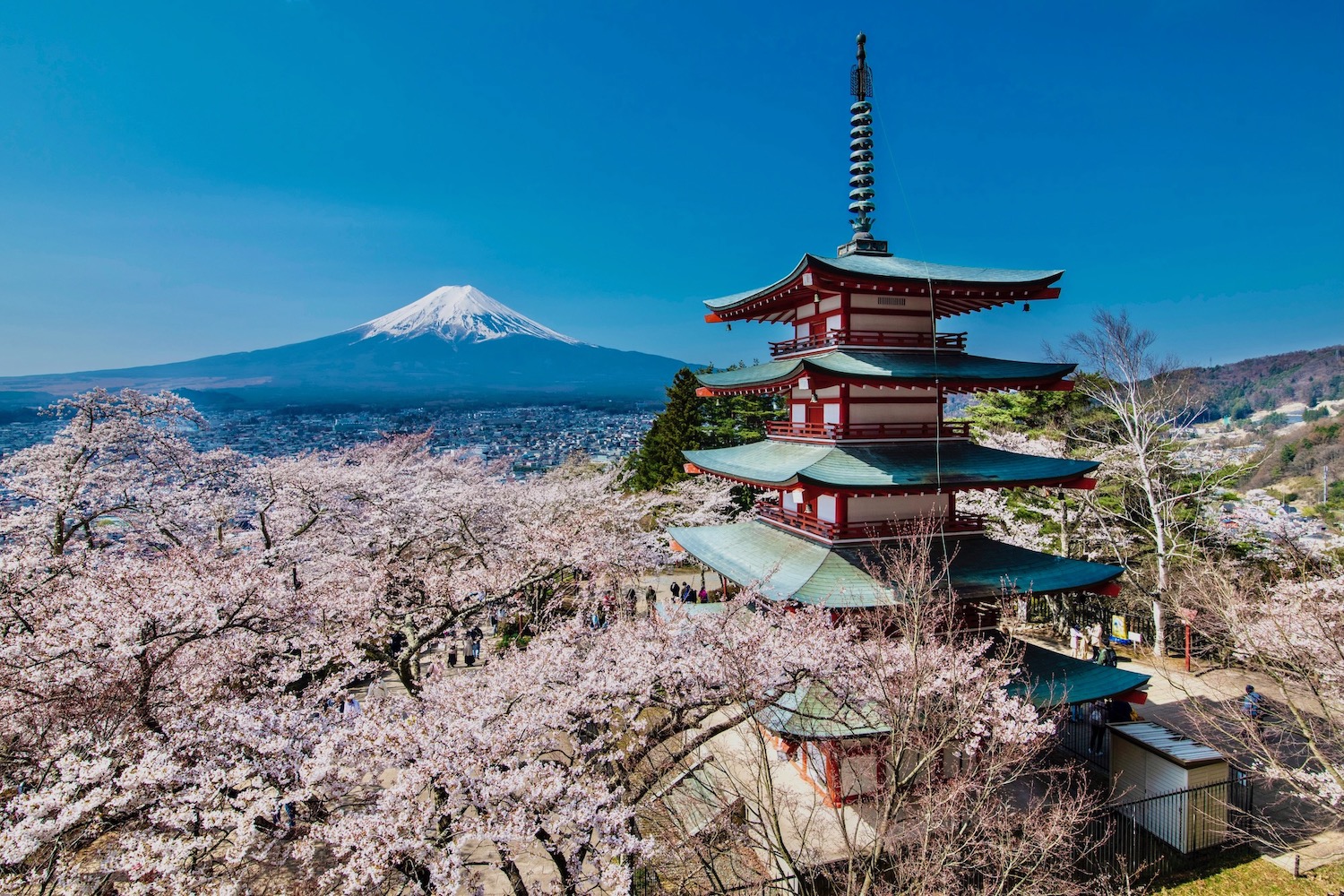
- Planning to be in the Fuji Five Lakes region? Around the second week of April, hot spots like Chureito Pagoda and the north shore of Lake Kawaguchi will reach mankai.
- Other flowers exist in and around Mt. Fuji, including a small nemophila display on Lake Kawaguchi just after the sakura peak, and tsutsuji (azaleas) at the Odakyu Hotel de Yama in Hakone.
Other FAQ About Attending the 2027 Fuji Shibazakura Festival
How do I go to Fuji Shibazakura Festival?
There are two basic ways to attend to the Fuji Shibazakura Festival, which takes place at Fuji Motosuko Resort between about mid-April and mid-May every year. The easiest is renting a car and driving there yourself. Alternatively, you can get a direct bus to the resort from Kawaguchiko Station.
Is the 2027 Shibazakura festival worth it?
The 2027 Fuji Shibazakura Festival is worth it if you perfectly time your visit to the full bloom of the “hot pink moss.” If not, or if Mt. Fuji isn’t clearly visible against a mostly blue sky, then you might find the day slightly disappointing. Doing your due diligence well in advance of travel will maximize your chances for success.
Where can I see pink moss in Japan in 2027?
The shibazakura (a type of phlox) are most beautiful at Fuji Motosku Resort, near Lake Motosu just northwest of Mt. Fuji. Do be aware, however, that although they can look like “pink moss” from a distance, they are not actually moss. But they are very, very pink, so there’s that.

The Bottom Line
Attending the Fuji Shibazakura Festival is more than worth it if you’re willing to do the homework necessary to ensure success. There’s a bit of bad news, of course—shibazakura is phlox, not “hot pink moss”—though once you make peace with that, enjoying this short-lived phenomenon (which is unique, if not extraterrestrial) is pretty straightforward. Among the due diligence necessary is monitoring the weather. Flowers in full bloom are pointless, after all, if you can’t clearly see Mt. Fuji rising into a blue and mostly cloudless sky. Need personalized help getting your trip to see Mt. Fuji’s pink phlox just right? Commission a custom Japan itinerary today!