


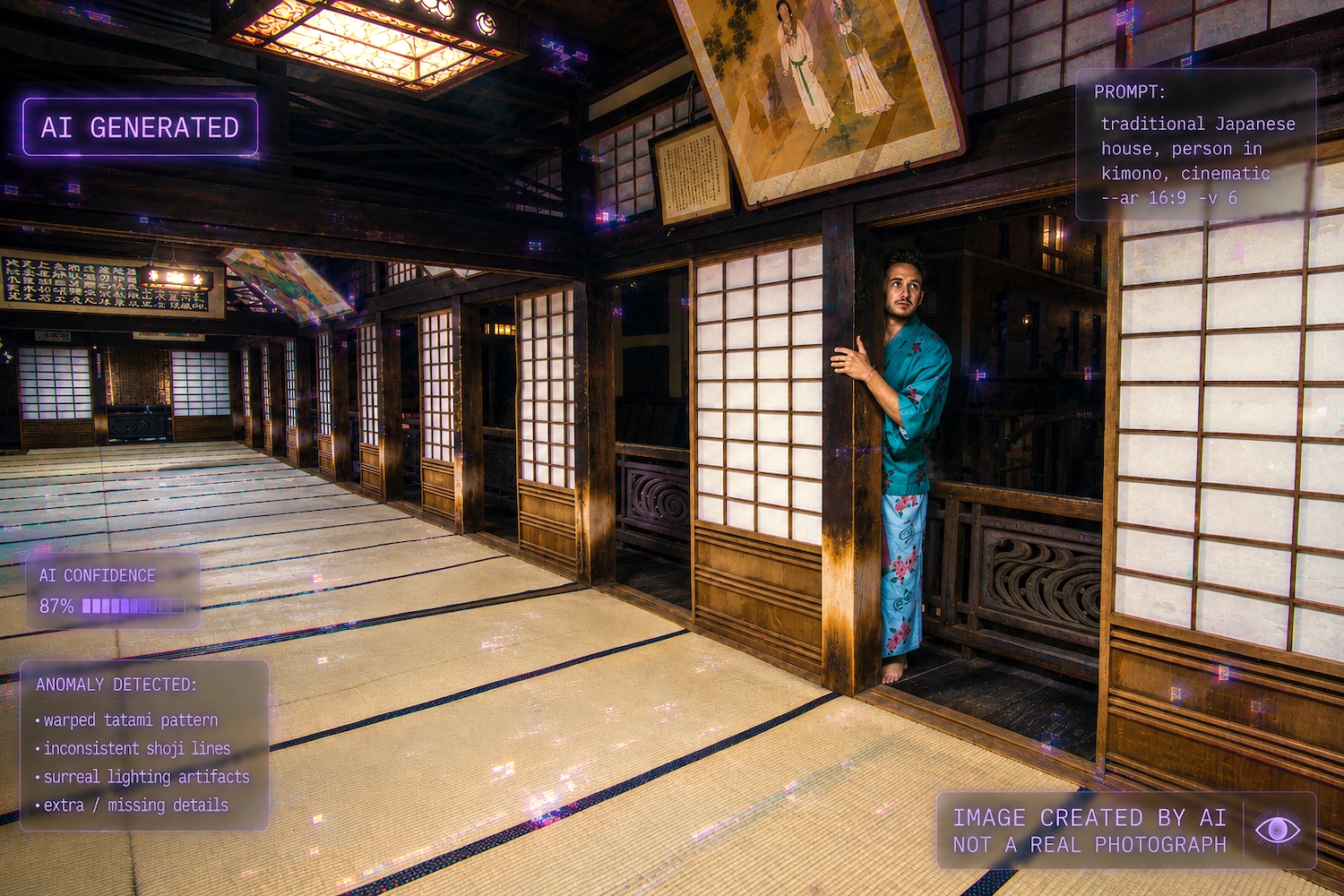
As I was outlining this article and getting ready to write it, I asked ChatGPT to help me with an image. “Take this picture,” I instructed it, and copied in an actual photo of mine, “and make it obvious AI.”
The first result? Similar to the one you see above, but with a glaring mistake. It says :AI-GENERAOED,” rather than “AI- GENERATED.”
Now, I’m not necessarily saying that you’ll be met with such blatant errors if you attempt to plan a trip to Japan with AI. But I would ask you to hear me out: If you can’t trust an LLM to spell a simple word correctly, should you really follow its recommendations about the best destinations to visit in Japan (among other things)?
Why So Many Travelers Are Using AI for Japan
Look, I get why you might want to use AI to plan your trip to Japan. For starters, it’s free. Well, not for the environment, let alone for the future of human work and dignity. But in the immediate term, you don’t have to pay a cent to use it. You can get what appears to be a complete itinerary in seconds, and not have to give your trip much more thought until after you arrive in Japan. We’ll talk in a second about whether that’s actually a wise strategy.
Additionally, LLMs are programmed to tell you what you want to hear. Whereas a human travel planner (myself or someone else) might correctly tell you that your ideal Japan itinerary is too ambitious for the amount of time you have, or that the ryokan you’ll be dreaming about for years is an overpriced tourist trip, ChatGPT and Claude aim primarily to please. They’ll create an itinerary that gives you the trip you want, whether or not it is in your best interest to attempt it.
5 Ways AI Fails at Japan Travel Planning
It has no taste—literally or figuratively
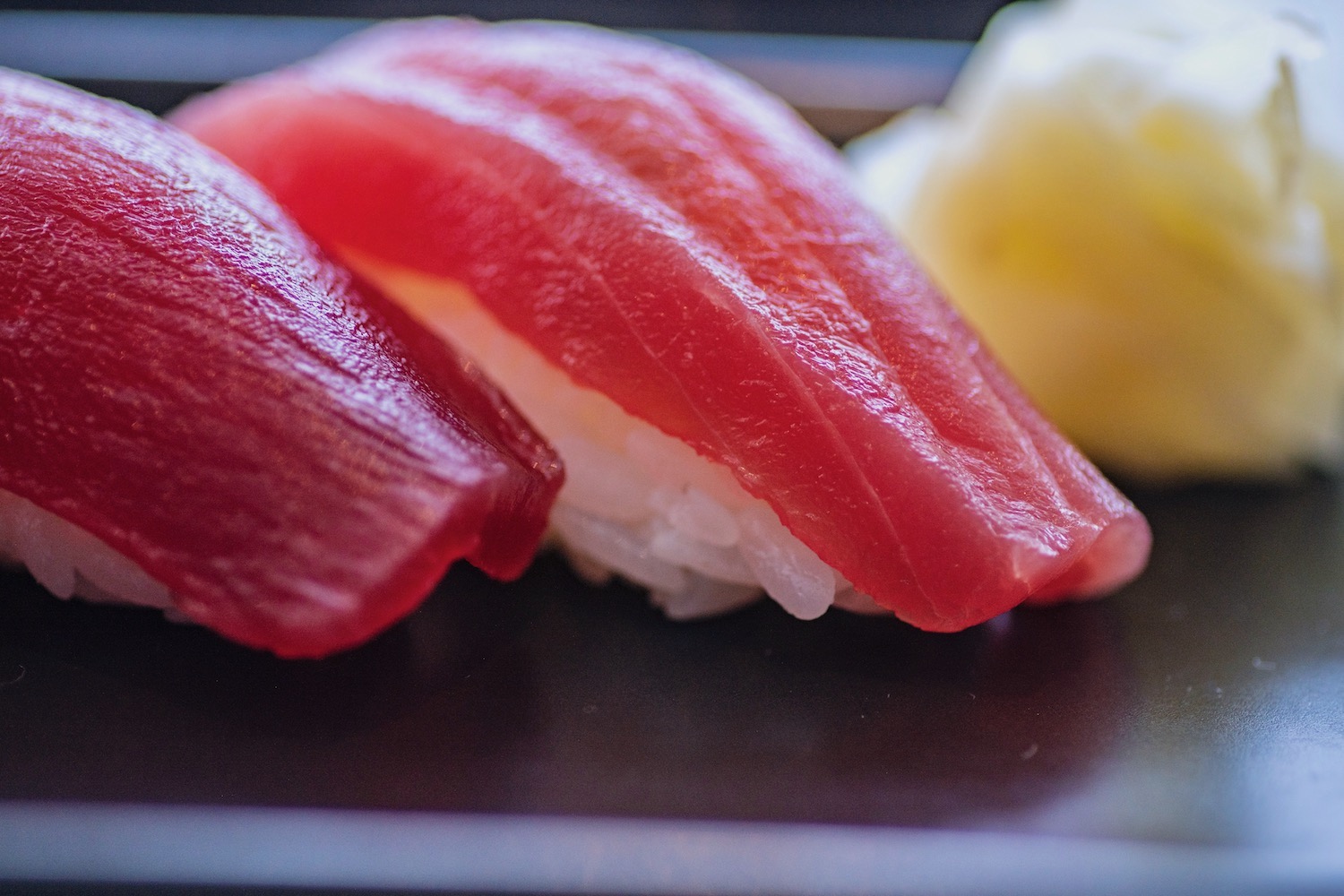
At risk of stating the obvious, AIs don’t have mouths or taste buds, and cannot taste food. They can recommend trending restaurants, but they cannot tell you if ramen or wa-gyu lives up to the hype. Likewise, although you favorite LLM can certainly curate a convincing list of the top hotels and ryokan in a given place, it can’t (and often won’t) tell you which are actually worth the money.
It misinterprets the human scale of logistics and transport
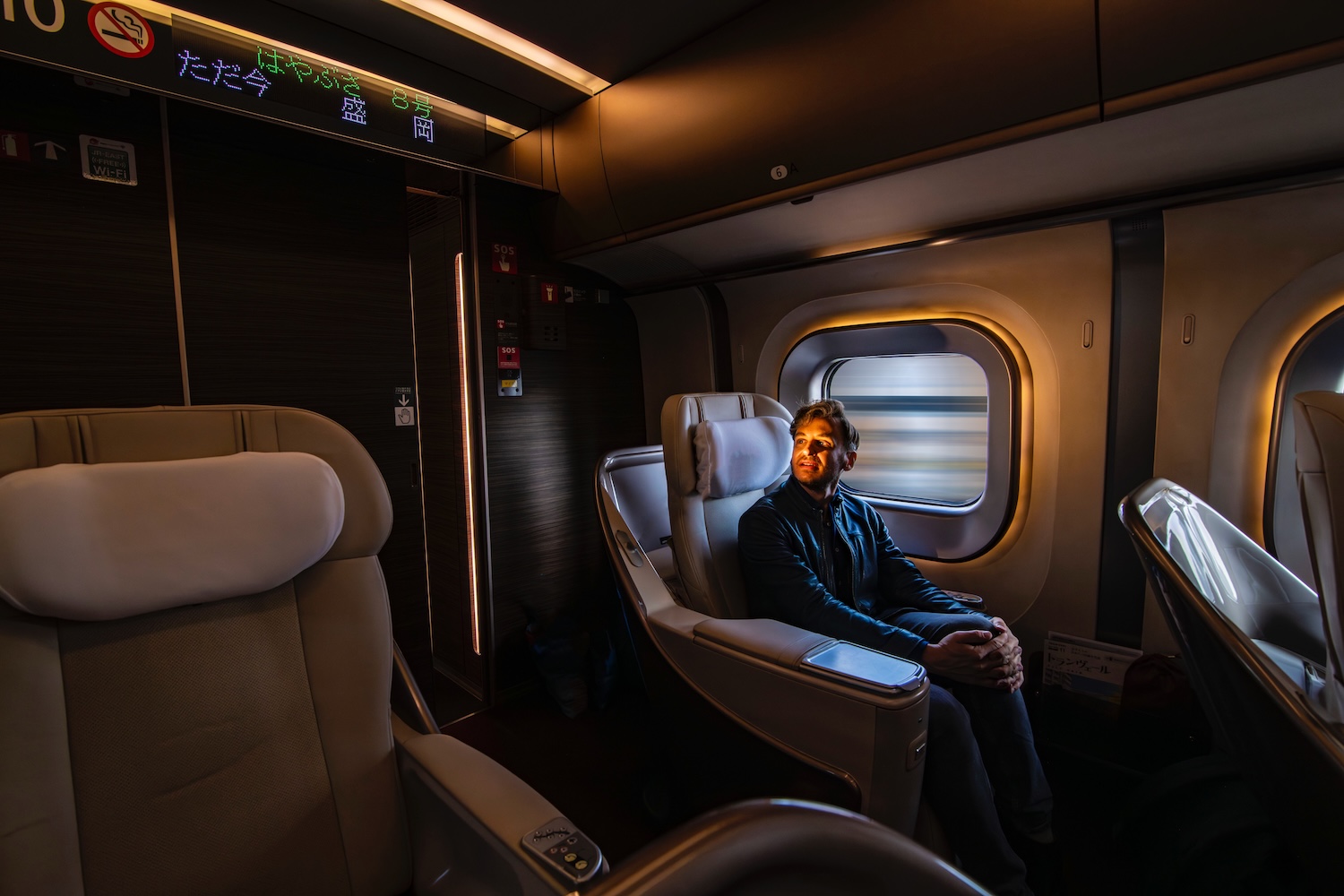
A few weeks, someone emailed me panicked with their Japan AI itinerary. Claude, you see, had exclusively suggest Shinkansen transfers that were between 1-5 minutes in length. Although this is definitely possible at some smaller stations, it certainly wasn’t the case for this poor traveler. Even if you only trust an AI to plan out the tedious logistics of your trip, you stand a real risk of getting stranded (or miserable even if you do make your train).
It lacks perspective about destinations and experiences

AI collates more than it curates—it’s programmed not to let you know your blind spots (let alone to fill them in), but to pretend they don’t exist. I’ve seen more than one AI Japan itinerary that recommended hotels in Shinjuku and days spent in central Kyoto to travelers who told it they wanted to go off the beaten path, and another that suggested a tour through Hyogo prefecture’s somewhat obscure Uo-no-tana Fish Market as a “more convenient” alternative from Osaka than Kuromon Market, even though the latter is actually in the city center.
It hallucinates invisibly and silently
Whether you use AI for a Japan itinerary or to help you come up with a daily task list, you’ve no doubt noticed its hallucinations. Sometimes this is harmless, dropping in a word in a foreign language you don’t speak, or stating that someone you know for a fact is dead is still alive and well. In the context of planning a trip to Japan, I’ve seen AIs tell travelers that Tokyo’s “tuna auctions” still take place at Tsukiji Market (even though they ceased in 2018), and that the 2011 Tsunami is an irrelevant consideration for travelers bound for the Sanriku Coast, which took a direct hit from it.
It isn’t accountable

If you hire me to plan your trip to Japan and I mess it up (which is unlikely—I’ve literally never received a serious complaint or a single refund request), you have recourse both during and after your trip. With AI, your next steps are limited. While ChatGPT might bail you out in the moment after a missed train or plane connection, or once you arrive at a long-closed restaurant for dinner that will never happen, you’re SOL if something more serious happens and it causes you to lose money and hours/days of time, or compromises your safety.
The Best Alternative to AI Japan Travel Planning
Now, as I’ve been honest about since the first paragraph of this post, I’m not impartial. I offer a custom Japan itinerary planning service, which has helped hundreds of travelers since I introduced it in 2012. It’s more expensive than ChatGPT or Gemini—I neither deny nor apologize for this. But when you hire me, you get personalized daily recommendations for activities, meals, accommodation and transport, based on 12+ years of real-life Japan travel experience.
Perhaps as important as what I give you is what I don’t give you. I won’t recommend destinations or experiences just because people are talking about them online, let alone because I am incentivized to do so by an algorithm. I won’t suggest overpriced restaurants or tourists-trap hotels. Perhaps the most important contrast between hiring me and deciding to plan your Japan trip with AI? I’ll give you a reality check on what you can and can’t achieve given the amount of time you have.
Other FAQ About Using AI to Plan Your Trip to Japan
Why shouldn’t I use AI to my plan my trip to Japan?
At first glance, your favorite AI can instantly produce what appears to be an accurate, actionable Japan itinerary. But even a shallow dive into the details reveals mistakes at multiple levels, never mind a pronounced lack of taste, judgment and attention to human detail. If you’ve planned your trip with AI, you can email it to me and I can very quickly diagnose its issues.
Why does AI make so many mistakes when planning trips?
AI makes many mistakes when planning trips because it isn’t actually synthesizing an itinerary. It’s collating and curating information it’s lifted from other sources (like this blog), and algorithmically outputting an approximation of an itinerary that is likely neither accurate nor actionable. The problem is that the finished product usually “looks” legit, while fools people into thinking it’s fine.
Why is the Japan itinerary AI planned for me so bad?
LLMs like ChatGPT and Claude lift information from human sources and attempt to make sense of it according to a finite range of programming cues. When it comes to planning trips to Japan, they’re literally doing the same research you’ll do—it’s just faster, and doesn’t have to pass any smell tests. If you were to plan a Japan trip yourself, you’d notice details (such as too-short transit times, or restaurants that had bad reviews) that these AI tools would miss.
The Bottom Line
I’ll be honest: I have a vested financial interested in encouraging you not to plan a trip to Japan with AI. At the same time, I also recognize AI’s very real limitations and don’t want you to rely on it, even if you don’t decide to hire me to plan your trip. Even the best LLMs have massive blind spots when it comes to planning travel—they can’t taste food or know how long you’ll need to transfer between trains at a massive rail hub. And most importantly, there’s no way to hold them accountable if you follow their advice and your trip gets ruined as a result. By contrast, when you use my Japan itinerary planning service, you’re leveraging over a decade of on-the-ground experienced that’s nuanced, precise—and, most importantly, human.