



I always root for the underdog, and Osaka is no exception. Although it’s Japan’s second-largest city (well, third if you count Yokohama), Western tourists reliably snub it—in favor, not surprisingly, of nearby Kyoto.
On one level, I get this. Kyoto is a more “unique” city; because it, like Osaka, is in the heart of the Kansai region, it serves as a similarly effective base for day trips.
On the other hand, the Kyoto vs Osaka is at its core a study in contrasts: These two cities simply couldn’t be more different, their utility as hubs for exploration notwithstanding. You really should plan on devoting time to both if your schedule at all allows it.
Why So Many Travelers Skip Osaka (or Just Day-Trip There)
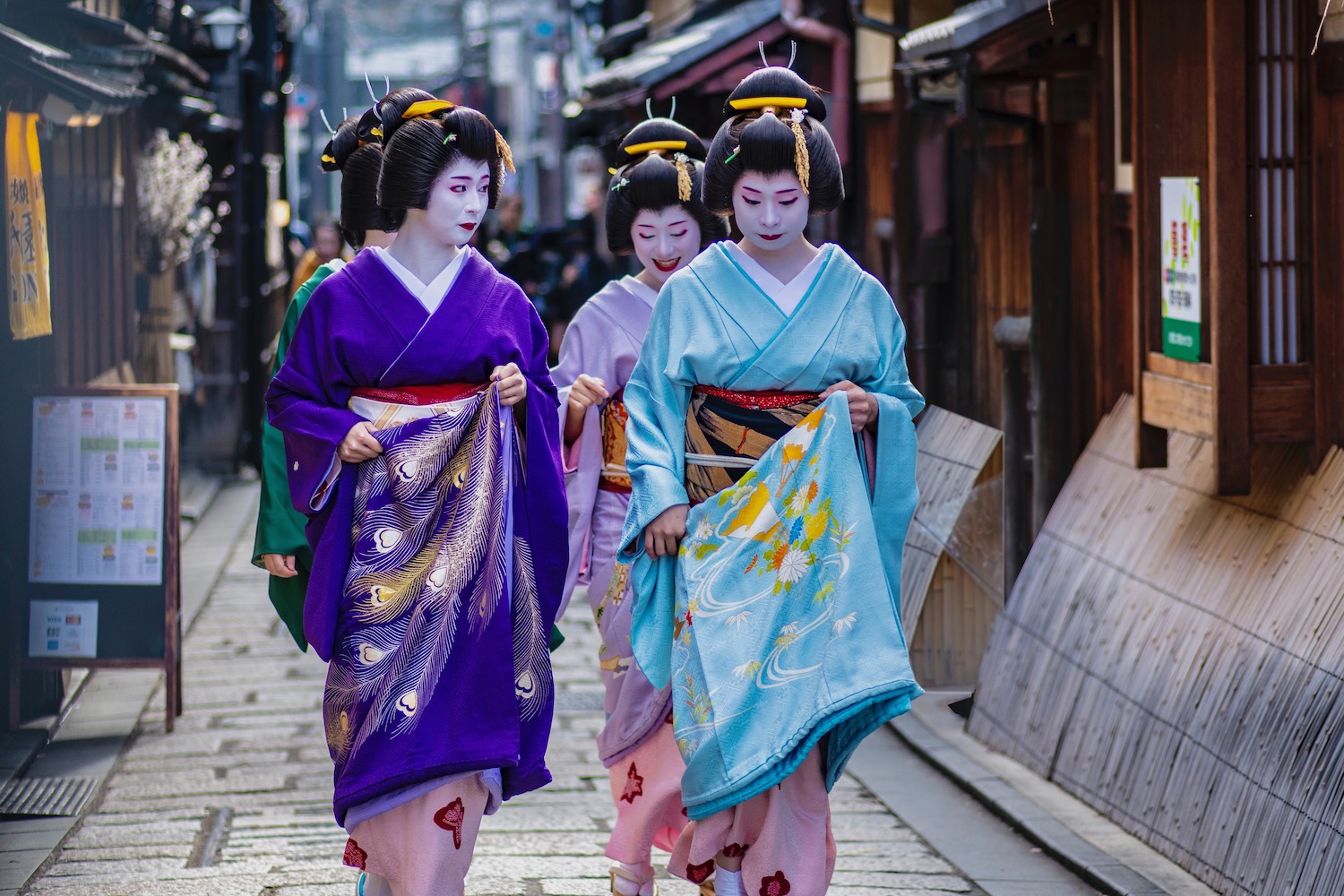
For most foreign visitors to Japan, whether to visit Kyoto or Osaka isn’t a question. Kyoto—Japan’s erstwhile capital; the capital of temples and Geisha—is the only choice. They might see Osaka on a day trip, though it might not get the entire day. Even I, in my itinerary planning business, sometimes suggest an evening eating street food in Dotonbori or Shinsekai as a chase to a day in Himeji and/or Kobe, simply to “squeeze” Osaka in.
The reasons for this are both simple and complex—I’ll be covering the former now, and the latter in subsequent paragraphs. The “simple” reason is that many travelers (at least Western ones—those from East and Southeast Asia see it a bit different), Osaka seems like an alternative and maybe even lesser version of Tokyo, which creates redundancy within their itinerary. Including it would occupy days better spent elsewhere.


Ways to Compare Kyoto with Osaka
Getting there and around—and away
Both Kyoto and Osaka are connected directly to Tokyo via the Shinkansen—take a Nozomi for the fastest journey; keep in mind that Osaka’s bullet train depot is called Shin-Osaka Station. Getting around Osaka relies mostly on the Osaka Metro system (whose red Midosuji Line is the most useful one); in Kyoto, you typically need to supplement journeys on the cross-shaped Kyoto City Subway with the JR Sagano Line, the Keihan Main Line and local buses. The best areas to stay in Kyoto and Osaka (Highashiyama and Namba, respectively) are about as far from each city’s main railway stations as one another, which means the two are equally when it comes to getting out of town.
Things to do
Kyoto and Osaka are both replete with attractions, but of a very different sort. In Kyoto, I usually like to spend my first evening amid the temples of Higashiyama and the Geisha of Gion; the next morning, I ride across town to Arashiyama, home to the infamous Sagano Bamboo Grove, then head back east and ride down to Fushimi Inari Shrine in time to see it light up. In Osaka, meanwhile, I like to spend my first evening eating street food along Dotonbori Canal; on day two, I pair an okonomiyaki lunch with an afternoon at Osaka Castle, before proceeding to Shi-Tenno-ji, the city’s oldest temple.
Accommodation
In Kyoto, many travelers opt for ryokan guest houses (ranging from the simple Ryokan Kyoraku to the upmarket Seikoro), but I’m personally partial to “normal” hotels. These likewise run the gamut—you can save money on a more spartan place like the Waka Heian Shirakawa Hotel, or splurge on the boutique Dhawa Yura Hotel. Osaka, meanwhile, is dominated by city hotels. They’re all pretty “nice”; what more money gets you is a larger room. In my experience, you can have literally twice as much spice at the higher-end Hotel Royal Classic Osaka than you do at the budget Sotetsu Fresa Inn Osaka-Namba.
Restaurants and nightlife
Comparing Osaka vs Kyoto on this front, it’s a matter of trade-offs. Kyoto’s main claims to culinary fame range from tofu (which is generally unappealing to Westerners, but is excellent here), to local-style Obanzai meals. Nightlife-wise, bars (which range from sleazy to sophisticated) along Kiyamachi-dori and further north in Ponto-cho tend to dominate. Osaka, meanwhile, is all about street food, from the aforementioned Dotonbori to eclectic Shinsekai, where you can enjoy kushikatsu (fried food on sticks) before going up in Tsutenkaku tower for a view. Notably, Osaka has a much better defined gay scene (in the form of Doyama-cho) than Kyoto, if that’s important to you.
FOMO factor
Osaka, for better and for worse, is not a tend that people tend to regret not visiting until they get there. To put it another way, if you never make it to Osaka on your trip to Japan, you won’t know what you’ve missing—in fact, you might think you’ve missed nothing at all. By contrast, Kyoto is not only the most popular tourist city in Japan, but frequently tops list of world cities by major publications. If it’s your first time in Japan and you skip Kyoto (NOTE: If you don’t have time, then at the very least you should consider a Kyoto day trip from Osaka), you will almost certainly leave with regret.


Other Potential Kansai Region Bases
If neither Osaka nor Kyoto is a place you want to call home for a few days, good news—there are other places to base yourself in Kansai. Here are a few options:
- Nara—always the bridesmaid, never the bride! But trust me when I say that staying overnight in Nara allows you to see the city in a new light (literally. The sunsets here are wild!).
- Although it’s slightly less convenient than the two cities I’ve profiled in this article, Kobe is so much more than beef, particularly if you sleep here for a few nights.
- Rather than leaving Kyoto behind entirely, sleeping in less-touristic districts like Nagaoka-kyo (in the west) and Fushimi (in the southeast) can offer a vastly different experience.

Other FAQ About Osaka and Kyoto
Which is better, Kyoto or Osaka?
Kyoto and Osaka have very in common, apart from being very close to one another, both physically and as bases for sightseeing in the Kansai region. Kyoto is better if you want to lean heavily into history and architecture (crowds be damned); choose Osaka if you still have an appetite for big city energy after Tokyo, and/or if you think you’ll have the time and bandwidth to explore underrated neighborhoods.
Should I stay in Osaka or Kyoto?
If you have time in your itinerary, I’d suggest staying in both of these cities—three nights in Kyoto; two in Osaka. This will allow you not only to explore each city center, but also to take day trips—Nara, Uji and Fushimi from Kyoto; Himeji Castle and Kobe from Osaka.
Is Osaka less expensive than Kyoto?
Raw prices in Osaka are similar to the ones you see in Kyoto—less than you’re probably expecting; but more than you wish to pay. The key is that while in Kyoto you’ll usually pay for a ryokan that’s much more spartan than its nightly rate suggests, your Osaka expenditure correlates directly with the size of your room in a city hotel.

The Bottom Line
Comparing Kyoto vs Osaka is, in some sense, a fool’s errand. Geographical proximity notwithstanding, these two cities couldn’t be more different. Kyoto is an ancient capital famous for scenic vistas, Geisha and temples; Osaka, while “older” than it seems on the surface, is Tokyo’s sassier sister down the Shinkansen Line. On the other hand, because the two are so close, they usually end up occupying a similar place in people’s Japan trips—in other words, there’s room for one, but (usually) not both. Need personalized help deciding how the Kansai region fits into the larger picture of your Japan journey? Commission a custom Japan itinerary today!