



A few days ago, during a private travel planning session, a client asked me for a brief Uji vs Nara summary. As the little hamster wheel in my head turned, I wondered whether I should drop them a link to my post on the subject. And then it dawned on me that I hadn’t written one.
This is not for lack of thought on the topic. Even on my own trips, I often wonder whether to stop in Uji on the way to or from Nara, or even if I should completely substitute Japan’s “tea city” for its deer one. This is to say nothing of Fushimi, also on the same rail line.
If you’re curious about whether Nara or Uji is best for you, I invite you to continue reading. I think you’ll find my decade-plus of insight inspiring as you make this important decision!co
The JR Nara Line is a Day Tripper’s Dream
Before I help you decide between Uji or Nara, I have to praise the JR Nara Line a bit. Although its most famous destination is the one it’s named after, many incredible tourist destinations are right along it. Just outside of central Kyoto, for exmaple, you have Tofuku-ji, one of Japan’s best autumn destinations anywhere in the country. If you ride a local service, meanwhile, you can get off at Inari Station and walk to Fushimi Inari Shrine in a matter of minutes.
Even better? The JR Nara Line isn’t your only option for seeing many of these places. If you’re staying in Gion or Higashiyama, for example, you can ride the Keihan Main Line southward, albeit not all the way to Nara. You can, however, ride it all the way to Tofukuji (where you can transfer to the JR Nara Line) and Fushimi Inari Stations; you can get off at Chushojima Station and transfer to the Keihan Uji Line, which will take you all to Uji.



Ways to Compare Uji with Nara
Main claims to fame
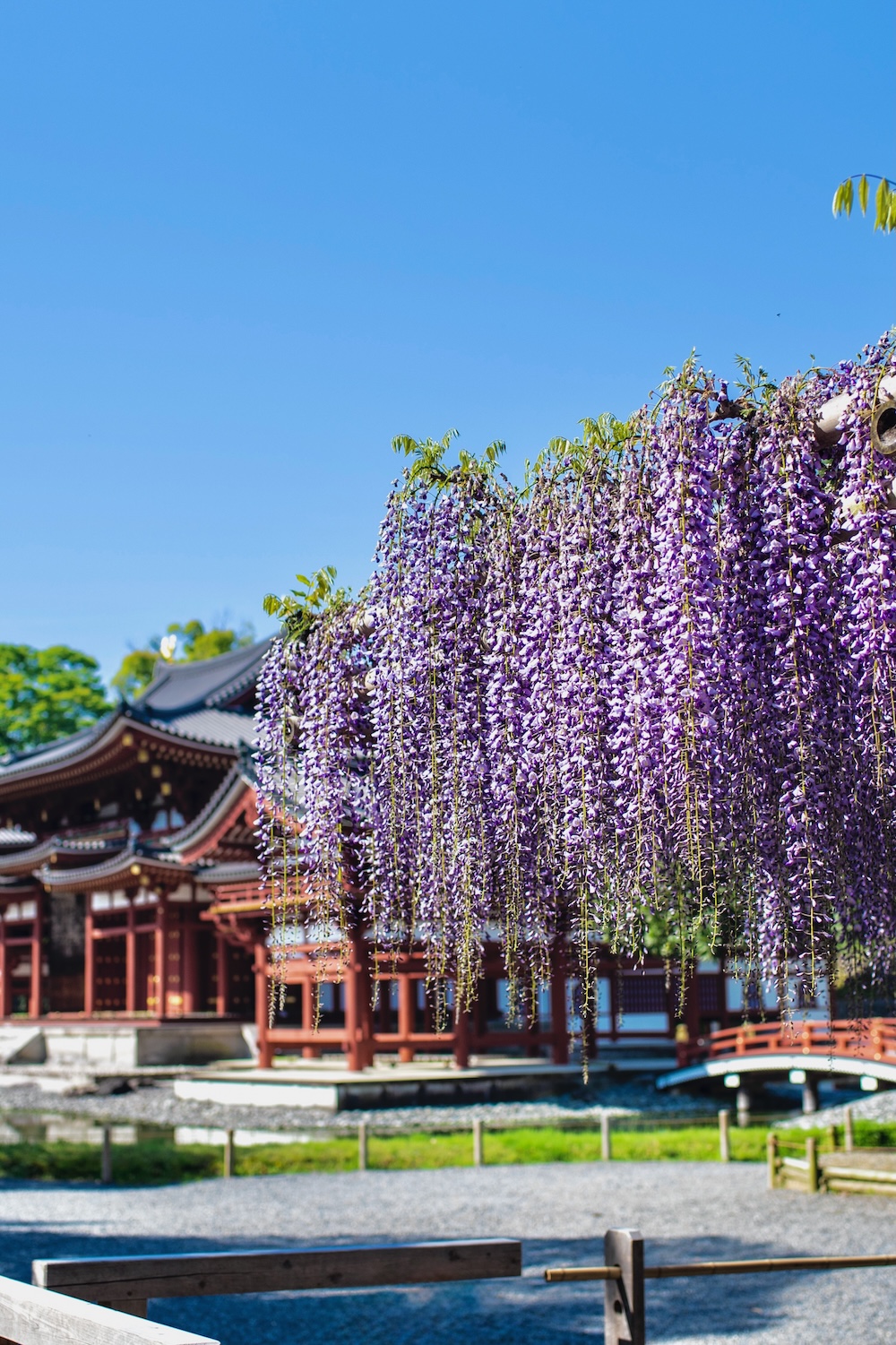
Nara, as you’ll likely know if you’ve read a single article about Japan on any website, is home to the world’s largest urban deer population; they roam all around its urban core, from their conspicuous “home” in Nara Park, to popular attractions like the Nara Natural Museum and Kasuga Shrine. Uji, by contrast, is known as being a hub of tea (and, in particular, matcha) though the cultivation of said tea is confined mostly to areas outside the town center, which is known mainly for Byodo-in, the temple on the back of the ¥10 coin.
Other things to do
With this being said, eeing Uji and Nara beyond these main sights is definitely fulfilling. In Nara, I love digging deep into its deer into its secondary (and, among certain crowds, even more notable) point of notoriety: Being home to some of the oldest wooden structures in the world, including Todai-ji and Horyu-ji temples. If you’re in Uji and don’t mind renting a car, meanwhile, I highly recommend driving to the d:matcha Tea Farm in Wazuka city just east of town.
Food and drink
As you might imagine, a lot of the food and drink in Uji is matcha-themed, from the bright green soba noodles served alongside tempura sets along Byodo-in Omotesando street, to colorful cakes served inside and outside of town. In Nara, on the other hand, one of the most interesting culinary traditions is the traditional mochi made at Nakatanidou, where they really put on a show of making it. Then, of course, there’s also the “deer food” you can buy and feed to local residents!
Onward excursions
Comparing Nara vs Uji on this front, there’s an obvious advantage of Nara, which makes sense. Uji, after all, is technically part of Kyoto City, which means that many would-be excursions (the aforementioned tea farm notwithstanding) tend to overlap with day trips from Kyoto. From Nara, by contrast, travelers with cars can really dig deep into the Kii Peninsula just to the south of the prefecture, from cherry blossoms and autumn colors at Mount Yoshino, to the sacred pilgrimages between Wakayama‘s Mount Koya and Kumano Kodo scenic areas.
Merits as an overnight stay
I’ve written an entire article about staying overnight in Nara. It was Japan’s capital before Kyoto, after all, though that’s not the only reason I love spending more time here. The city is home to tons of attractions, yes; but more than that, crowds clear out so much late at night and early in the morning that it almost feels like a separate destination. By contrast, since Uji is technically in Kyoto City (even if it’s ~30 minutes away from the center), the returns of staying overnight here are comparatively diminishing.



Adding Fushimi Into the Equation
I’ve already referenced Fushimi Inari Shrine a few times in this article, so it won’t come as a surprise to you that you can visit this part of Kyoto on the same day as you visit Nara or Uji. However, if you think the only thing to do in Fushimi is to visit one of Japan’s most famous and crowded shrines, you’d be mistaken. In fact, it’s a highly underrated part of Kyoto everywhere outside the shrine’s main grounds (including any more than 15 minutes up the mountain!).
Among other interesting activities, you can book a sake tasting tour with my friend Kotaro, and learn more about Nihonshu than you ever wanted, including how to pair it with all kinds of foods. This is to say nothing of underrated Fushimi Momoyama Castle, or the authentic, local feel of Fushimi-ku more broadly.

Other FAQ About Nara and Uji
Can I do Nara and Uji in one day?
You can absolutely do Nara and Uji in one day! To optimize your trip, leave Kyoto as soon as possible and ride the JR Nara Line all the way to JR Nara Station. Stay there until lunch, then head back north, stopping in Uji (and, potentially, in Fushimi) on the way back to Kyoto.
Which is better, Nara or Uji?
Nara is better for the general Japan tourist, though Uji excels in a couple of ways. First, if you have an interest in Japanese tea, or in the architecture of Byodo-in temple. Secondly, if you’re open to renting a car and can visit an actual tea farm in Wazuka to the east of town.
How far is Uji from Nara?
It can take as little as 15 minutes to travel to Uji from Nara on the JR Nara Line, depending upon which specific train service you take. Note that travel time is longer if you take a Local train, or if you ride the Kintetsu Kyoto Line from Kintetsu Nara Station.
The Bottom Line
Uji vs Nara: Which one is best for you? The best answer is not to choose: If you leave early enough and manage your time well, you can stop in Uji on the way back from Nara; you may also even be able to add a sake tour or shrine visit in Fushimi. With this being said, there are some cases where one is clearly better than the other. Namely, if you’ve got your heart set on visiting a tea farm and don’t mind renting a car, Uji is probably a better choice than Nara, whose city center is a bit more difficult to customize. Speaking of customizations, hire me to plan your trip to Japan if you want personalized daily recommendations for activities, meals and accommodation, plus detailed transportation advice.