


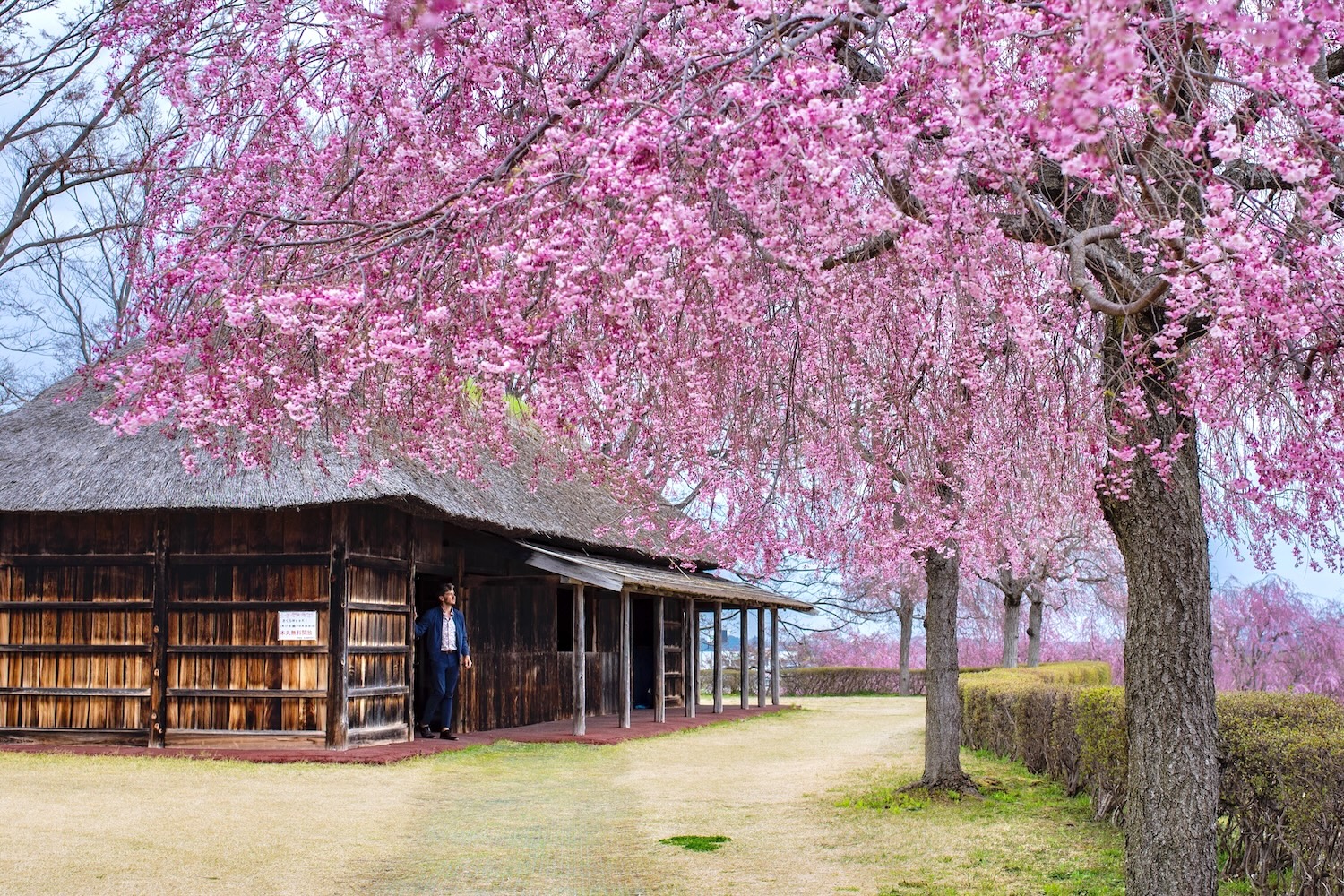
I’ll start this post with an embarrassing confession. For years—like, many years—I improperly wrote and pronounced the Japanese name for weeping cherry trees: shidarezakura (枝垂桜).
“Shi-dera-zakura,” I would confidently declare, not realizing at the time (I hadn’t formally studied Japanese yet) all the ways I could’ve been improperly describing the trees. Thankfully, I end up correcting the error myself and was never (at least not to my knowledge) found out by anyone who knew better.
Of course, you’re not here because you want to read about my travails with the Japanese language. You’re here to find out where to see the most beautiful weeping cherry trees in Japan! Don’t worry: I will soon oblige you.
Why Weeping Cherry Trees Are So Special
Whether you manage to find one of the “waterfall” cherry trees in Japan or see an ordinary weeping one (spoiler alert: these trees are a anything but ordinary!), this particular sort of trees has a unique kind of beauty. The first factor in this? The shape of the tree, of course. Like a willow tree, it features long, dropping branches which, when the trees are in full bloom, boast hundreds or even thousands of flowers each.
As you might imagine, the effect is especially profound in destinations where many shidarezakura exist in one place, or where the tree in question is so large that it almost looks like multiple specimens. Another unique factor about weeping cherry trees? They tend to bloom slightly earlier or later than somei yoshino ones. Practically speaking, this often means that if you miss the “normal” sakura season in a given destination, shidare trees will likely be your consolation prize.
My Favorite Spots to See Weeping Cherry Trees in Japan
Kakunodate Samurai district, Akita
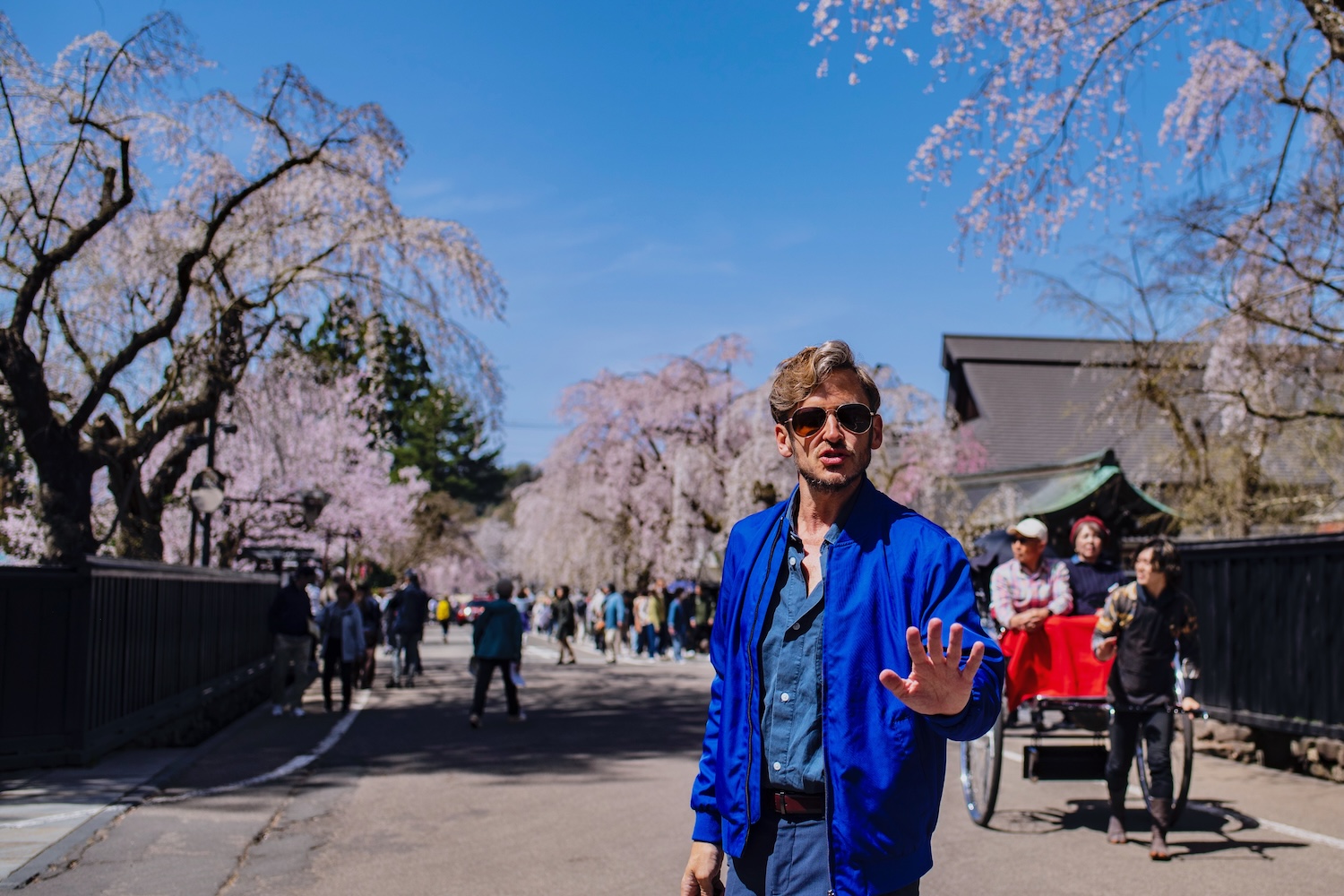
Without a doubt, the most easily accessible collection of shidarezakura in Japan is in the Kakunodate Samurai district. Both the former warriors homes and the handsome boulevards lined with the trees are just 15-20 minutes on foot from Kakunodate Station, which is a Shinkansen stop!
Nejo Castle Ruins, Aomori
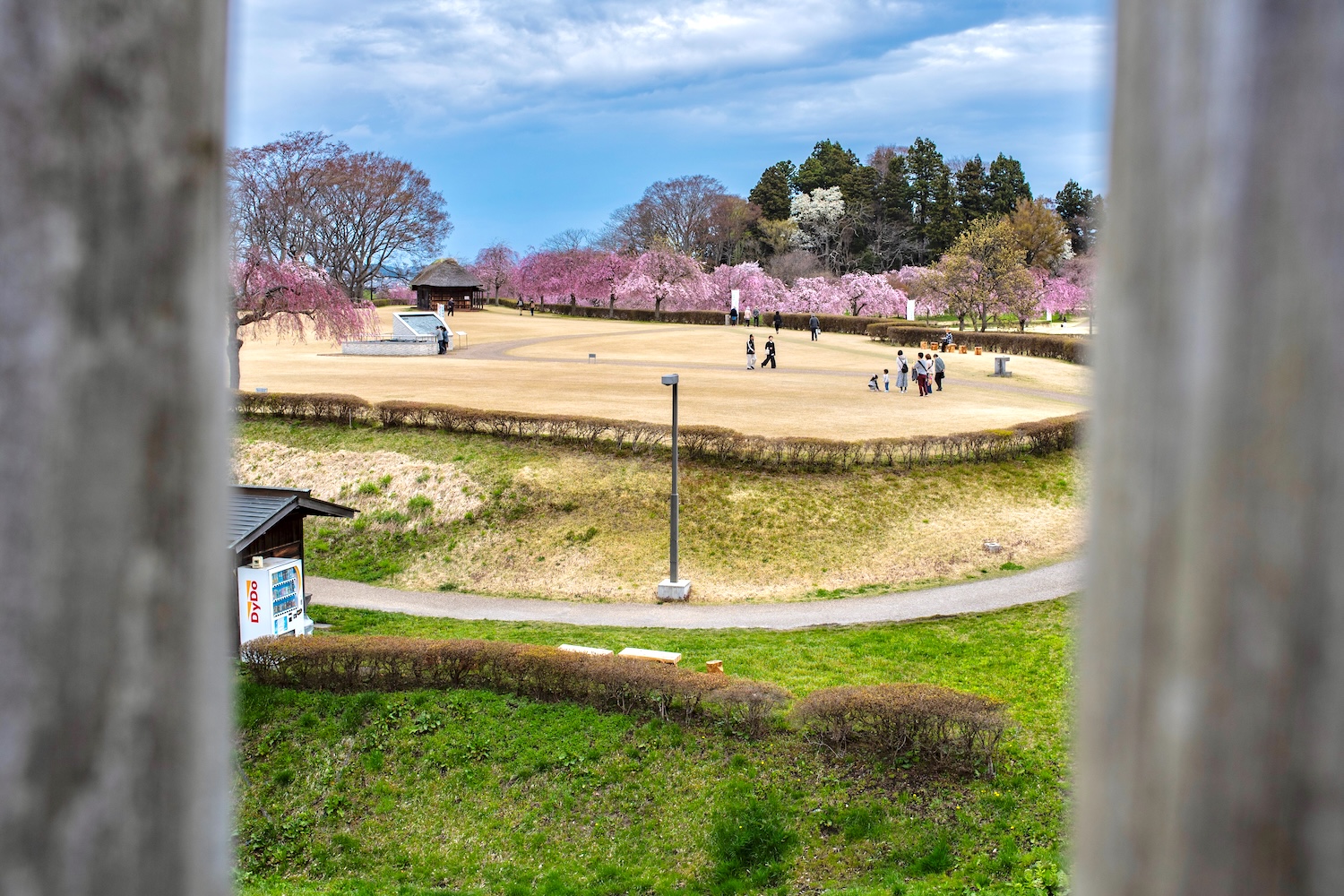
Another Japanese weeping cherry tree hot spot in northern Japan is the Nejo Castle Ruins in Hachinohe. These are a little bit less convenient to reach—if you don’t rent a car (which I always recommend when off Japan’s beaten path), you can get a bus from Hachinohe Station or Hon-hachinohe Station. As of 2026, this remains a very “local” destination, so you’re unlikely to see many other foreign travelers.
Denpo-ji, Kesennuma, Miyagi
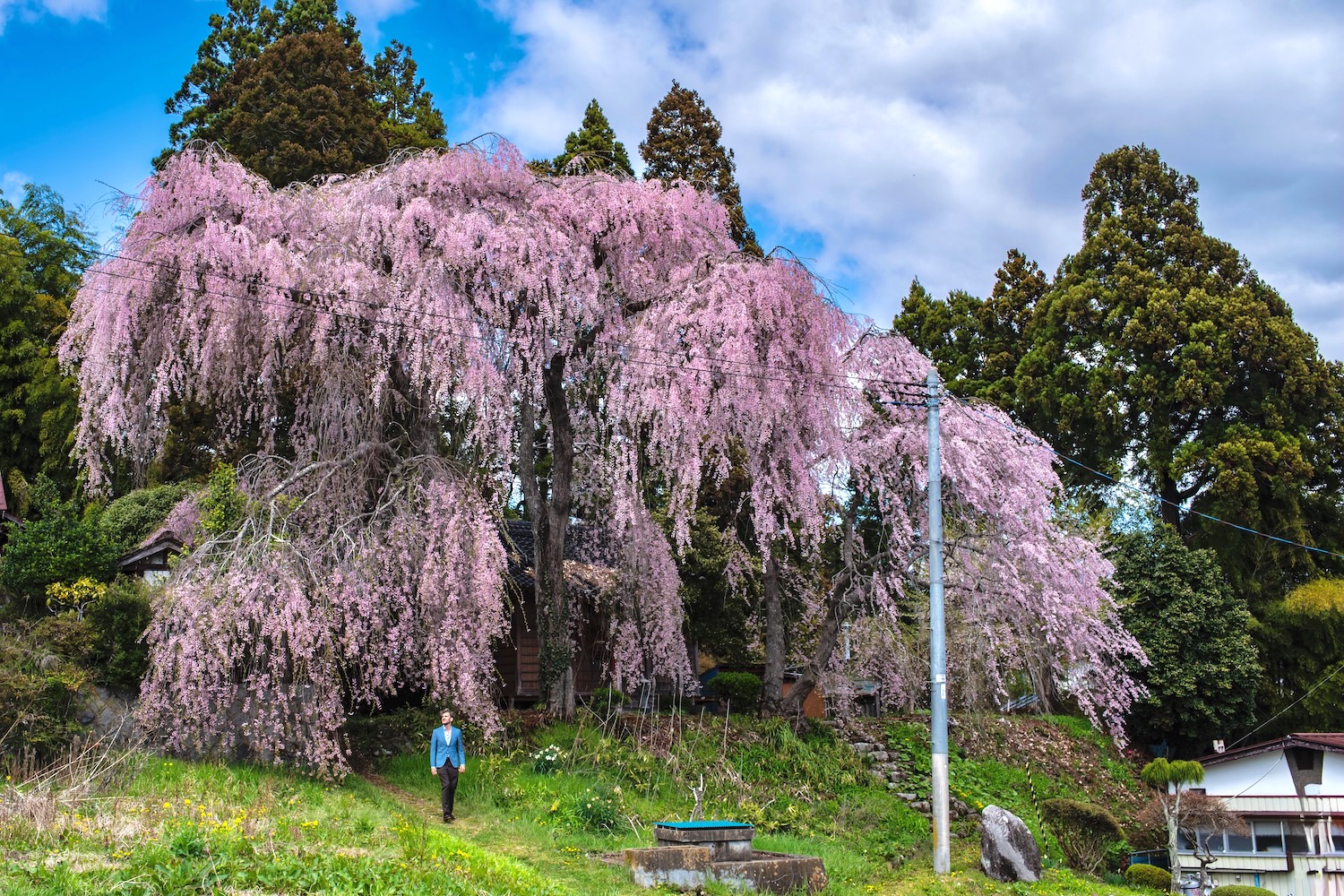
Kesennuma is a pretty small city, which means that if you’re already there, you can reasonably walk (or, absent that, use Google Maps to take the local bus system) to Denpo-ji temple. The issue here is that Kesennuma, which is obscure even in the context of the barely-touristed Sanriku Coast, is somewhere you’re unlikely to be in the first place. (Which, to me, makes it all the more worth visiting!)
Miharu Takizakura, Fukushima
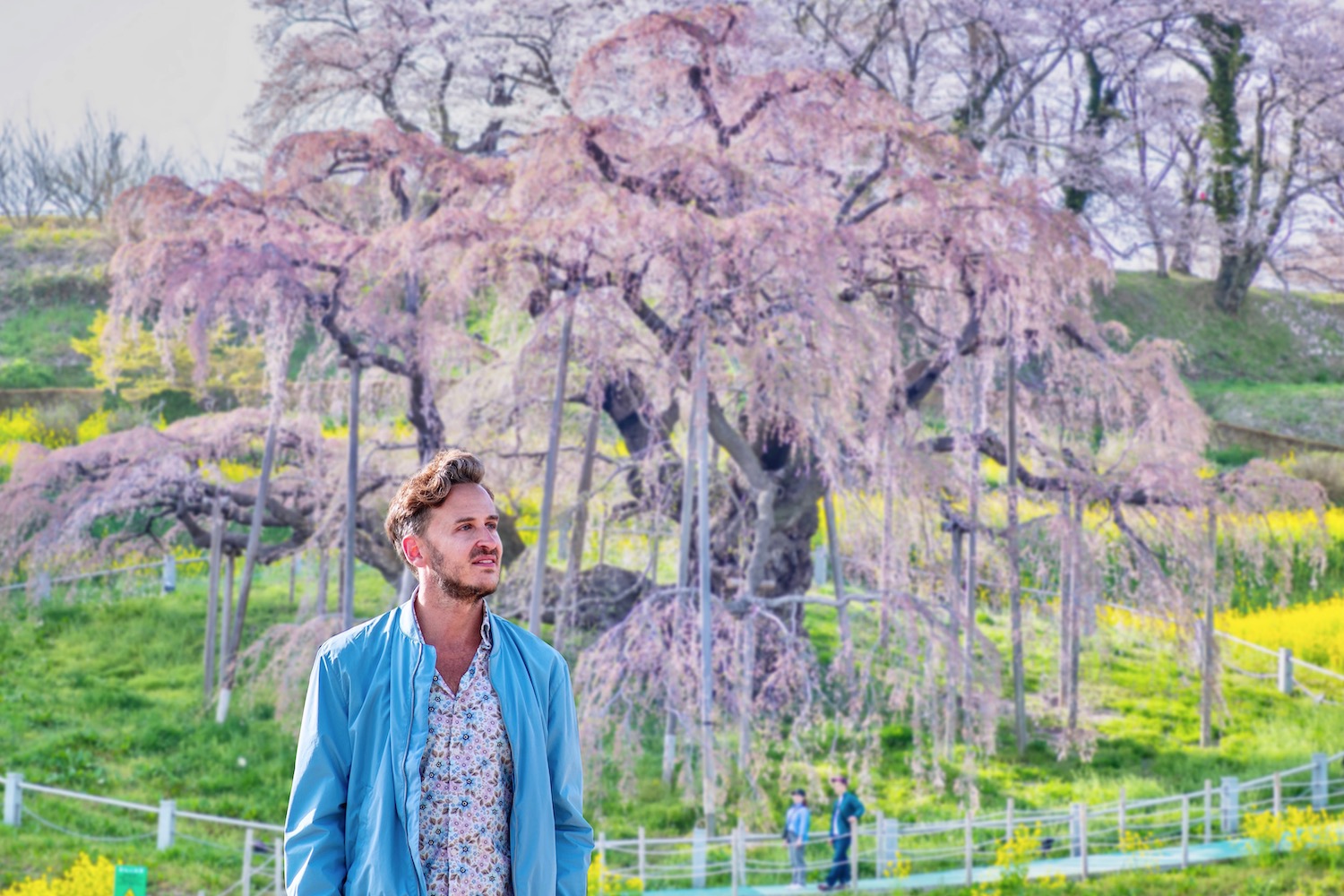
The most famous Japan weeping cherry tree by far is not even colloquially known as a shidarezakura but instead a takizakura, or “waterfall” cherry tree. Arriving at the 1,000-year old trees, which is located in the town of Miharu just west of Koriyama in Fukushima prefecture, shows precisely why this is the case. No matter how you come here (buses are available; I prefer to drive), it will blow your mind. Truly!
Maruyama Park, Kyoto
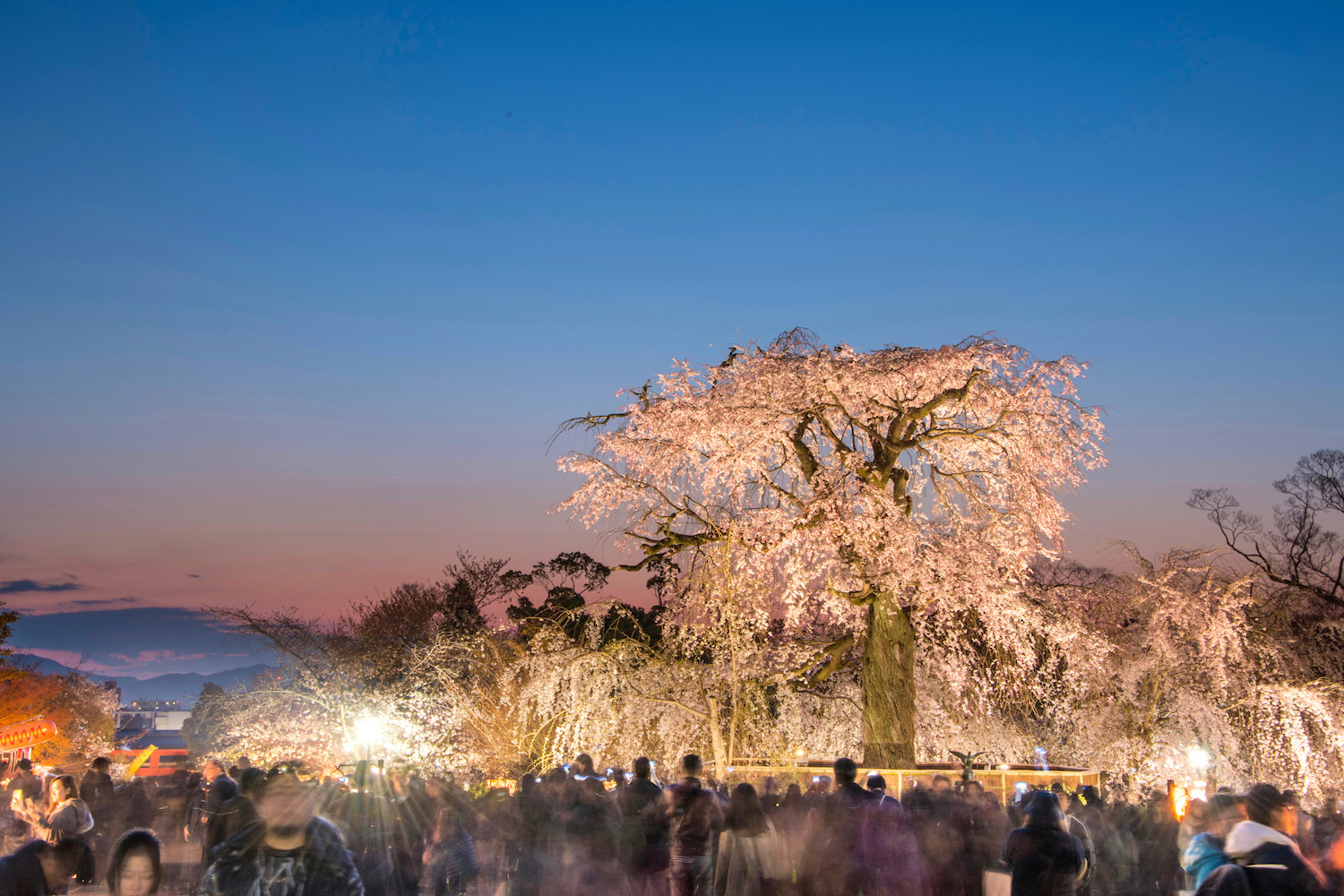
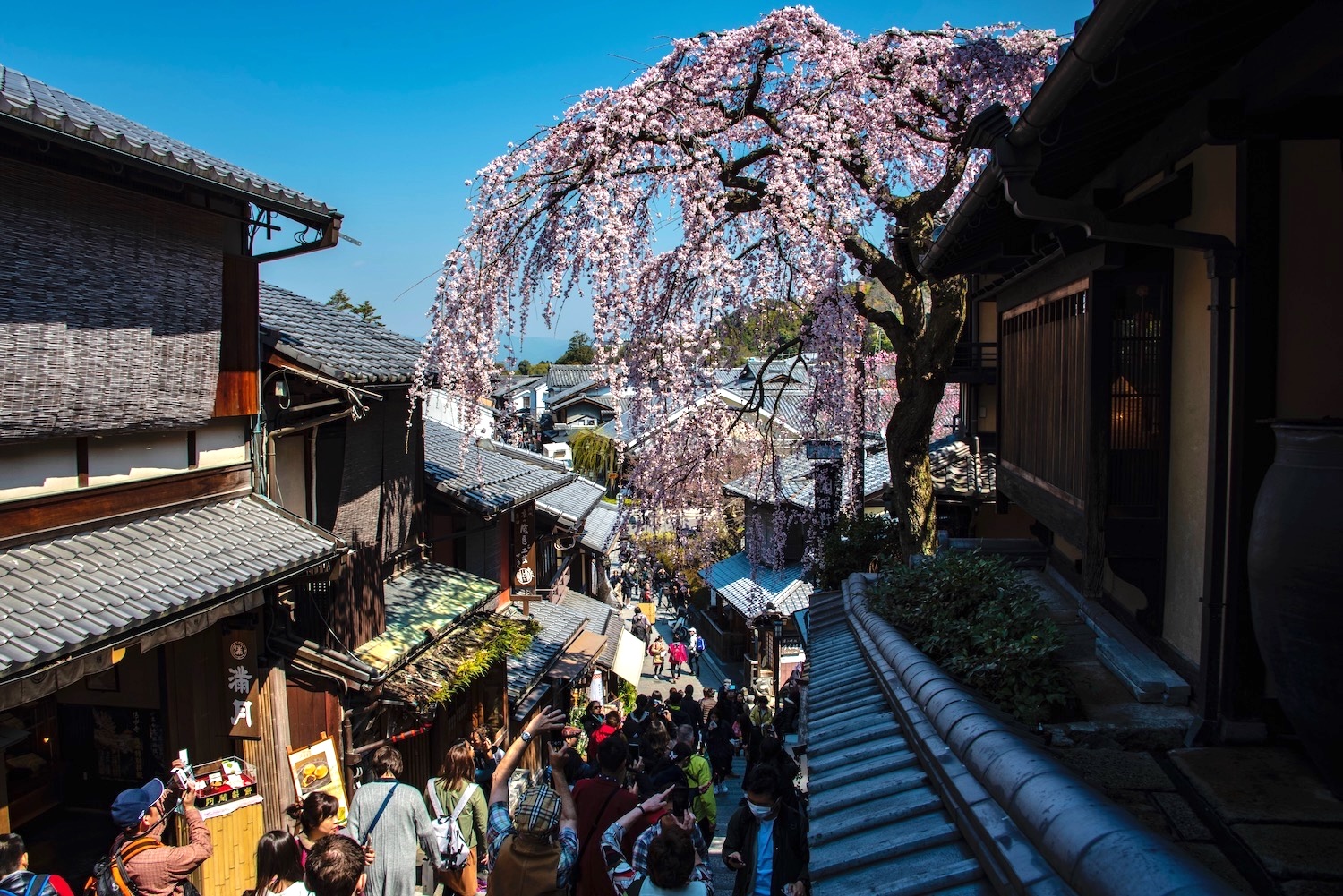
Last but not least is probably the weeping cherry trees that’s most accessible for the majority of travelers: The one in Maruyama Park in central Kyoto. This is not the only shidarezakura in Kyoto, though the previously most famous one (which was along Sannenzaka slope, and is pictured later in this article) sadly died in 2024.
Other Types of Cherry Blossoms in Japan
Shidarezakura and takizakura trees are probably my favorite sorts of cherry blossoms in Japan, but there are other options, too:
- If you travel to Okinawa in late January or early February, you’ll see trees of the Kanhizakura variety, or Formosan cherry. These are known as such because they’re the same species that bloom in Taiwan (Formosa).
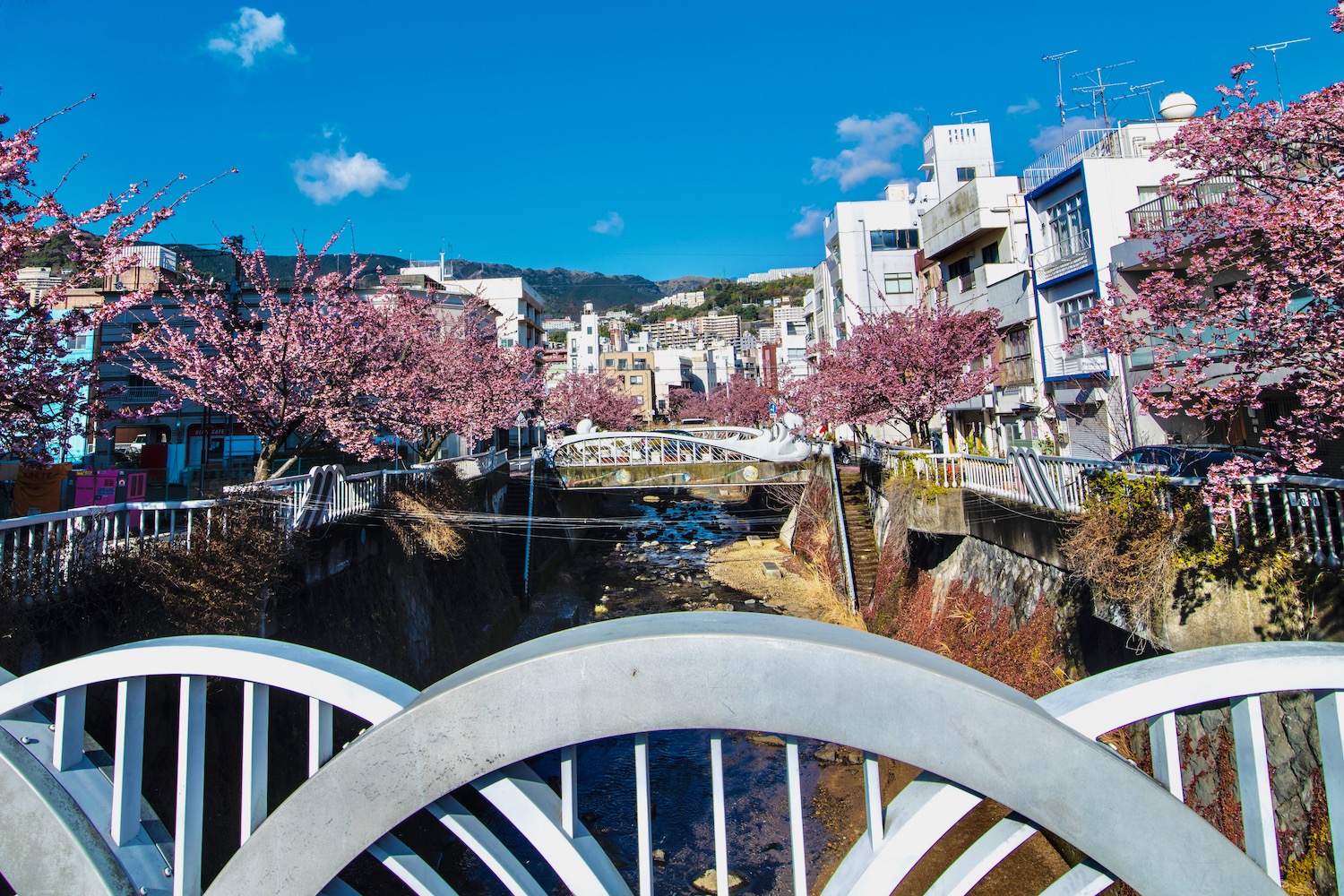
- Want to see early-blooming sakura on the Japanese mainland? Make a beeline for the Izu Peninsula, where you can find both Kawazu-zakura (which bloom in late February or early March) and the Atami-zakura sub-species, which can bloom as early as late January in and around the city of Atami.
- Alternatively, if you’re a bit late for the normal cherry blossom season, you can find the “fluffy” Kanzanzakura and Yaezakura cherry trees in most Japanese cities and towns. These bloom 1-2 weeks later than normal cherry trees.
Note that as is the case with weeping cherry blossoms in Japan, most of the above cherry trees feature pinker, darker petals than the somei yoshino, which tend to be a whitish-pink.
Other FAQ About Weeping Cherry Trees in Japan
Are weeping cherry trees Japanese?
Weeping cherry trees are native to Japan, and have existed in the country since the Hei’an period, more than 1,000 years ago. Interestingly, while certain weeping trees do exist in the wild, most of the specimens in the country today were carefully bred by sakura experts, who continue their work of propagating trees to this day.
What kind of cherry trees grow in Japan?
The most common type of cherry tree in Japan is the pinkish-white somei yoshino, but other species exist as well. These include the early-blooming Kazawu-zakura trees native to the Izu Peninsula, as well as later-blooming varieties such as kanzanzakura. In total, over 100 unique varieties of cherry trees exist in Japan, with individual tree specimens numbering well over one million.
What is the most famous cherry tree in Japan?
The most famous cherry tree in Japan, by far, is the “waterfall cherry” (takizakura) Miharu Takizakura cherry tree in Miharu town, Fukushima prefecture. Although its exact age is not known, historical records of it date back more than 1,000 years. Physically, it’s more than 13 meters (~40 feet) tall and as wide as 25 meters (~75 feet), and since it’s in basically perfect condition, it a rather imposing specimen, in addition to being beautiful.
The Bottom Line
I’ll be adding to my round-up of weeping cherry trees in Japan over time—this list is not (yet) comprehensive. At the same time, it’s the perfectly place to start getting inspiration for your next sakura season trip to Japan, no matter how central a focus the shidarezakura end up being. In some cases, they’ll merely be a happy accident (such as if you happen to walk through Kyoto’s Maruyama Park) while in other instances (such as if you prioritize the Kakunodate Samurai district), theyll end up being the focus of your trip. Need personalized help putting your March or April adventure together? Commission a custom Japan itinerary today!