


After the success of my recent post about Samurai towns, it dawned on me that perhaps a similar one about big Buddhas in Japan would perform well. I put it on my schedule—and, to my surprise and delight, am sitting down to write it less than a week later.
On one hand, this is an article I only could’ve written now, nearly 13 years after my first trip to Japan. Not long ago, I might’ve lacked the experience necessary to put a compelling round-up of Daibutsu together.
On the other hand, the October 2026 “original” version of this post might not be final. If you can believe it, there are still Buddhas on my Japan bucket list!
Buddhism (Sometimes) Take a Back Seat in Japan
The fact that so many people scour the internet for tips of visiting the three great Buddhas of Japan hides a broader truth. Namely, that while Buddhism is quite visible in Japan, it’s actually only the second-most popular religion in the country, and by a pretty long shot. Japan’s homegrown Shinto religion (which, at least superficially, can sometimes seem the same or similar to Buddhism to Western eyes) is by far more widespread.
With this being said, there’s a rich Buddhist heritage in Japan, both in terms of temples in basically every Japanese city (Tokyo’s Senso-ji is an easy example that most travelers know), as well as dedicated experiences throughout the country. I’m thinking in particular about Mt. Koya, which was founded over a millennia by Kukai, the monk who was credited in making Buddhism mainstream in Japan in the first place.
Where to Find Japan’s Big Buddhas
Kotoku-in, Kamakura
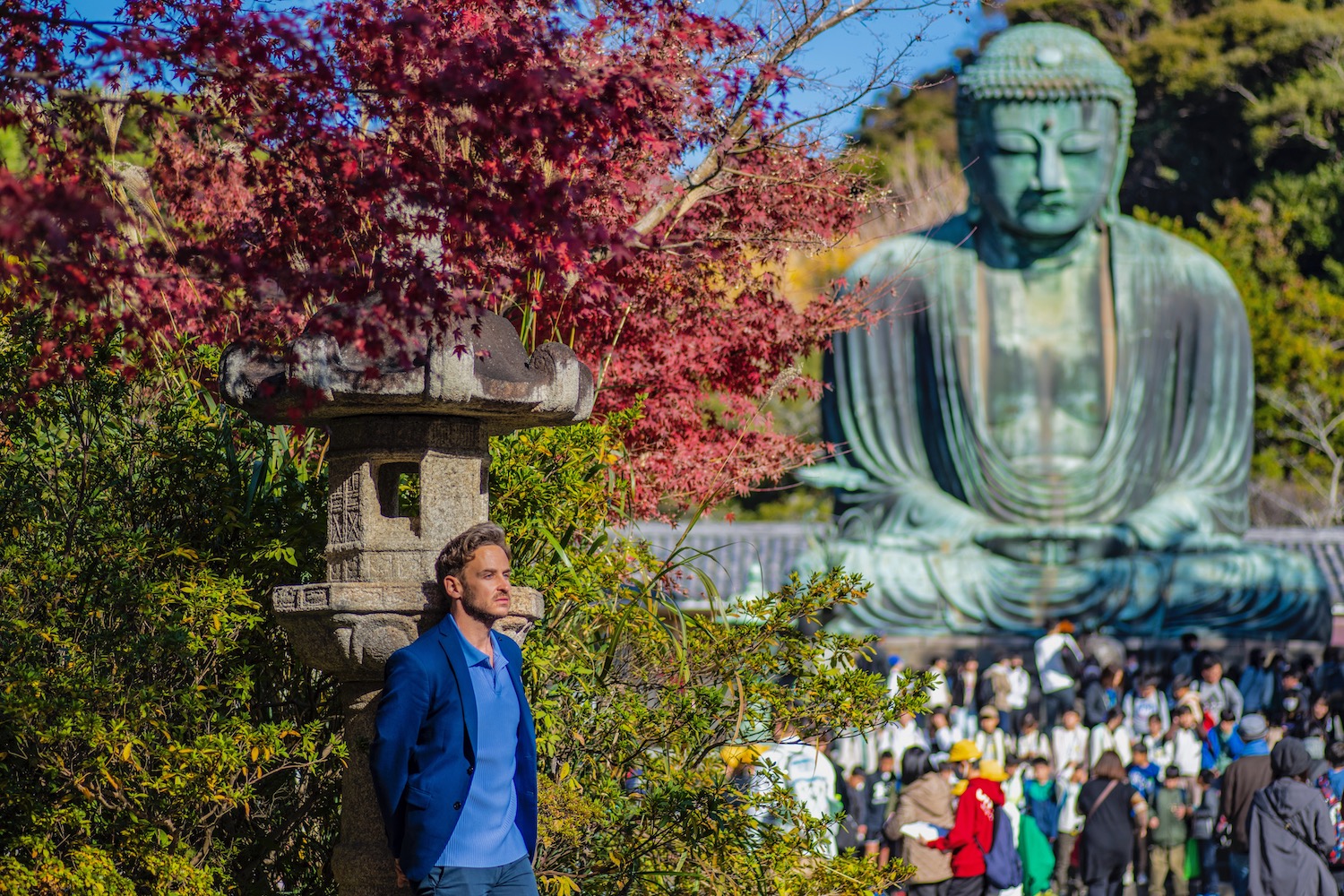
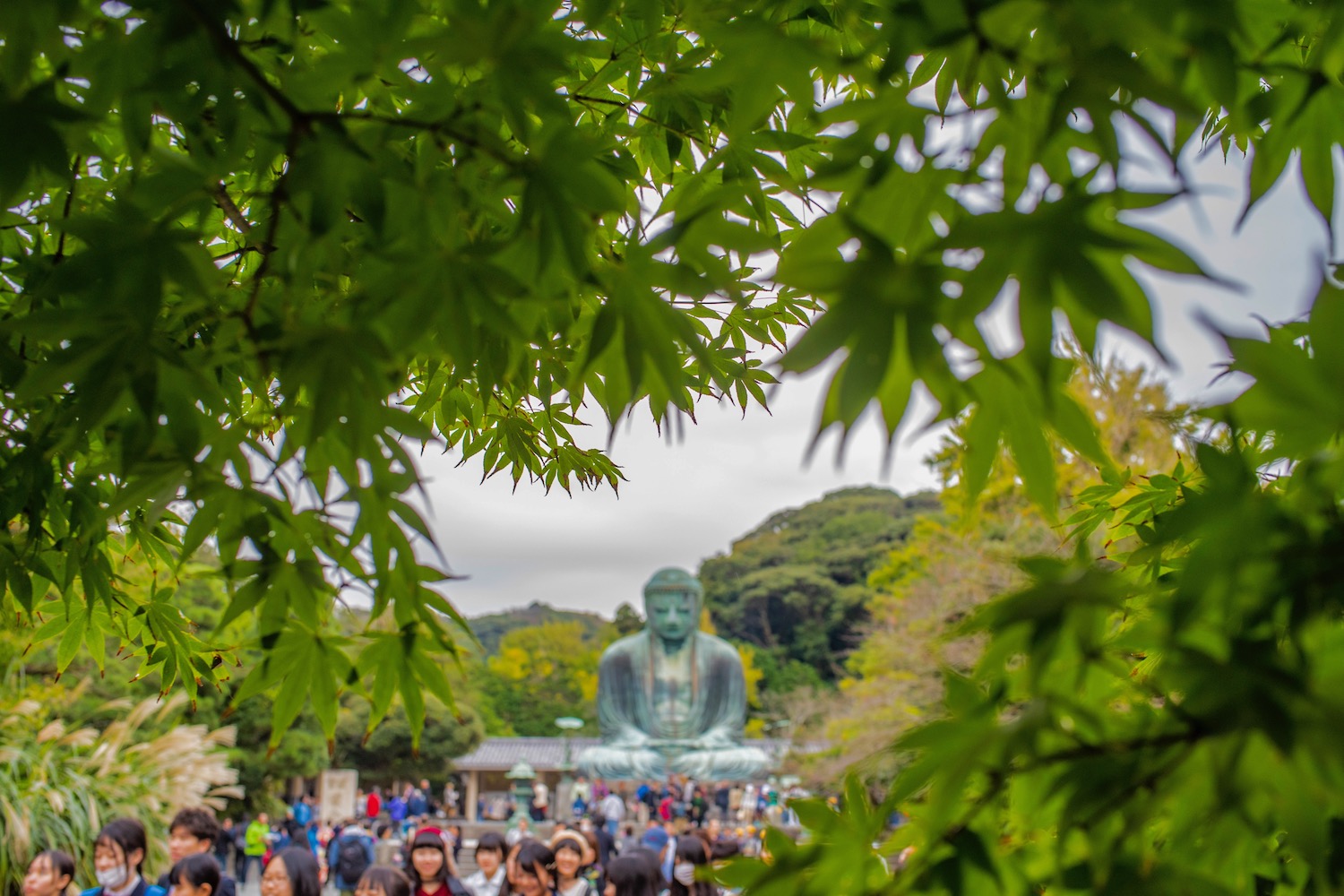
The bad news? The big Buddha of Kotoku-in temple in Kamakura is firmly on the tourist trail. Even if you get to Hase Station right before the opening time and are one of the first to enter, there will be dozens (if not hundreds) of other people there by the time you finish. The good news? It’s still impressive, and is especially beautiful amid autumn leaves or spring’s cherry blossoms.
Todai-ji, Nara
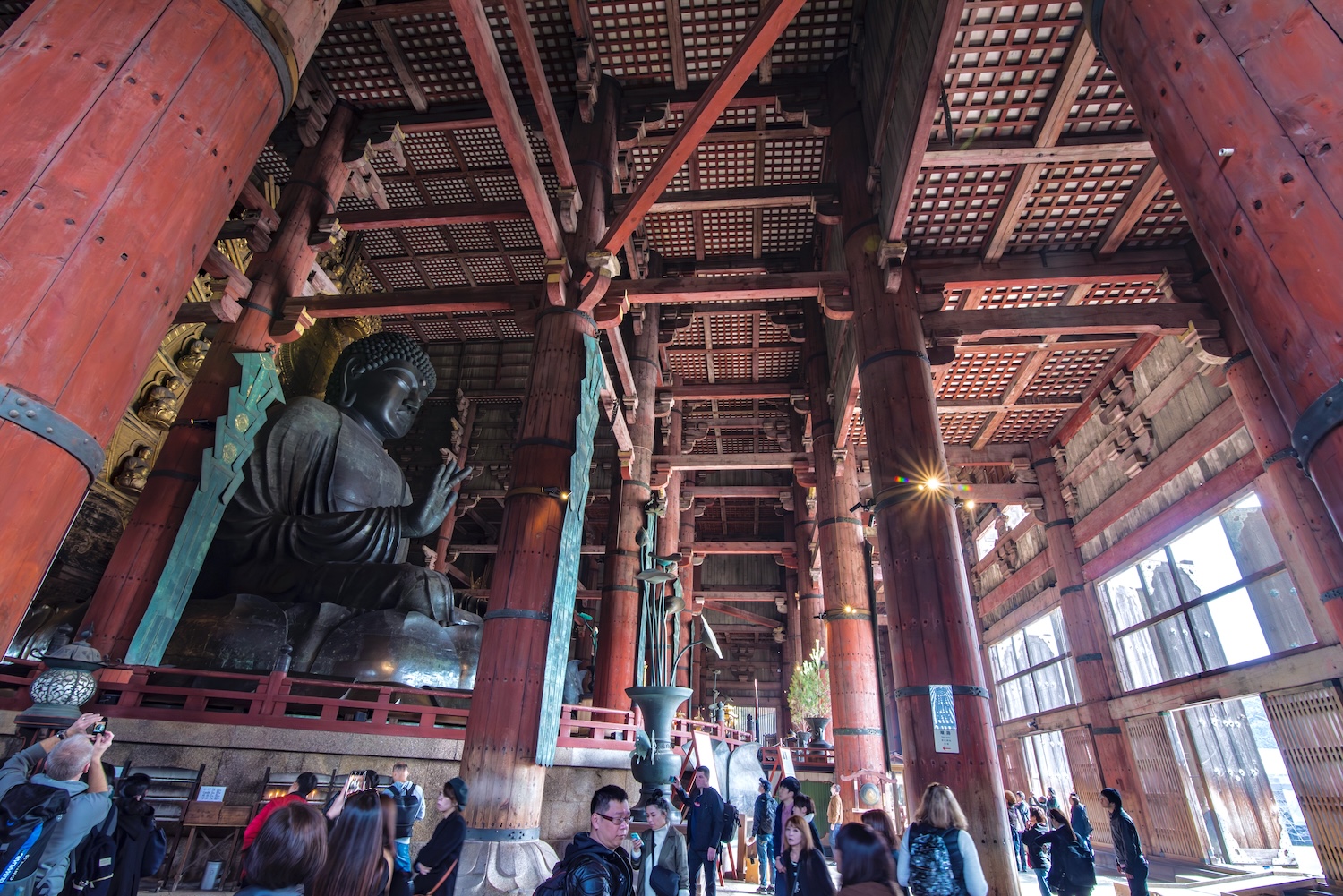
The second-most famous among Japan Buddha images is the one housed in Nara‘s Todai-ji temple. Like the one in Kamakura, this Daibutsu is a major tourist attraction. However, Nara offers even more non-Buddha attractions than Kamakura, with deer-filled Nara Park and the serene Kasuga Shrine just steps away from Todai-ji.
Takaoka Daibutsu, Toyama

Of the three great Buddhas of Japan, the Takaoka Daibutsu is the least-crowded one, which makes sense. Takaoka, as much as I personally like it, is not exactly a popular tourist city. If you do decide to make the journey here, you can easily come on a day trip from Toyama, which can include a stop on the Amaharashi Coast if you’re traveling by train, or span a larger portion of the Noto Peninsula if you’ll be driving.
Ushiku Daibutsu, Ibaraki

Ushiku Daibutsu is unique among Japan Buddha statues—and not just because it’s located in underrated Ibaraki prefecture. Specifically, it’s a standing Buddha, and because of this posture, is actually the tallest Buddha statue in Japan overall. Because of its remote location, however, you basically need to have a car in order to get here.
Nijon-ji Daibutsu, Chiba

The Nihon-ji Daibutsu in Chiba, by contrast, is easily accessible not only by public transportation (specifically, the Nokogiriyama Ropeway from Hama-Kanaya Station), but is also easy to do as a day trip from Tokyo. Even better? In addition to the Buddha itself being impressive, the hilltop complex offers incredible views across Tokyo Bay, including of Mt. Fuji on a clear day.
Nanzo-in, Fukuoka
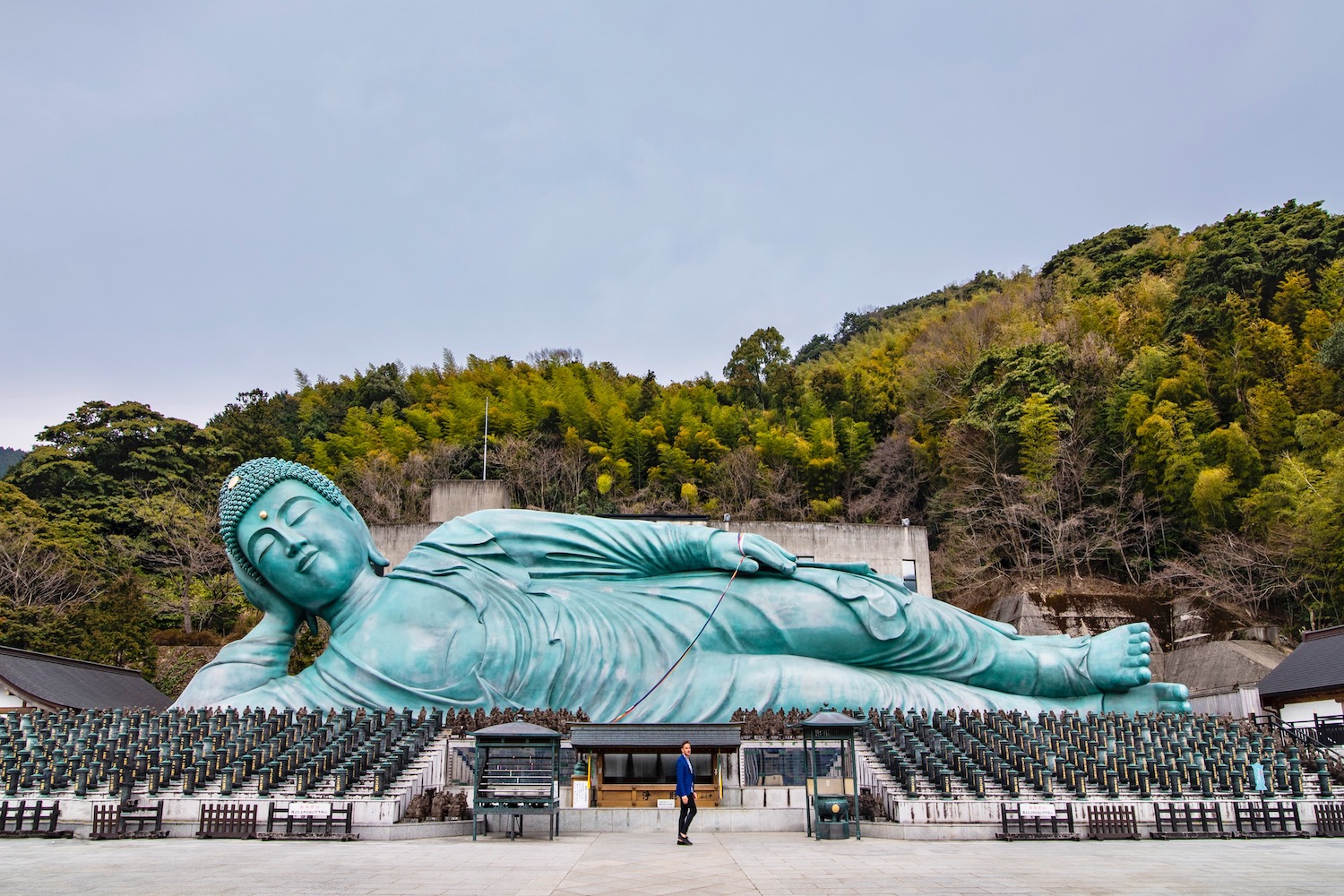
Curious about where Japan’s reclining Buddha is located? The most famous one is at Nanzo-in, a temple that’s a short train ride east of Hakata Station in Fukuoka. In addition to being remarkable both in terms of its size and its flattering patina finish, it’s a place you can visit quickly enough to combine with other destinations, be that the yatai food stalls of central Fukuoka, or Daizaifu Tenman-gu shrine just south of the city.
Hill of the Buddha, Sapporo
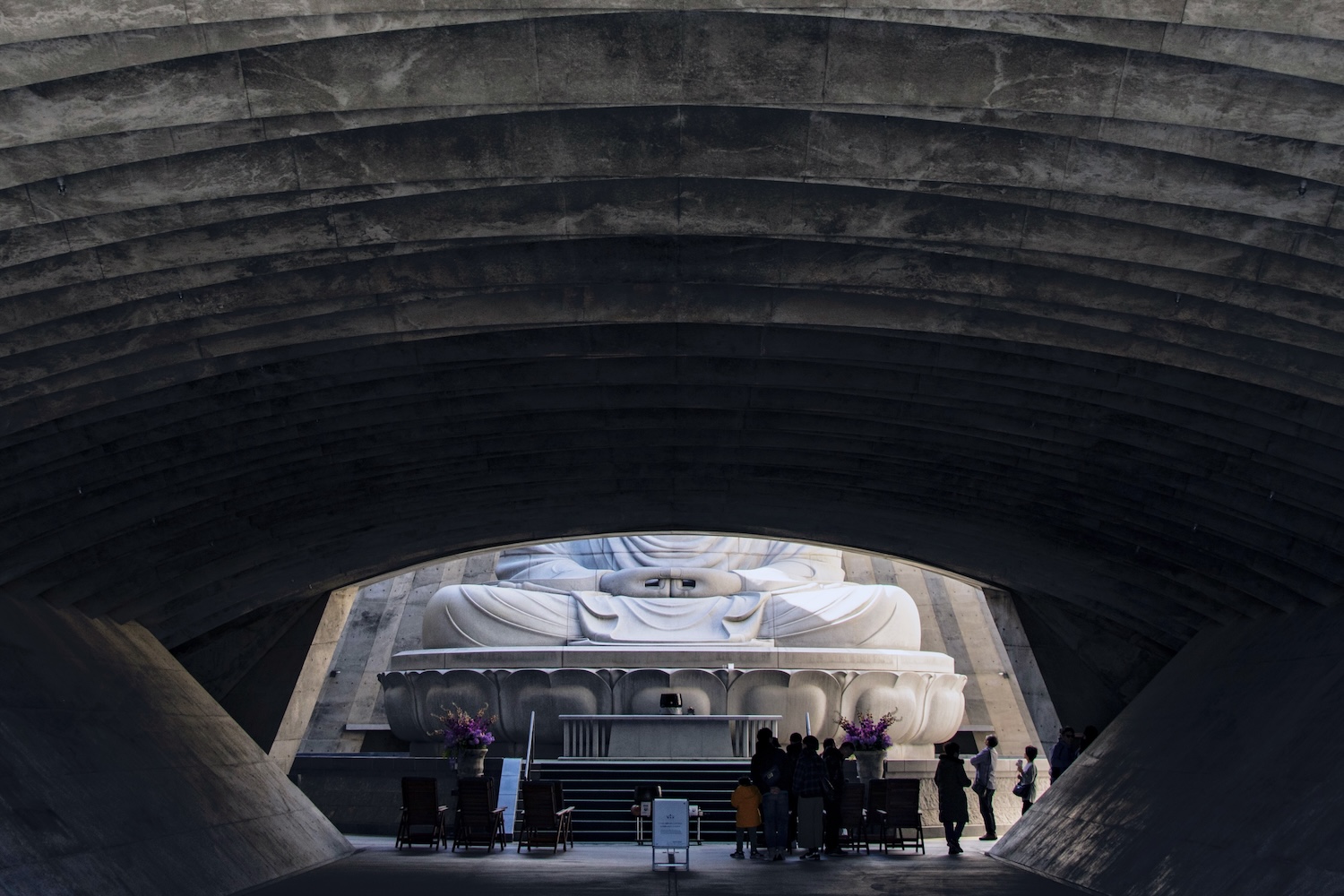
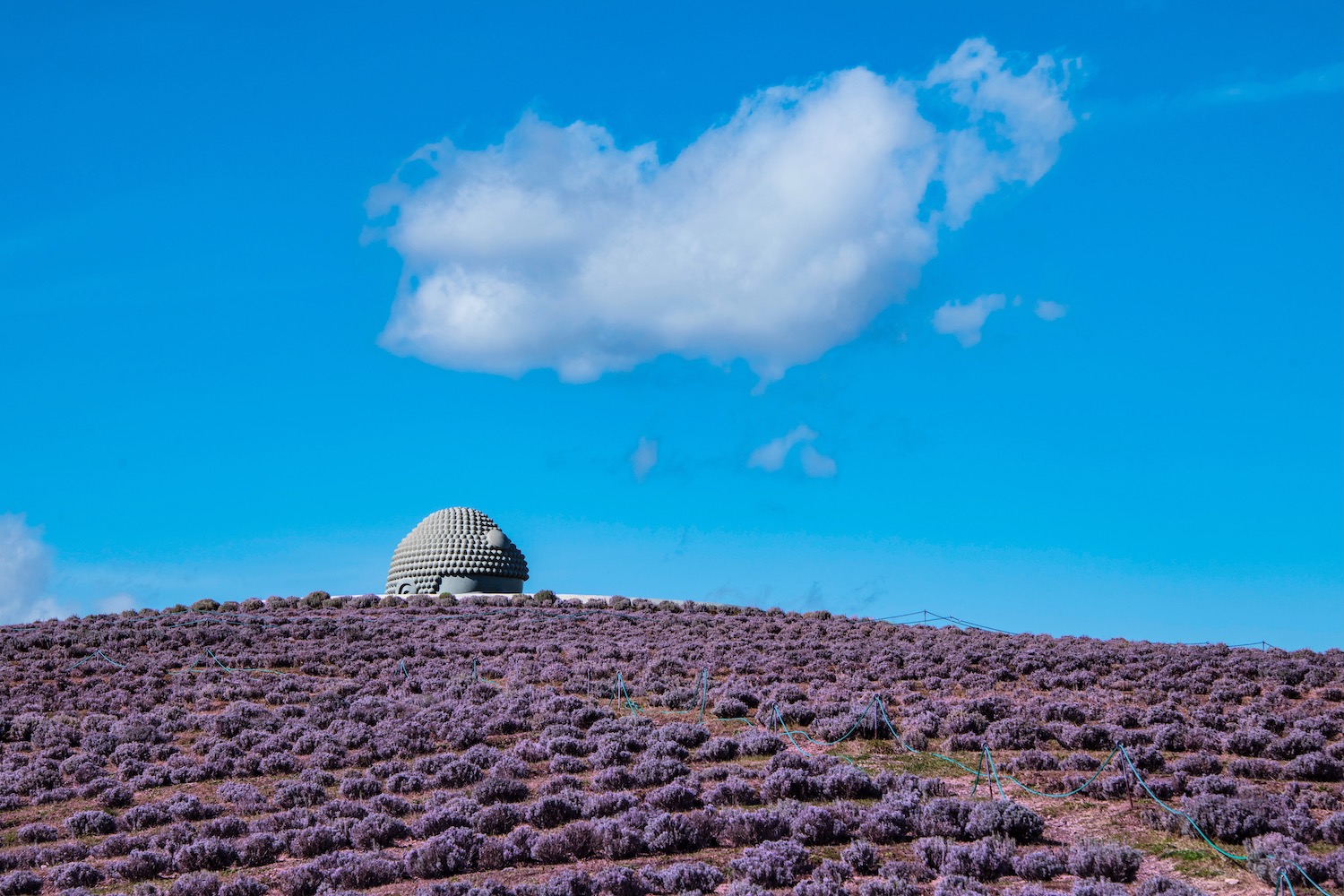
Makomanai Takino Cemetery near Sapporo is famous primarily for its replicas of the Easter Island monoliths, but is also home to Atama Daibutsu, known in English as the Hill of the Buddha. It’s most beautiful in July, when its hill is covered in Hokkaido’s famous lavender, but is worth visiting at any time of year.
Honorable Mention: Sendai Daikannon
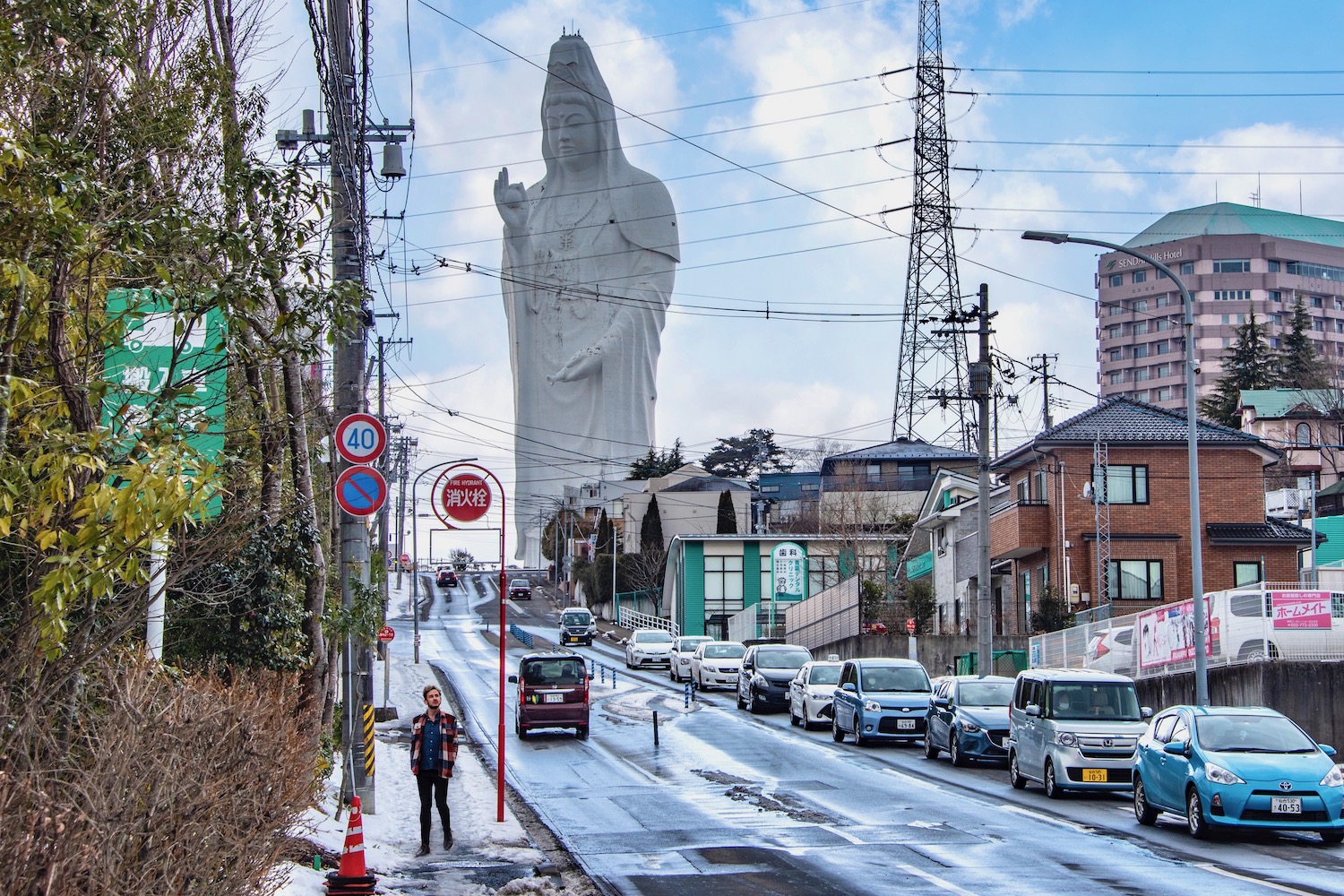
Beyond the difference between Buddhism and Shinto, another distinction is sometimes lost on foreigners. I’m talking, of course, about the difference between a Daibatsu status and a Kannon one. In Chinese-speaking countries, Kannon is called Guan Yin; in both cases, Guan Yin/Kannon images represent the Goddess of Mercy. She is not, contrary to hearsay throughout Asia, a “lady Buddha,” even if there’s a visual case to be made for that.
I bring the Kannon vs Buddha debate up not to feign being a religious scholar, but to qualify my honorable mention: The Sendai Daikannon is not a Buddha image. It is, however, a massive and remarkable piece of Buddhist architecture, and one that I highly recommend you visit if you happen to be in the hub of southern Tohoku. TIP: If you have a zoom lens but no time, look closely when you’re explore the Aoba Castle ruins to see the statue towering in the distance.
Other FAQ About Big Buddhas in Japan
Where are the three great Buddhas of Japan?
You can find three great Buddhas of Japan, in no particular order, at Kotoku-in in Kamakura, Todai-ji in Nara, and at the Takaoka Daibutsu in Takaoka city in Toyama prefecture. However, there are many other impressive Buddha images throughout Japan, so don’t feel constrained by a “Top 3” ranking.
What is the most famous Buddha statue in Japan?
Most travelers regard Kotoku-in, the “Big Buddha” of Kamakura, to be the most famous Buddha statue in Japan. However, two other Daibutsu (in Nara and in Takaoka city, Toyama prefecture) are also rather famous. Furthermore, special Buddhas throughout Japan (the standing one of Ushiku in Ibaraki; Fukuoka’s “reclining” one at Nanzo-in) are also increasingly well-known.
Where is the massive Buddha in Japan?
There are a number of very large Buddha statues in Japan, but the great Buddha of Kamakura at Kotoku-in temple is the largest outdoor sitting Buddha in Japan, and the best-known one in the country by a long shot. The absolute largest, meanwhile, is Ibaraki prefecture’s Ushiku Daibutsu, a standing Buddha image that’s a relatively short distance from Narita Airport.
The Bottom Line
Searching for big Buddhas in Japan, beyond the usual suspects? I’ve spent more than a decade exploring the country, and while Daibutsu have rarely been the target of any particular trip, I’ve added many of them to my rolodex over the years. Of course, the aforementioned usual suspects—the three “great” Buddhas of Japan in Kamakura, Nara and Takaoka—absolutely live up to every bit of the hype built up around them. Still, I do recommend checking out others, whether you do so on a day trip from Tokyo to underrated Mt. Nokogiri, or if you happen to have a free day in Sapporo or Fukuoka. Need personalized help putting your next Japan trip together? Commission a custom Japan itinerary today!