



My journey putting this Kanto itinerary together began over a decade ago, when I made what was then my fourth (I think) trip to Japan, as a guest of the JTB travel company. Kanto Press Trip, the subject line of the email inviting me on it had read, intriguing me from the get-go.
Even then, in spite of being very new on my Japan journey, I’d known the Kan-tō (関東) was the eastern Japanese region to which Tokyo belonged. I was also aware that it likely comprised so much than the capital.
Strangely, many of the places I ended up visiting on that particular trip were not in Kanto at all. Still, more than 10 years later, I’ve now explored all seven of the region’s prefectures deeply enough that I can guide you through them properly.
How I Came to Know Kanto (Outside of Tokyo)
It’s not an exaggeration to say that this Kanto travel guide has been a decade-plus in the making. Of course, it’s also accurate to point out that my first experiences ostensibly in “Kanto” were actually in Chubu, the central region of Japan. Remember that press trip I mentioned in the intro to this piece? It actually began in Yamanashi prefecture (the one famous for Mt. Fuji), then proceeded into Shizuoka, specifically to the city and Atami and onto the Izu Peninsula.
Now, this is not to say that those destinations aren’t worth visiting—quite to the contrary; the Izu-hantō is one of my favorite places anywhere in Japan. However, my marketed Kanto trip actually only entered the proper Kantō-chihō about three quarters of the way through it, when I spent a night in Hakone followed by one in Yokohama, both in Kanagawa prefecture. All the other heavy lifting I’ve done to acquire the expertise for this guide was mine alone.
Where to Do in Japan’s Kanto Region
Explore Tokyo—on and off its tourist trail

It’s not shocking to say that you should visit Tokyo as part of your Kanto trip. However, I would encourage you to dig a little deeper, especially if you don’t think you’ll be able to explore many of the six prefectures outside of Tokyo. An easy way to do this is to head west, be it to Mt. Takao (which is a scenic escape any day of the year) or at Shiofune Kannon-ji temple in Ome city, which is resplendent during tsutsuji (azalea) season.
See Saitama beyond Kawagoe
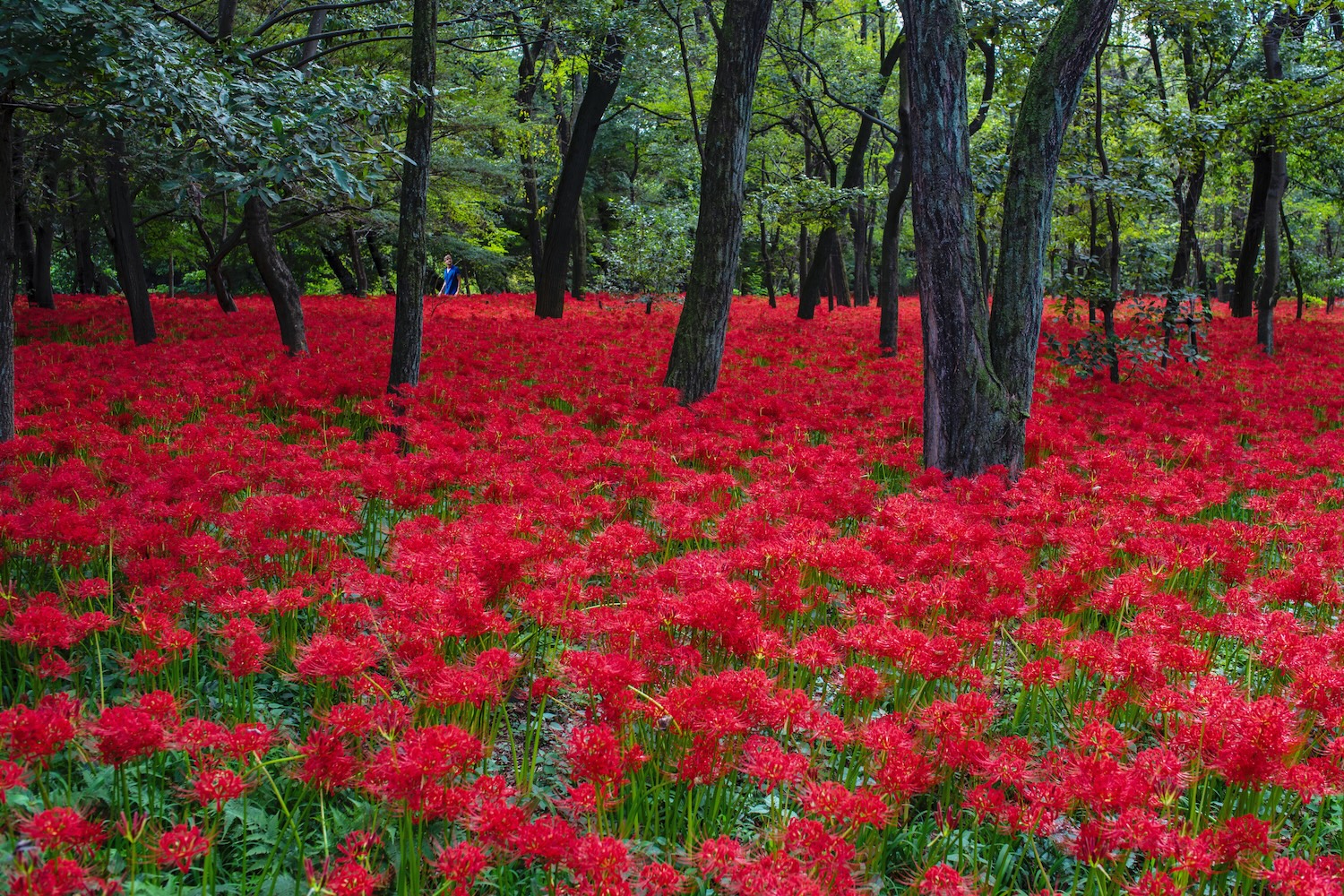
The Edo-era city of Kawagoe is without a doubt one of the top things to do in Kanto, even if it usually takes the former of a day trip from Tokyo. Other options in underrated Saitama prefecture include Omiya Bonsai Village (located a short local train ride from the Shinkansen hub of the same way) and, if you happen to be in Japan in late September or early October, the so-called Spider Lily Park in rural western Saitama-ken.
Kanagawa: Kamakura, Yokohama, Hakone—oh my!

As is the case with Kawagoe, Kanagawa prefecture’s Kamakura city is one of the most popular day trips from Tokyo. Even better, you can often combine it with an excursion onward to Enoshima island, or/or stop in the underrated city of Yokohama on the way back to Tokyo. However, this is only the beginning of what Kanagawa-ken offers—and I’m not just talking about the popular hot springs resort city of Hakone. Among other spots, Shin-Nase Beach, pictured above, offers one of the most scenic views of Mt. Fuji anywhere in Japan.
Spend the night in Nikko (and dig deeper into Tochigi)

The historical city of Nikko (which—spoiler alert—is another popular Tokyo day trip) is like the others I’ve mentioned here near the top of where to go in Kanto. However, it’s but one example of why underrated Tochigi prefecture should be on your list. Highlights here range from urban (the prefectural capital of Utsunomiya), to suburban (Ashikaga Flower Park is home to one of Japan’s best wisteria collections) to the top-grade culture you find in Mashiko, one of Japan’s premier pottery hubs.
Soak in Gunma’s bubbling baths
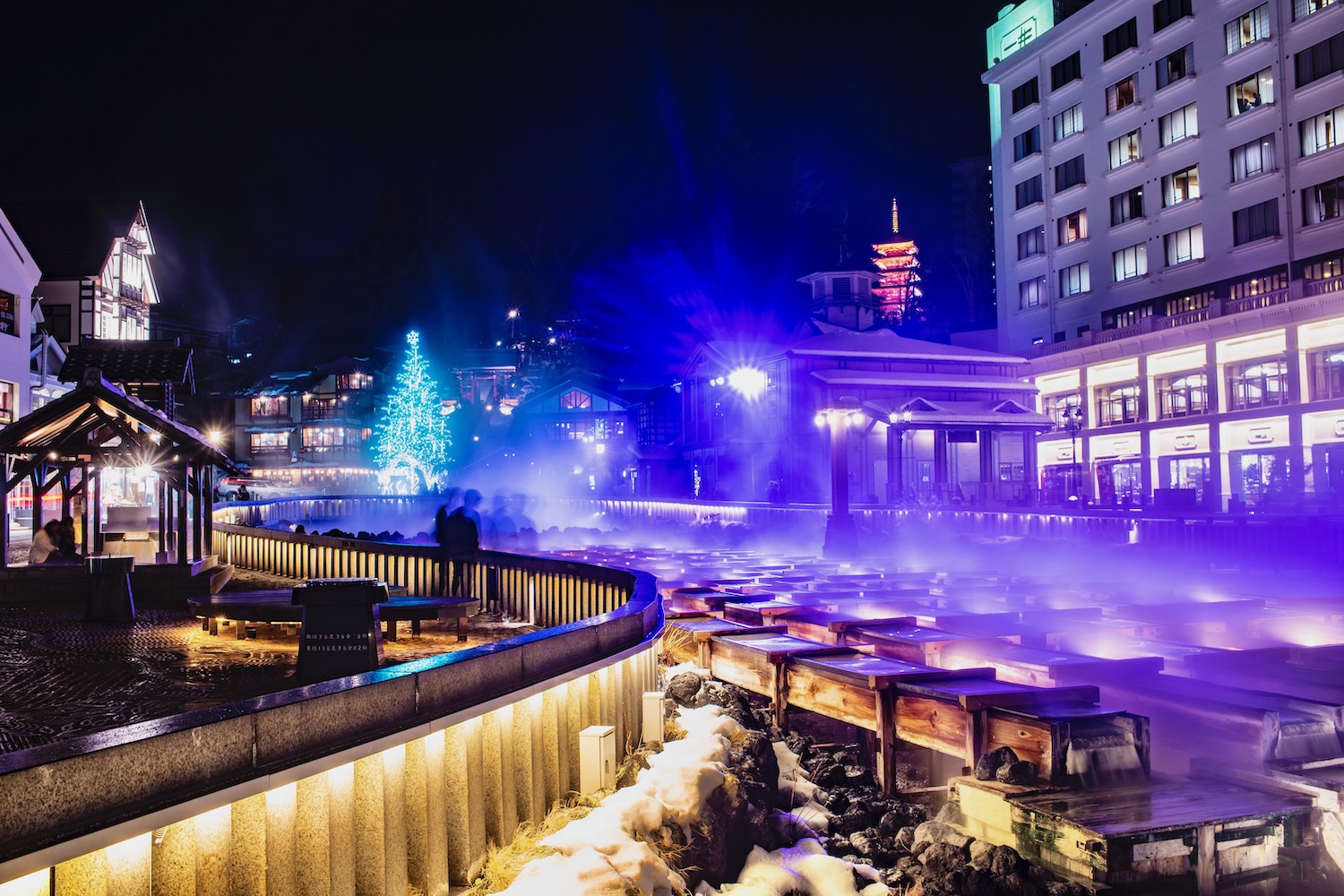
Gunma, like so many other Kanto-area prefectures, is so much more than its main claim to fame. To be sure, while I’ve cited it primarily for the world-class hot springs like those in Kusatsu Onsen (pictured above) and the Takaragawa Onsen hot springs inn, there’s so much more on offer. This ranges from large cities like Takasaki and Maebashi, to the smaller city of Tatebayashi, which is home (among other places) to one of Japan’s best spots for tsutsuji (azaleas).
Touch grass (or stone) in Chiba, Japan’s flyover country

Searching for things to do near Narita Airport? Well, Chiba prefecture delivers in spades. For some travelers, this will simply entail traveling to nearby Narita city or to the canal town of Sawara, which offers Edo-era architecture year-round, and fields of irises in the summer. Chiba-ken‘s west coast is also worth visiting, whether you make a day trip from Tokyo (because of course you should) to Mt. Nokogiri, explore underrated Chiba City or simply enjoy a view of the capital from the free i-Link rooftop near Ichikawa Station.
Give Ibaraki a chance

Ibaraki frequently ranks as Japan’s least-loved prefecture, though this is in my opinion not deserved. For starters, even if you only come to Hitachi Seaside Park in mid-April (or anytime of year, frankly—it’s beautiful in any season), you’ll get a high ROI of your money and time. This is to say nothing of underrated Mito city, and not just because it’s home to Kairaku-en (one of the “three great gardens” of Japan).
How Long Do You Actually Need in the Kanto Region?
As you might imagine, you have a lot of flexibility in terms of discovering Kanto—many of the destinations I’ve listed here are easily doable as Tokyo day trips, on account of how central (literally and figuratively) the capital is to the region. In fact, depending upon how many days in Tokyo you decide to spend, you could see almost everywhere I’ve recommend in Kanto without every sleeping in a hotel outside of Shinjuku or Ginza.
On the other hand, if you want to take a day that’s truly comprehensive, then the topic of how many days in Kanto can quickly shift to weeks, rather than days. With an important caveat: You don’t necessarily need to do it all in a single trip. If you plan to return to Japan many times over a number of years (or decades) like I have, you can discover the region piecemeal. And trust me when I say that there’s a definite benefit to doing it this way!

Other FAQ About Japan’s Kanto Region
Where is Japan’s Kanto region?
Japan’s Kanto region comprises the Tokyo metropolis and the six prefectures immediately around it—namely, going clockwise from west to east: Kanagawa; Saitama; Gunma; Tochigi; Ibaraki; and Chiba. “Tokyo” and “Kanto” are often used interchangeably, but the region is so much more than its most famous city.
Is it worth visiting the Kanto region outside of Tokyo?
Kanto is absolutely worth visiting outside of Tokyo! I especially love exploring underrated prefectures like Saitama and Ibaraki (which even Japanese people tend to denigrate and disregard), as well as going off the beaten path of more popular ones. Chiba, for example, is so much more than Narita Airport.
Is Mt. Fuji part of the Kanto region?
Mt. Fuji is not part of the Kanto region, though it is visible from many places within Kanto. Rather, Mt. Fuji (and both the Yamanashi and Shizuoka prefectures that surround it) is part of Chubu—in other words, central Japan. I will soon be writing a guide to Chubu, so stay tuned!

The Bottom Line
My Kanto itinerary more or less comprises the trip I wish JTB had sent me on a decade ago. Rather than pushing into Chubu (as much as I love the central region of Japan), it focuses entirely on Tokyo and the six eastern Japanese prefectures that surround it. Some of you will take only the most superficial of my suggestions, day tripping to must-visit destinations like Nikko (in Tochigi) and Kamakura (in Kanagawa). Others will go further off the beaten path, be that exploring Chiba prefecture beyond Narita Airport, or even venturing into underrated Gunma, Ibaraki or Saitama. Need personalized assistance charting a course through Kanto? Commission a custom Japan itinerary today!